Radical-chic and ignorant-pop

Of Marcello Veneziani

Tom Wolfe died in America last Monday and I would like to say something about radical chic, of which he was the discoverer and brilliant slayer. I too have criticized them since I met them, As a boy I read Wolfe's book against them which Alfredo Cattabiani had published in '73 by Rusconi. On the contrary, before the radical-chic I met their ancestor, lo snob of which Panfilo Gentile spoke ill, noting that snob stands for without nobility, fake nobleman who poses as one. As well as opinionated, i radical chic they snob they become detestable when they become intolerant towards those who do not belong to them race.
But I don't like their backhand at all either, crude pop ignorance. That of those who hate all reading and despise everything that smells of art, thought and culture, that of those who make contemptuous and demented judgments online without understanding, without knowing; that of those who hate the world and belch and fart against the universe and all greatness in the name of freedom and rights. That of those who suffer fromegalitarian envy, he wants to make those who are better off than them suffer and have them confiscate what they have deserved and achieved. In short, those who assert their encyclopedic ignorance as a right and a virtue. Sometimes they are even right-wing people, although usually the homunculus-type is below the right and left. I can't say which is worse, radical-chic or rude-pop. Or better, I would know: the worst are those who make their arrogance or ignorance fall on others. Read More
Share

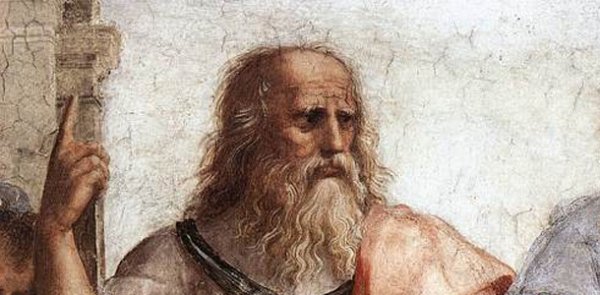
Plato's Republic: a philosophy against the modern world

Of Luca Leonello Rimbotti
Plato's Republic: a philosophy against the modern world
Source: Italicum
Literary utopia, or a true manual for building politicians? Criticism of Plato's most scathing and incisive work has often moved between these two poles, considering this capital text from time to time as a rhetorical exercise, or an ontological proof, or instead, something that is to be shared, a true manifesto of universal politics, capable of constituting at any time a code of exemplary social stability. Other times however, as in the case of the liberal Popper, Plato and his “Republic” played the part of public enemy number one, the ideology that, proposing a well-organized society in itself, firm and solid and therefore closed to external dangers and evils, more than others, it endangers the beatitudes of the "open society".
The catalog of positions that the Platonic "Republic" presents is one that is difficult to digest for those with an egalitarian stomach, pacifist and progressive. It is impossible not to see that ancient classicism and postmodern degeneration are in antithetical positions. For bourgeois and moderate eyes, cosmopolitans and "do-gooders", Plato's thought represents the greatest scandal: it outlines the community to the highest degree, and therefore dismisses individualism a priori, which instead is the great refuge of liberal impotence. These are some of the most qualifying points of Platonic politics, which constitute – as rightly so, from his point of view, Popper noted – how much more unassimilable to the mentality of post-modern "democrats".: the rigid and severe paideia, the education and selection to which Plato entrusted in the "Republic" the growth of the ruling classes of the ideal city; the suppression of individualism in the face of the prevalence of community interests; community, really, of women and property; the abolition of private property; the dominance of the "organic" State over the individual, whose rights are unknown, but only duties; the type of government, hierarchical, aristocratic and elitist, in which philosophers participate and not at all the mass of the people. All this scandalises the hypocritical and fraudulent nature of modern "democrats"., who pass off their upper-bourgeois oligarchies as governments "of the people" and exchange their financial dictatorships for services rendered to the majority. Read More

Share