Fidelity to Mass, the refusal of the rite of Paul VI

Giuseppe Federici Study Center – For a new onset
Press release no. 3/19 of the 9 January 2019, San Giuliano
Fidelity to Mass, the refusal of the rite of Paul VI
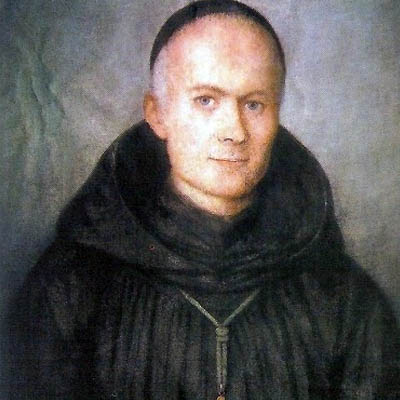
We publish the Sodalitium calendar cards, dedicated to fifty years of resistance to the new mass (1969-2019), concerning the courageous priests who rejected the new rite of Paul VI and for this reason were persecuted by the modernists. A big difference with the Ratzingerians who consider the "new mass" of Paul VI the "ordinary rite" of the Church and downgrade the Roman Mass of Saint Pius V to an "extraordinary rite", passing with ease from Montini's table to the "majestic altars".
Read More

Share

The anti-modernist Oath prescribed by Pope St. Pius X

I N. I firmly accept and believe each and every one of the defined truths, affirmed and declared by the infallible magisterium of the Church, especially those doctrinal principles which directly contradict the errors of the present time.
Primo: I believe God, beginning and end of all things, he can be known with certainty and can also be demonstrated with the lights of natural reason in the works he has accomplished (cf Rm 1,20), that is, in visible creatures, as a cause from its effects.
Second: I admit and recognize the outward evidence of revelation, that is, divine interventions, and above all miracles and prophecies, as very certain signs of the supernatural origin of the Christian religion, and I consider them perfectly suitable for all men of all times, including the one we live in.
Read More

Share

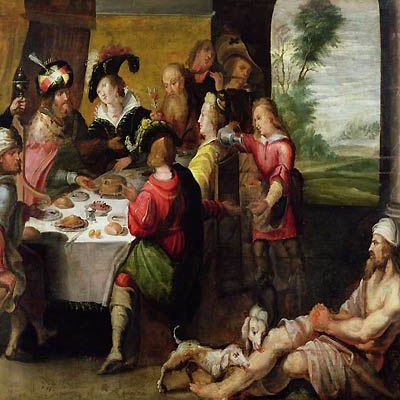
The unjust steward. The rich man

Esteemed Associates and kind Supporters, We are truly grateful for the large number, devoted and fervent participation in the last «Pilgrimage of Tradition», procession of 22 km from Osimo to Loreto in honor of Virgo Lauretana. An appointment of true friendship, of friends of the Church, friends of the Papacy, friends of the Clergy, friends of the Saints and Martyrs, friends of Our Lord Jesus Christ and the Blessed Virgin Mary. We take this opportunity to point out the relationship about true friendship, drawn mainly from the studies of Cornelio ALapide, published on our Youtube channel. We come to the usual study of the Holy Scripture using the precious "Life of Jesus Christ" by Abbot Ricciotti, who today talks to us about the unfaithful farmer and the rich man.
• § 470. As well as being the scribe of mercy, Saint Luke is also the Evangelist of poverty (§145): so here is the series of parables we are examining, pearls on divine mercy are followed by others on human poverty, these too are preserved only in Luca's chest. That giving up wealth was an act of foresight on the part of the follower of Jesus, it was shown by him with the following parable. There was a rich man who had a farmer, and he was accused by the master of squandering his assets; therefore he was called by the master, which he told him dryly: «I have heard bad rumors about you; present me with the accounts of your administration as soon as possible!». – Gone out of there, the farmer thought about his own cases, and he saw himself lost if he did not find some way to survive in his old age. He then began to think: «Now that the administration will be taken away from me, how will I be able to support myself? I am no longer capable of working in the fields; I'm ashamed to ask for alms". After thinking about it for a long time, he decided to make the burden of his livelihood fall on the master by means of a cunning scam. It was a question of falsely reducing the debt that each colonist had with the master, so that those fraudulently benefited debtors would then show their gratitude to the factor by rewarding him. He therefore called a settler and asked him: «How much you owe my master?» – He replied: «One hundred barrels of oil». – The factor then: «No, take the receipt here and write fifty!». – So this first debtor was forgiven half of the debt. Then called another, he asked him the same question; and he answered: «I owe a hundred measures of wheat».
Read More
Share

Of Ascension

84. What is celebrated on the Feast of the Ascension??
R. The glorious day is celebrated on the feast of the Ascension, in which Jesus Christ, in the presence of his disciples, he ascended by his own virtue to heaven, forty days after his resurrection.
85. For what reasons did Jesus Christ ascend to heaven??
R. Jesus Christ ascended into heaven,
1. to take possession of the eternal kingdom conquered with his death;
2. to prepare our place, and serve as a mediator and advocate with the Father;
3. to send the Holy Spirit to his Apostles.
86. On Ascension Day, Jesus Christ alone entered heaven?
R. On the day of the Ascension, not only Jesus Christ entered heaven, but the souls of the ancient Fathers entered with them, which he had freed from limbo.
87. How Jesus Christ is found in heaven?
R. Jesus Christ sits at the right hand of God the Father in heaven; that is, how God is equal to the Father in glory, and as a man he is exalted above all the Angels and all the Saints, and made Lord of all things.
Read More

Share

Two-faced Janus

Giuseppe Federici Study Center – For a new onset

Two-faced Janus
About a procession and a conference scheduled in Emilia: the video of Don Francesco Ricossa's homily in the church of San Luigi Gonzaga in Albarea (FE), 26 maggio 2019.
source – http://www.centrostudifederici.org/giano-bifronte/
Share

L'eresia antiliturgica e la riforma protestante (by Dom Prosper Guéranger)

[…] It is only within the true Church that anti-liturgical heresy can ferment, that is to say that heresy which presents itself as an enemy of the forms of worship. Only where there is something to destroy will the genius of destruction try to introduce this deleterious poison. The East has only tried it once, but violently, the shots, and this happened at the time of unity. In the eighth century a furious sect arose which, under the pretext of freeing the spirit from the yoke of form, broke, torn, burned the symbols of Christian faith and love. Blood was shed for the defense of the image of the Son of God as it had been shed four centuries earlier for the triumph of the true God over idols. But it was reserved for Western Christianity to see the longest war organized within its midst, more stubborn, which still continues, against all liturgical acts. Two things contribute to keeping the churches of the West in this state of trial: first of all, as has been said, the vitality of Roman Christianity, the only one worthy of the name of Christianity, and consequently the one against which all the forces of error had to turn. Secondly, the rationally material character of Western peoples, which, devoid of the agility of the Greek spirit as well as of Eastern mysticism, in terms of beliefs, they don't know what to deny, rather than rejecting what disturbs or humiliates them, incapable for this twofold reason, of following the same heresy like the Semitic peoples for long centuries. Here's the reason why you come to us, if certain isolated facts are overlooked, heresy has never proceeded except through denial and destruction. In this direction, as we will now see, all the efforts of the immense anti-liturgist sect must be made.
Read More
Share

Attack on Syria: false note, real criminals

Giuseppe Federici Study Center – For a new onset

Press release no. 42/19 of the 28 maggio 2019, Saint Augustine of Canterbury
Attack on Syria: false note, real criminals
Chemical weapons and false flags’
Further evidence that the US 'attack by chemical weapons’ it was based on a 'false flag’
Further evidence has emerged indicating that the alleged chemical attack in Douma 2018, in Syria, it was staged by US-backed militiamen, not by the Syrian government.
Recent revelations indicate that the United States not only falsely accused Damascus of carrying out the attack, but they carried out bombings against Syria based on a false pretext. To this day, the United States has categorically failed to produce any convincing evidence to support its initial claims.
On the contrary, a subsequent investigation conducted by the Organization for the Prohibition of Chemical Weapons (OPCW) has produced overwhelming evidence showing that a 'false flag' event’ it was carried out by US-backed militants. This included a chlorine gas cylinder found in a militant weapons cache inspected by OPCW investigators, which matched exactly with the two cylinders speciously used in the same Douma attack 2018.
While US-backed militants insisted that two gas cylinders were dropped from government helicopters on Douma, the OPCW observed that the alleged craters caused by the impact of the cylinders corresponded to those in nearby buildings clearly caused by explosive devices.
The OPCW final report regarding the Douma incident stated: He teams [of the OPCW mission in Syria] observed that a similar crater was present on a nearby building under construction.
Share

Sant'Agostino di Canterbury

28 maggio, Saint Augustine of Canterbury, Bishop and Confessor (Roma, 13 November 534 – Canterbury, 26 maggio 604).
“A Canterbury, in England, Saint Augustine Bishop and Confessor, which, sent there together with others by Blessed Gregório Papa, preached the holy Gospel of Christ to the English, and there, glorious for virtues and miracles, he rested in the Lord".
O Lord, than with the preaching and miracles of your blessed confessor and bishop Augustine, you have deigned to illuminate the English nation with the light of true faith, granted, we pray to you for his intercession, that the hearts of the errant return to the unity of true faith, and we remain faithful to your saint
source – https://www.sodalitium.biz/santagostino-di-canterbury/

Share

MAJOR CATECHISM – Of the procession that takes place on the day of St. Marco and in the three days of the minor Rogations.

 
79. What is done by the Church on the day of St. Marco and ne’ three days of the minor Rogations?
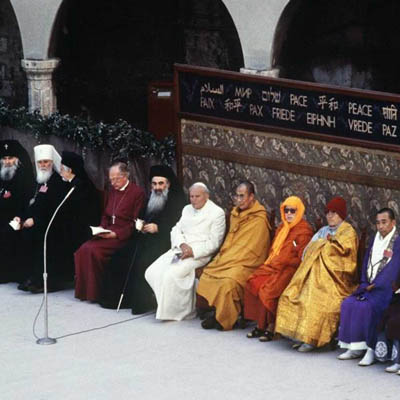
On the days of St. Marco and ne’ three days of the minor Rogations, processions and solemn prayers are made by the Church to appease God, and make him favorable to us so that he forgives us our sins, keep his punishments away from us, bless the fruits of the earth that begin to show themselves, and provide for both our spiritual and temporal needs.
80. The processions of S. Mark and the Rogations are ancient?
The processions of S. Mark and the Rogations are very ancient, and the people used to compete barefoot with a true spirit of penance and in very large numbers, leaving every other occupation to intervene.

  1. What do we do with the litanies of the Saints that are sung in the Rogations, or in other similar processions?

With the Litanies of the Saints

  1. we implore mercy from the Holy Trinity; and to be heard we turn in particular to Jesus Christ with those words: Christ, hear us, Christ, hear us, Meaning what: Christ listen to us, Christ hear us.
  2. we invoke the patronage of the Virgin Mary, of the Angels and Saints of heaven, telling them; pray for us: pray for us.
  3. we turn again to Jesus Christ and pray to him, for everything He has done for our health, to free us from all evils, and mainly from sin, telling him: free us, Sir: free us, oh Lord.
  4. we ask him for the gift of true penance, and the grace to persevere in his holy service, and we pray for all orders of the Church, and for the union and happiness of all God's people by saying: we ask you, hear us: listen to us, oh Lord, please.
  5. Let's end this prayer with the words with which we begin, that is, by imploring God's mercy, telling him again: Kyrie eleison etc.: Gentleman, have mercy on us etc.

Read More

Share

Dictionary of dogmatic theology. The religious feeling

Valid ancient and modern psychologists discuss the nature of feeling without arriving at an agreed definition. Some believe that feeling derives from an affective or emotional faculty that is distinct from both the volitional faculty (motivates) both from the perceptive-intellectual faculty. Others reduce feelings to psychological movements and phenomena; others instead make them representative or intellectual functions. The scholastic theory formulated by Saint Thomas (d’Aquino) in the footsteps of Aristotle, despite its antiquity, presents the best guarantees of truth. According to this doctrine, there are only two psychic faculties in man: the cognitive and the appetitive, each of which is distinguished into sensitive and supersensible or spiritual. We therefore have the sensitive area with the sensory organs, sensations and passions, which belong together to the body and the soul that informs it. From there we move on to the spiritual zone, in which intellect and will function, which are immaterial faculties. Sensation is typical of the sensitive faculties, That, by passive impression of the external world on the senses, it becomes perception of the object and its representation (ghost – image), which corresponds in the appetitive faculty to the movement towards the perceived object, that is, that impulse accompanied by physical emotion, which is usually called passion (amore, hatred, gioia, sadness etc.).
Read More
Share
1 2 3 4 20