Carlo Freccero: Foa, finally a Rai President out of the frame
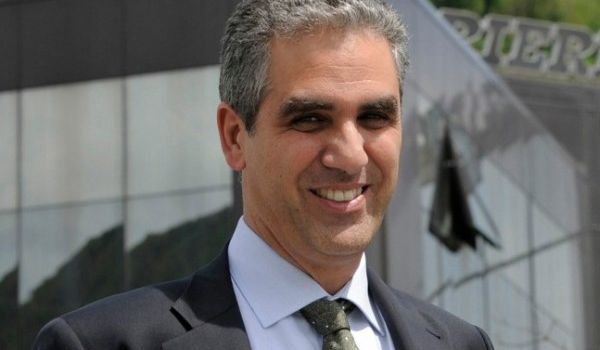
Carlo Freccero: Foa, finally a Rai President out of the frameby Carlo Freccero

Foa is part of a small group of opinion leaders, blogger, journalists and thinkers, who present the other side of the coin on the internet, the facts beyond the propaganda

I wrote some time ago on these pages that the order of speech it's changing. Foa's proposal to president of Rai is a confirmation of my statement. I'll say more. If the nomination is followed by the proposal, there is a good chance that this process would be accelerated, because information is fundamental for the formation of public opinion. The proof? The hysterical reaction with which his candidacy was received by the entire mainstream press. The Movement 5 Stelle suggested Salini and no one had anything to object to. The League proposed Foa and the uproar broke out. It is paradoxical that Foa is being fought as a fake news dealer. In this area Foa is a precursor, but in reverse.

It's from 2006, a year that in terms of the fight against fake news is prehistoric, that Foa analyzes the problem of truth in politics. His book The sorcerers of the news, of which among other things the update has been released, critically analyzes the phenomenon of spin doctors and its implications in terms of democracy. The figure of the spin doctor is not a figment of the imagination of conspiracy theorists, but an official figure, well paid, which has long been involved in organizing the electoral campaigns of Democratic and Republican candidates in America and which, more recently, it was also introduced in Italy. I remember the spin doctor who followed the Monti government and the complete Americanization of the Renzian electoral campaign. The spin doctor is not bound by the truth. Read More
Share

Fake News and induced truths

Of Enrica Perucchietti
Fake News and induced truths
Source: Italicum
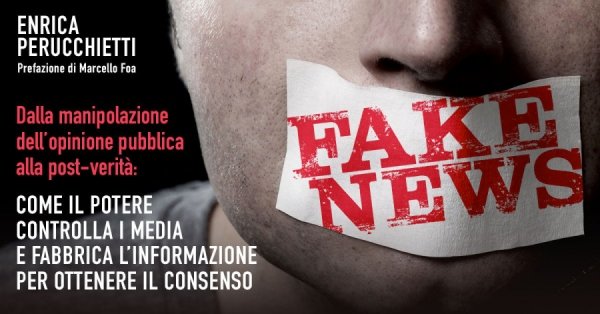
Interview with Enrica Perucchietti, author of the book “Fake News”, Arianna Publishing 2018, edited by Luigi Tedeschi

  1. According to the thoughts of Walter Lippmann, our perception of reality is conditioned by images, concepts, moral values ​​not directly acquired, but transmitted to us by others. Therefore, the narration of facts is necessarily subjective, a representation of reality formed through stereotypes, assumed as interpretative canons of reality itself. In the fluidity of today's telematic communication, therefore, new stereotypes replace old forms of manipulation of reality. It is therefore necessary to conclude that the perception of reality is always mediated by the uninterrupted succession of cultural stereotypes over time, every truth arises from selective parameters of interpretation of reality itself. In this case the post-virtual truths of media technology, they do not end up being equated with the metaphysical conceptions of philosophical knowledge and/or with the transcendent truths of religious faiths?

The risk exists. Yet the truth is one, with its infinite nuances, beyond the stereotypes or cultural archetypes that each of us has inherited or been indoctrinated into. I agree with the philosopher Alain De Benoist according to which the intent of post-truth would be to discredit the truth by presenting it as a "great story" which can no longer be believed precisely because everyone has constructed their own subjective truth. It would be the triumph of relativism: everything becomes “relative”, virtual and therefore chaotic. At this point of collective disorientation, Power guarantees the existence of its own truth through the supervisory action of the mainstream media and the laws introduced to guarantee order. That is, we want each of us to be increasingly wary of the news we can find on the web even if it is documented and true and, more generally, of alternative information to make exclusive reference to "certified" news.: we must only rely on what the Party says and has decided for everyone. The others will be conspiracy theorists, webeti and well poisoners. Read More

Share