Life and sayings of the Desert Fathers: John the Persian

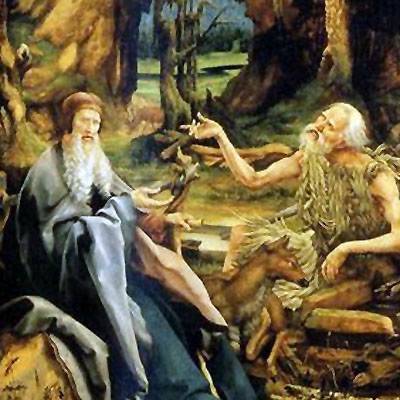
A man said to his father Giovanni: «We have suffered so much for the kingdom of heaven; we will inherit it eventually?». And the old man said: «I trust that I will inherit the Jerusalem of above inscribed in heaven. He who promised is faithful; why should I doubt? I was as hospitable as Abraham, gentle like Moses, holy like Aaron, patient like Job, humble like David, a hermit like Giovanni, contrite like Jeremiah, doctor like Paolo, faithful like Peter, wise like Solomon. And I believe like the thief that he who out of his goodness has given me all this, he will also give me the kingdom of heaven" (237d-240a).
Taken from Life and sayings of the Desert Fathers, edition New City, 1999.
source – https://www.sursumcorda.cloud/articoli/padri-del-deserto/2174-vita-e-detti-dei-padri-del-deserto-giovanni-il-persiano-parte-2-ed-ultima.html
Share

Dictionary of dogmatic theology. The Holiness of the Church

Holiness is the second property that the Nicene-Constantinopolitan Symbol attributes to the Church and which emanates from the intimate nature of the same. In fact, if the Church is "the union of Christ with man in a social form" it must be holy, like everything that is in contact with God. The Bible presents holiness as the characteristic attribute of the Church: «Christ loved the Church and gave himself for her, in order to sanctify it (…), to prepare her as an immaculate bride, without wrinkles and without moles" (Ephesus. 5, 26); «Christ chose us so that we might be holy and immaculate before him» (Ephesus. 1, 4): "He gave himself for us in order to redeem us from all iniquity and to purify himself into an acceptable and zealous people for good works" (Tit. 2, 14). The holiness of the Church is threefold: sanctity of principles, of the limbs, of charismas. The sanctity of principles consists in the fact that the Church is endowed with means that are suitable for producing sanctity in men (active sanctity). Really the dogmatic and moral doctrine of the Church (Magisterium) it is the ferment that lifts the human mass from the darkness of the earth to the splendors of the sky; his Sacraments (Ministry) they are the channels that transmit sanctifying grace; his authority (Empire) it tends only to guide the faithful along the path of perfection. The sanctity of the limbs results from the spectacle that has constantly occurred in the history of Christianity of many faithful living according to the precepts of the Gospel (common holiness) and many others who, also following the evangelical advice, they have reached the arduous heights of heroism (eminent sanctity), which is usually sanctioned by canonization. All the centuries of the history of Christian peoples, from San Paolo to San Benedetto, from Saint Francis of Assisi to Saint Teresa of Jesus, from San Vincenzo de' Paoli to San Giovanni Bosco are intersected by the luminous trail of heroic sanctity (passive sanctity). The sanctity of charisms emerges from the gift of miracles, with which the Holy Spirit usually manifests his presence throughout the mystical Body (they are in fact the miracles thanks gratis datae for the building of the Church) as in some member endowed with singular virtue, because God, ordinarily he uses the souls dearest to him to work his wonders (signs of holiness).
dal Dictionary of dogmatic theology, Piolanti, Relative, Garofalo – peace to their souls! – Studies, Roma, 1952.

Source – https://www.sursumcorda.cloud/articoli/dizionario-di-teologia-dommatica/2171-dizionario-di-teologia-dommatica-la-santita-della-chiesa.html

Share

Available numbers 159 Give Up Hearts – 5×1000

The. is available on the site number 159 (of the day 5 maggio 2019) Of Hearts Up®. The weekly can be downloaded for free in download section dedicated to Members and Supporters only

  • Press release number 159. Jesus at the last Feast of Dedication;
  • [VIDEO] What is true humility? From the Treasures of Cornelius ALapide;
  • [VIDEO] Conspiracy against the Church and civil society – Freemasonry and the Supreme High Sale;
  • I adore you, a Santa Croce;
  • Dictionary of dogmatic theology. The Resurrection of the bodies;
  • Dictionary of dogmatic theology. The Holiness of the Church;
  • Dictionary of dogmatic theology. The Holiness of N. S. Jesus Christ;
  • The farmer taken to Heaven by Saint Francis de Sales;
  • Life and sayings of the Desert Fathers: John the Persian (part 2 and last).

SOURCE – https://www.sursumcorda.cloud/tags/numero-159.html

Share

For the Roman Mass, against the Novus ordo

Giuseppe Federici Study Center – For a new onset
Press release no. 36/19 of the 6 maggio 2019, San Giovanni a Porta Latina
For the Roman Mass, against the Novus ordo
“Whoever is satisfied with the M.P. the Supreme Pontiff, which on the contrary declares that the missal reformed by Paul VI is the ordinary rite of the Catholic Church, and which defends its doctrinal orthodoxy a priori, he has already deserted the battle that has begun, 40 years ago, give a brief critical review of the New Order of the Mass".
Preface to the reprint of the Brief Critical Examination of the Novus Ordo Miss
Il 30 November 1969, first Sunday of Advent and therefore the beginning of the new liturgical year, a new "Ordo Missae" was to come into force in all Catholic churches, a new missal (promulgated with the apostolic constitution Missale Romanum of 3 April 1969) in application, it was said, of the conciliar constitution on the liturgy Sacrosantum Concilium (4 December 1963). In the intentions of Paul VI, clearly manifested in the consistory to the cardinals of 24 maggio 1976, the reformed missal had to take - definitively - the place of the old one: “The adoption of the new Ordo Missae is certainly not left to the free decision of the priest or the faithful. The education of 14 June 1971 predicted that the celebration of mass according to the ancient rite would be permitted, with the authorization of the Ordinary, only to elderly or sick priests who celebrate without assistance. The new Ordo was promulgated to take the place of the old one, after mature reflection, in order to put into practice the norms established by the Second Vatican Council".
Thirty years have passed now (Today 50, ndr) from that famous speech, and the ancient missal has not disappeared, as was desired and thought. And this not only because it is still celebrated in every part of the Catholic world, but also because the provisions issued by the successors of Paul VI have increasingly authorized the celebration of the ancient missal; ultimo in ordine di tempo il Motu Proprio "Summorum Pontificum" del 7 July 2007.
(cfr: https://www.sodalitium.biz/comunicato-riflessioni-sul-motu-summorum-pontificum-2/)
Read More

Share

Communion in the sacred

Taken from Catholic Encyclopedia, Vol. IV, Coll. 117-119, Imprimatur 8 October 1950. For communication in sacred things or communion in the sacred means the participation of Catholics in sacred ceremonies (prayers, functions, pre­diche, rites) carried out by non-Catholics (heretics, scisma­tici, unfaithful) inside or outside their churches or temples. This participation can be: active, when, Meaning what, one takes part in religious worship positively, performing some act, that has a relationship with it; passive, when one takes part in it only negatively, refraining from any action, that says relationship with the religious ceremony; formal, when there is adhesion of mind and heart; material, when this adhesion is missing and everything is reduced to an act of external and physical presence. Communication in sacred things is usually designated by the name of communication in the divine, to distinguish it from communication in the profane that is, in private and public relations that concern domestic and civil life, and communication in mixed things, that is, in relationships, which involve acts that can also be considered or have a religious side, come i matri­moni, funerals and similar ceremonies. The conduct of Catholics in this regard is regulated in principle by the CIC (Code of Canon Law of the 1917), and in its various applications by the norms issued by the Sacred Roman Congregations.
Communication in the profane. – According to current canon law, it is lawful, when there is no danger of spiritual damage; illicit, when this danger exists. Therefore those actions must also be avoided, which, maximum in some specific circumstances, they can mean or imply excessive familiarity or confidence or familiarity, and consequently dangerous, with non-Catholics, especially for people "simple and weak in faith" (cf. Sum. Theol., 2a-aae, q. 10, a. 9). Relations with the excommunicated knowing are regulated by particular rules (CIC, can. 2267).
Communication in the divine. It is never permissible for the faithful to actively assist or take part, in any way, to the sacred rites of non-Catholics (CIC, can. 1258 § 1). This applies not only when it comes to false or impious rites in themselves, but also when it comes to those rites that are specific to this or that sect or heretical group, schismatic, pagano. Because such participation is equivalent to the profession of a false religion and consequently to the denial of the Catholic faith. And even in the event that any idea of ​​denial could be excluded, three very serious damages still remain: 1) the danger of perversion in the Catholic who participates; 2) the scandal, and of the faithful, who take reason to judge badly of the person who deals with opponents of the faith and perhaps even to doubt its truth, and of non-Catholics themselves, who thus confirm their error; 3) indifferentism in matters of religion, that is, the outward approval of erroneous beliefs and the idea that the external expression of one's faith is something negligible. Read More
Share

Prayer to Saint Fedele from Sigmaringa (24.4)

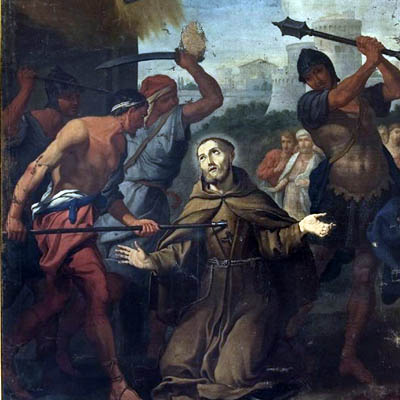
+ You have accomplished your career gloriously, Fedele! and its end was even more beautiful than its course. With what serenity you went towards death! With what joy you succumbed to the blows of your enemies, who were those of the holy Church! Similar to Stefano, you let yourself be discouraged by praying for them; since the Catholic, who must detest heresy, he must also forgive the heretic who immolates him. Pray, O holy Martyr, for the children of the Church; ensure that they know better and better the value of faith and the outstanding grace that God has given them, causing them to be born within it, unique and true, let them live warily against perverse doctrines, which resound in their ears from every side; that they are not scandalized by the painful defections that are so often recorded in this century of softness and pride. It is faith that must lead us to the risen Jesus; he recommends it to us in the words spoken to Thomas: “Blessed are those who have not seen and have believed”! We want to believe, and this is why we attach ourselves to the holy Church which is the supreme teacher of faith. It's her we want to believe, and not to human reason which would not be able to draw on the word of God, much less judge it. Jesus wanted this faith to reach us, supported by the testimony of the martyrs; and every century has had its own. Glory to you, Fedele! that you were able to win the prize by fighting mistakes, and the alleged reform! Take revenge as a Martyr, and incessantly asks Jesus that the sectarians of error return to the faith and unity of the Church. They are our brothers in Baptism: pray for them to return to the fold, so that one day it will be possible to celebrate the true Easter dinner all together, in which the Lamb of God gives himself our food, not in the picture, as in the ancient law, but in full reality, as befits the new one. So be it. +
[By Dom Prosper Guéranger] [24 April, Saint Fedele from Sigmaringa, Martyr (1577 – 1622 ), Protomartyr of the Order of Capuchin Minors and of the S. Congregation of Propaganda Fide. To Sevis, in Switzerland, Saint Fedele from Sigmaringa, Priest of the Order of Capuchin Minors and Martyr, which, sent there to preach the Catholic faith, in the same place, killed by heretics, he committed martyrdom, and by Pope Benedict XIII he was numbered among the holy Martyrs].

source – https://www.sursumcorda.cloud/preghiere/2160-preghiera-a-san-fedele-da-sigmaringa-24-4.html

Share

Prayer to Saint George to win the battle (23.4)

+ Oh George! you are the honor of the Christian militia. Serving an earthly prince did not make you forget what you owed to the king of heaven. You shed your blood for the faith of Christ, and in turn Christ made you leader and leader of the Christian armies. Be their support in the face of enemy ranks, and ensures victory for the defenders of the just cause. Protect them under the folds of your banner, cover them with your shield, and spread terror before them. The Lord is the God of hosts, and war often enters into the plans of Providence, now for the sake of justice, now for that of mercy. Commanders and soldiers need heavenly help. Waging war, they often seem to be carrying out a human work, While, actually, they carry out that of God. It is for this reason that they are more disposed than other men to feelings of generosity, and that their heart is more religious. The sacrifice, the danger, they elevate them above themselves: in fact soldiers occupy a large part in the glorious lists of Martyrs… (O glorious Saint George guide us to victory!) So be it. +
[By Dom Prosper Guéranger] [23 April, Saint George Martyr. The birthday of San Giorgio Martire, whose illustrious martyrdom is venerated by the Church of God among the crowns of the Martyrs].

source – https://www.sursumcorda.cloud/preghiere/2159-preghiera-a-san-giorgio-per-vincere-la-battaglia-23-4.html

Share

Press release number 158. The shrunken woman and the dropsical man

Esteemed Associates and kind Supporters, please, this year too, allocate the 5×1000 to our small Association. It is sufficient to indicate in the tax return (or attached to other models) our tax code – 01944030764 – in the appropriate box: «Support for non-profit organizations of social utility, of social promotion associations …». Thank you, God bless you! Let's come to Abbot Ricciotti and his «Life of Jesus Christ», from which we will study the chapter today: «The shrunken woman and the dropsical man. Convivial matters".
• § 455. These threats had an effect? [«In this last extension granted to the tree, or it will bear fruit, or he will end up under blows with an axe", cf. Up Hearts n° 157]. The fire lit by that fire that Jesus had come to throw on the earth was blazing? In other words, the "change of mind" was taking place which repudiated the old formalistic and sought the new spirit? Saint Luke does not give an explicit answer to these questions, but it seems good that he gives an implicit one through an anecdote that he adds to the previous narratives, and which shows how rabbinic formalism weighed like a leaden pall on the spirits and had not even been scratched by the threats of Jesus. The anecdote is that of the shrunken woman who was healed on a Sabbath (Luca, 13, 10-17); except the Evangelist himself, indulging his predilection for matching checks, shortly after this anecdote is followed by another very similar one about the dropsical man who was also cured on a Saturday (14, 1-6). The two squares logically refer to each other, as a repeated and disheartened response to previous questions on the effectiveness of Jesus' preaching, and it is therefore appropriate to present them side by side; However, similarly from the data of Saint Luke compared with the other Evangelists, it appears that the two facts are chronologically separated, and that the woman was healed shortly before the Feast of the Dedication and in Judea, the man instead shortly after that party and probably in Transjordan. Jesus therefore, during his pilgrimage in Judea, he went to a synagogue on the Sabbath and began to preach. Among those present was a woman who had been ill for eighteen years – perhaps arthritis or even paralysis – and so shrunken that she could in no way raise her head and look up. View it, Jesus called her and told her: «Donna, you are freed from your illness"; the mani does not impose. That, straightened up instantly, he began to thank and glorify God. The arch-synagogue who presided over the meeting (§ 64) He was indignant at the healing that took place on a Saturday; however, not daring to approach Jesus directly, he took it out on the crowd, haranguing them angrily: «There are six days in which you have to work: therefore come and be treated in them, and not on the Sabbath day!». For that zealous synagogue the miraculous healing meant nothing, on Saturdays instead – which, moreover, had not been violated – it meant everything. Jesus then responded to him and to the others of his mentality: «Hypocrites! Doesn't each of you untie his ox or donkey from the manger on the Sabbath?, e (lo) leads to water?». Indeed, untying or tightening a rope knot was included in those 39 groups of actions that were prohibited on the Sabbath (§ 70); but in practice, dealing with domestic animals, their support was provided in one way or another. Having made that clear, Jesus argues a fortiori in conclusion: «And this is the daughter of Abraham, and whom Satan bound eighteen years ago, it was not necessary for her to be released from this bond on the Sabbath day?». Illnesses of all kinds were commonly traced back to Satan (§ 78). So if there was a more opportune day than all to demonstrate God's victory over Satan, that is, of Good over Evil, it was actually Saturday, the day consecrated to God: therefore Jesus, better than any other, he had penetrated the spirit of the Sabbath, operating precisely in it that victory of God over Satan.
• § 456. The crowd cordially agreed to Jesus' reasoning; as for his opponents, St. Luke says they were confused, but this does not mean that they agreed to the reasoning. We already saw that the rabbinical observance of the Sabbath was one of the pillars on which the Pharisees were enthroned and that it should never collapse (§ 431). Even if the miraculous facts denied that observance, that meant nothing: the facts were overlooked and the Holy Spirit was blasphemed (§ § 444, 446), as long as the Pharisaical Sabbath remained. Read More
Share

Does Honorius "Refute" Sedevacantism? NEW Fr. Cekada Articl1

Reporting of don Anthony Cekada

Does the Pope Honorius Affair Refute Sedevacantism?

THE MULTITUDE of theological errors and evil laws that have emanated from the Vatican II popes over the past fifty years — and that is exponentially increasing during the madcap reign of Bergoglio — has prompted many traditionally-minded Catholics to seek out ways to reconcile the notion of papal authority with the obvious destruction wrought by those in our day who claimed to wield it.
Sedevacantists like myself settled on the following explanation a long time ago: the very errors and evils officially sanctioned by the Vatican II popes demonstrate that they never truly obtained papal office (or authority) in the first place, and were therefore false popes. (For an explanation, see Sedevacantism: A Quick Primer)
Others — be they Novus Ordo conservatives, neo-traditionalists within the Vatican II establishment, or traditionalists of the Recognize-and-Resist (R&R) variety — shied away from this conclusion. They sought to reconcile “recognizing” the V2 popes as true Successors of Peter with simultaneously “resisting” them — minimizing any obligation to adhere to the teachings of the V2 popes, to observe their laws, or in practice, to submit to their authority.
To achieve this end and to negate the logical appeal of sedevacantism, the conservative/neo-trad/R&R camp sought to demonstrate two things:

  1. Since ordinary papal teaching lacked the “infallible stamp” that the rare from the chair papal pronouncement possessed, Catholics had no obligation whatsoever to submit or adhere to it. Ergo, you’re free to ignore Bergoglio’s (or for that matter, Paul VI's) teachings and laws.
  2. Some popes in the past (Nicholas I, Vigilance, Honorius, Freer, Celestine III, John XXII, Alexander VI) were heretics, but nevertheless were always recognized as true popes. Ergo, a pope can teach heresy and still remain pope — take that, wicked sedes!

This is old stuff that the “right” subjected to constant recycling, even before Bergoglio’s Laudato Yes, and it always manages to float back, like gas from the landfill. I refuted point (1) in section 1 of 9/11 for the Magisterium, as well as in the introduction to my recent article, The Errors of Athanasius Schneider. I have refuted point (2) in a variety of articles listed in section 3 of my sedevacantist primer — and in so doing, please note, I have always pointed out that it was the Protestants, the Gallicans, and other haters of papal authority who raised these charges of “papal heresy” and were roundly trounced by an array of Catholic dogmatic theologians.
For the conservative-neo-trad-R&R camp, however, the historical case that seems both to provide a refutation of sedevacantism and to demonstrate the validity of points (1) and (2) is the case of Pope Honorius. From this, we are supposed to draw by analogy a principle for a course of action vis-à-vis Bergoglio and all the Vatican II popes that will allow one to recognize them as popes, but never, ever submit to them.
I dealt with the case in my lengthy article on Bp. Schneider, but since Honorius always seems to pop up in discussions of papal authority, I’ve been asked to sum up my arguments as a separate article.
Emperor Heraclius

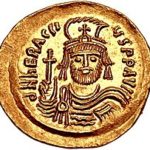
1. General Background. Pope Honorius I (625–638) reigned during the great controversy over the Monothelite heresy (=Christ had only one will, the divine). Around 634, he was approached by Sergius, Patriarch of Constantinople, who was attempting to resolve the dispute and pacify all sides in order to please the emperor Heraclius. Honorius responded to Sergius with several letters dealing with the controversy. Their contents became public only after the death of Honorius, and led to his being accused, variously, of either being a heretic himself, or at least, of being soft on heresy.
In 681 the Third Council of Constantinople posthumously condemned and anathematized Honorius, together with several Monothelites, which condemnation was subsequently renewed by the Second Council of Nicaea in 787 and the Fourth Council of Constantinople in 870. The condemnation subsequently made its way into the texts of some ecclesiastical oaths, and the Roman Breviary prior to 1570 portrayed Honorius as having been condemned for heresy.
Nevertheless, despite these condemnations, the Church continued to recognize Honorius as having been a true pope and true successor (albeit perhaps weak) of St. Peter.
Thus the facts in the story of Honorius that everyone agrees upon.
Points of contention!

2. Disputed Facts and Interpretations. But there are countless other facts and complications in this story that church historians and theologians do not agree upon, have interpreted in different ways and, generally, have been fighting over for centuries.
These disputed issues include: whether the texts themselves of Honorius’s letters really prove he was a heretic, or merely that he was “soft” in combatting heresy; how the term “heresy” is to be understood in the various conciliar condemnations, since at the time it did not always have the precise technical meaning it has today; whether the subsequent papal approval of the conciliar acts of Third Constantinople (necessary for their legal effect), approved the condemnation of Honorius for heresy properly speaking, or only cowardice; or whether some of the documents were or contained forgeries, a common problem during the era.
Countless other uncertainties like these muddy the waters, making it difficult not only to arrive at a clear and objective historical account of the Honorius affair, but also to tease out of these complicated events correct theological consequences.
Protestants, French, rationalists and others, especially in the 19th century, had no hesitations about their conclusions, of course, and they routinely trotted out the Honorius affair as one of their main arguments against papal authority in general, and papal infallibility in particular.
READ EVERYTHING

Source – http://www.fathercekada.com/2019/04/24/does-the-pope-honorius-affair-refute-sedevacantism/

Share

Prayer to preserve the true Faith

Prayer to preserve the true Faith” written by Saint Peter Canisius (1521-1597), Dutch of the Society of Jesus, apostle of the Counter-Reformation in Germany, defined as the “hammer of heretics”, beatified by Pius IX in 1868 and canonized by Pius XI in 1925 who also appointed him Doctor of the Church.

I confess aloud for my salvation everything that Catholics have always rightly believed in their hearts. I abominate Luther, I hate Calvin, I curse all heretics; I don't want to have anything in common with them, because they neither speak nor hear aright, and they do not possess the only rule of true Faith proposed to us by the only one, santa, Catholic, apostolic and Roman Church. Instead, I join in communion, I embrace faith, I follow religion and approve the doctrine of those who listen to and follow Christ, not only when he teaches in the Scriptures but also when he judges at the mouth of the Ecumenical Councils and defines at the mouth of the Chair of Peter, testifying it with the authority of the Fathers. I also profess myself a son of that Roman Church which the impious blasphemers despise, they persecute and abominate as if it were anti-Christian; I do not depart from his authority at any point, nor do I refuse to give my life and shed my blood in its defense, and I believe that the merits of Christ can procure my salvation or the salvation of others only in the unity of this same Church.
I profess with frankness, with Saint Jerome, to be united with those who are united to the Chair of Peter and I protest, with Saint Ambrose, to follow in everything that Roman Church which I respectfully recognize, with Saint Cyprian, as the root and mother of the universal Church. I rely on this Faith and doctrine that I learned as a child, as a young man I confirmed, as an adult I have taught and that so far, with my weak power, I defended. There is no other reason that drives me to make this profession other than the glory and honor of God, awareness of the truth, the authority of the canonical Holy Scriptures, the sentiment and consensus of the Fathers of the Church, the testimony of the Faith that I must give to my brothers and finally the eternal salvation that I await in Heaven and the bliss promised to the true faithful.
If it happens that because of this profession of mine I am despised, mistreated and persecuted, I will consider it as an extraordinary grace and favor, because that will mean that you, my God, you give me the opportunity to suffer for justice and because you don't want those people to be benevolent to me, as open enemies of the Church and of Catholic truth, they cannot be your friends. However, forgive them, Gentleman, so long as, or because they were instigated by the devil and blinded by the glimmer of a false doctrine, they don't know what they are doing, or they don't want to know.
Grant me this grace anyway, that in life and in death I always bear an authoritative testimony of the sincerity and loyalty that I owe to you, to the Church and to the truth, may I never distance myself from your holy love and may I be in communion with those who fear you and who guard your precepts in the holy Roman Church, to whose judgment I submit myself and all my works with a prompt and respectful soul. All the saints who, either triumphant in Heaven or militant on earth, they are inextricably united with the bond of peace in the Catholic Church, may they exalt your immense goodness and pray for me. You are the beginning and the end of all my goods; Praise be to you in all respects, everlasting honor and glory.
SOURCE – http://www.centrostudifederici.org/preghiera-conservare-la-vera-fede/


Share
1 2 3 4 5 6 20