
Of Marcello Veneziani
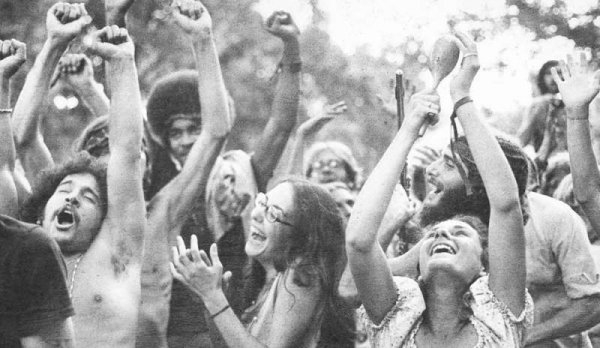
Source: On Earth
l 1968 It's not a date like many others. It's like a plaque fixed on the path of history. Which establishes a before and an after. But a tombstone also means something else. AND a tombstone on a world, on a series of values and customs, of languages and systems, questioned and partly eradicated by the revolutionary vortex triggered by an unstoppable impulse to contest everything that represented authority, discipline, identity.
On Earth interviewed the writer and philosopher on the topic Marcello Veneziani, who published a book with an eloquent title ten years ago “Overthrowing '68” (ed. Mondadori).
On what form of freedom was '68 based ideologically??
“Freedom took on the global meaning of liberation in 1968. Liberation of the subject, of repressed sexuality, of oppressed peoples, of chained instincts and impulses. Liberation from the State and from the Norm, from the Family and its obligations and rituals, liberation from constraints of all kinds, praise of infidelity and chameleonism as a permanent mutation. It is the passion for the unlimited, freedom as forbidden to forbid, as a desire for creation and permanent self-creation, without any border. But behind the promise of liberation from everything, behind the Marcusian denunciation of repressive tolerance (the very same Marcuse who had written an essay on liberation), his arrogant other side was also hidden in '68, permissive intolerance; that is, extreme permissiveness but woe to those who do not accept the new commandment of liberation and protest. That background of intolerance then gave rise to political extremism, to the violence of radicalism, to the justification of regimes such as that of Mao and Pol Pot, than in the name of the cultural revolution and liberation from every past, they carried out exterminations that not even Hitler and Stalin together did".
It is possible to list an overview of the damage caused by the dispute?
“1968 failed as a political and economic revolution, because the power structures and the capitalist system remained firmly in place. But he fussed over the costume, about sex and language, on the family and the relationship between generations, on school and university. And there it caused its most serious damage, some irreparable. The company that entered into '68 had many flaws and many archaisms, many hypocrisies and many contradictions, but the one that came out of it, especially in those areas mentioned, it was worse. The original error was the split between rights and duties, between freedom and responsibility, between results and merits, and the absolute predominance of desires over every other consideration".
For a sort of heterogenesis of ends, the capitalist system even emerged strengthened in 1968. How was this possible?
“Because '68, beyond the maximalism he displayed and the passion for exotic revolutions, in Latin America, in China and Cambodia, it was born and died as an intra-bourgeois and not anti-bourgeois revolution; an internal revolution within the bourgeoisie that used protest to free itself from its residual Christian values, moral and traditional. In this key, '68 cleared society of the last barriers that stood in the way of the absolute and definitive triumph of global capitalism: the banks represented by traditional values, from the family, from the national bond, with a religious sense”.
What are the ideological roots of this hatred towards certain values?
“The 1968 movement believed that tradition was part of a 'holy alliance' of reaction led by capital: instead tradition was the last bastion to prevent citizens, believers, the patriots, fellow countrymen, the parents, were reduced only to consumers, interchangeable pawns, atoms without identity. As a result, capitalism triumphed and often employed yesterday's sixty-eighters as its agents and functionaries.. Ultimately, the present narrative of '68 as a radical modernization means precisely this: a radical mass society, conceived on radical values and global capitalist interests”.
How and to what extent the contestation of the figure of the father and the family institution has affected society?
“The family was the area in which '68 caused the most devastation. And the father understood as auctoritas, eat paterfamilias, but also as a holy father, as a homeland – that is, land of the fathers – as a teacher, was symbolically suppressed. Il ‘68 – I wrote in my book - it was the movement of joyful patricide that brought to fruition that patricidal tendency inherent in modernity and which manifested itself several times in the twentieth century. But the fatherless society of '68 also produced the childless society, with a record birth rate and with the idea that the people of 1968 are a permanent adolescent who does not project himself into any child because he is the eternal Peter Pan".
These are Istat data from these days: one in two Italian women of childbearing age has no children. The price of female emancipation was the renunciation of motherhood and the atrocious demographic crisis of today's Italy?
"And, this is largely the case. Female emancipation has produced undeniable fruits and recognized fundamental rights for women; but with the same honesty, let it be recognized that all this happened to the detriment of motherhood , of family cohesion and balance based on the diversity of roles. Then one can also say that the conquests were worth the losses, but let us be honest in saying that those conquests entailed huge and significant losses.".
It arose in '68 – she said – a “radical mass society”. This triumph of libertarian values occurred despite the fact that the electoral consensus of the Radical Party has always been low on average...
“After 1968 no revolutionary movement came to power in the West, much less in Italy; on the other hand, that path – divorce – was started, abortion, decriminalization of drug-related and other family-related crimes, homosexual unions, and then continue with other more recent ones. In essence, the radical soul of '68 won. And the left itself today is no longer able to represent the poor and oppressed classes, the proletarians and the townships, the workers and the masses, but focuses its battles on civil unions, euthanasia, feminicide etc. The social revolution has become a sexual revolution".
In his book he remembers Jan Palach, stressing that while “others set the world on fire by thinking of themselves, he set himself on fire thinking of the world". '68 also produced some good things?
“A East, the youth revolt was conceived in the name of a combination, homeland and freedom, or national independence, political sovereignty and free expression of dissent. And this produced fruit. Ultimately, Jan Palach's gesture is like the denunciation of Solzhenitsyn and Pope Wojtyla, they produced that popular movement which then coincided with the collapse of communism. I don't know whether to call it '68 but that was a largely positive effect.".
A feeling of rejection towards this sort of bulimia of individual freedom seems to be spreading. Ten years after the release of his book, notes that the ranks of those who would like to "overthrow '68" have grown?
"I do not know. Sometimes I would be tempted to say no, there is habituation to the ongoing process and the forced stages undergone, there is resignation, belief that it is an unstoppable and powerful flow. But sometimes I notice an awareness of the game at stake that wasn't there ten years ago or more, greater sensitivity on these issues, an intolerance and a rebellion against poltically correct, which is then the legacy of '68, a trail of political results throughout the West but also in Eastern Europe that suggests an overthrow of '68. It's about, naturally, of a cultural revolution, which however lacks leaders, the examples, the languages, the means, especially the media to do so. And laboratories in which to train a post-1968 generation, anti-68 but not by instinct and drive, but with knowledge of the facts and ability to act. As difficult as it is necessary".
the care of FEDERICO CENCI

