

Of Alessio Mannino
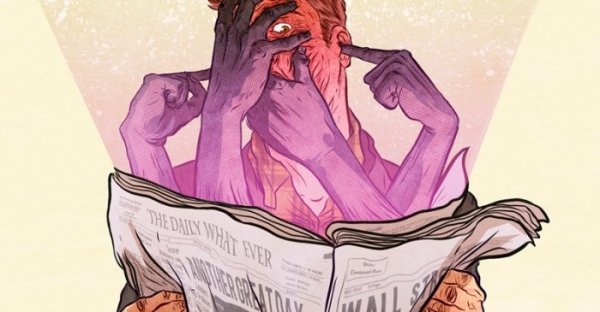
Source: The dissident intellectual
The coldest of all monsters, Nietzsche said of the State - and he didn't know what the Market would be... The last person to want to put handcuffs on freedom of expression is the Poland governed by the Catholic-nationalist right: It is forbidden to claim that the Nazi extermination camps were Polishi. Put it like this, he would seem like a fool trying to abolish something stupid by decree: the concentration camps were undoubtedly German, to define them in any other way would simply be false or inaccurate. But unless you're under oath in a trial, punish those who declare falsely with prison (Now it's fashionable to call them fake news), it is trying to cage the least cageable, compressible and repressible there is: the thought.
Even if it were an unfounded and clearly idiotic thought. Dice: but how naive, Power has been trying to deny it since the dawn of time, often or almost regularly succeeding, the circulation of unwelcome facts and ideas. Certainly. And if he doesn't proclaim himself democratic, there would be no problem: in dictatorship, under an absolute monarch or with the Inquisition reigning, we knew that certain things could be thought but not said, but at least you were dealing with a hateful oppressor yes, but consistent with its principles. But if, like in Warsaw, we are happy to consider ourselves democratic, then any form of censorship becomes inadmissible.
The Polish case is just the latest in a long series. Modern democracies, who love to boast of appearing too liberals, they have never been respectful of their own assumption. That is, the possibility for the citizen to express what you think, with the sole limit of not encouraging mutual violence (hence the prohibition of slander and insult, otherwise we would run the risk of archaically returning to private revenge). Let's take our case, the Italy of the much praised article 21 (Everyone has the right to freely express their thoughts through speech, written and any other means of dissemination). With the reform of opinion crimes of 2006 at least it has been done abolish subversive propaganda and to transform the penalties for contempt of institutions and offenses against religious confessions into fines.
But they still exist there Scelba law which affects the apologia of fascism (hinged on the famous Transitional Provision of the Charter which in 1948 prohibited the reconstitution of the fascist party: then it could fit; Today, not anymore), the reads Mancino against incitement to racial hatred (to which it was added in 2016 the aggravating circumstance of denial of the Jewish Shoah, and to which we would like to add the redundant Fiano proposal), not to mention the geniuses of the Democratic Party who would dream of one to punish those responsible for fake news, to end with Boldrini and all those who, although understandably soured because they are daily targets of insults, they theorize an impossible legal ban on hatred (which is a feeling, and as such it cannot be suppressed with code). It has happened that even incitement to crime becomes a weapon of repression, as was the case with Erri De Luca accused of inciting sabotage of the TAV in Val di Susa for having only written, we repeat written, textual, that remained the only alternative (later ending up acquitted: every now and again, there is a judge in Berlin). Defamation, then – and those who do our job as journalists know this well – it is widely used as intimidating blackmail and a half pressure, psychological and economic, on those who exercise the right to report and criticize.
All away. Putting a lid on thought crimes, defamation and any unhealthy attempt at gagging: this is the only way to honor the illusion called democracy. But not for the sake of liberalism: formerly Locke, who is his father, he preached intolerance against the enemies of tolerance, prefiguring the most Jacobinly consequential Saint-Just (no freedom for the enemies of freedom). The historic liberal is already a fascist in nuce. It is therefore not liberal freedom, which must be defended. It is freedom tout court. That of simply being what you are, thinking what you think. Being free to give life to your own way of understanding life, singular and community, making it slide, widening it, increasing it, affirming as much potential as it carries within itself, granting as much space as possible to the vital forces (virtue, their ancient name) that they are just there, and therefore, whether high or low, they must be able to exist.
In this sense the true democrat, consistent, not liberal at all, if anything Periclean and aristocratic, he is a very realistic idealist, and therefore a tragic lover of Life: because he accepts her as she is, with its dark side of hatred and negative passions, harnessing it just enough so as not to suffocate it and letting it expand creatively. If democracy makes sense, it is only to allow the conflicting play of different points of view to develop more naturally, spontaneous and indeed free. A controlled anarchy with a competitive ethos, and perhaps – here lies the idealism – aimed at excellence (who has always fought, it is known, against the prevalence of the cowardly and the idiot, in a war that will never end; but what would be dishonorable to do while hiding behind the shortcut of liberticidal laws...). Everyone thinks and says what they want: the intelligent individual will recognize his peers. The rest is pettiness and small humanity in need of shutting other people's mouths because their own can only vomit conformism and factionalism.
The writer's opinion does not necessarily coincide with that of Christus Rex – Tradition
Similar Posts
