

Of Mario Bozzi Trails
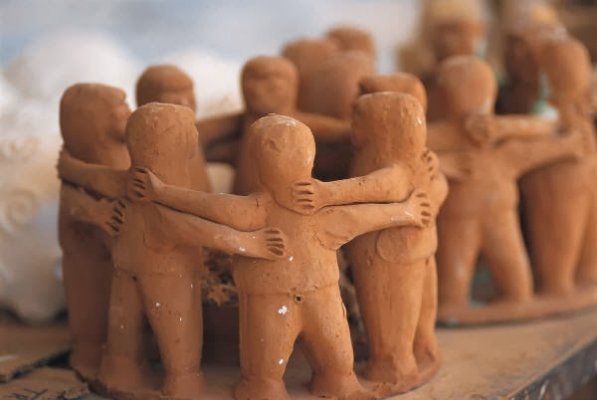
Source: Mario Bozzi Trails
The paths to freedom and political participation are long and complicated. Not only because of a weak and botched electoral law. The crisis of representation in our country and - upon closer inspection - throughout Europe has profound features, which go far beyond mere political data. It is certainly an institutional and cultural crisis, social and economic. But above all it is the crisis of a collective identity model, to whom, willy-nilly, Western society has conformed, today forced to deal with her "solitude", with the loss of places to meet, of ideal constraints, of shared expectations, of those "intermediate bodies" which for centuries have been essential places of intermediation and political and social participation. To lift the veil of misunderstandings and silences on this underlying crisis, reported, until yesterday, from a minority culture, considered , with contempt, “out of date”, it has arrived now, on the front page of the “Corriere della sera”, Pierluigi Battista.
Starting from the latest election results, symptom of a mass rebellion with complicated implications, Battista analyzes the underlying roots of a crisis that arises from the process of emancipation "from belongings, from ideologies, from corporations", essentially from the end of the mediation tools between the State and the individual. By saying that Religion was a suffocating superstructure, parties were useless, the bureaucratic and backward unions, the physical places of participation (from parishes to party sections, from factory cells to territorial consortia) trappings of a world to be archived, was created – Battista's words – a sort of generalized periphery, a “lonely crowd” – to use the image of sociologist David Riesman, capable of bringing down a "system" that seemed solid and unassailable.
The result ? Battista replies: “…you don't vote anymore, and if you go to vote you vote for those who seem to be the only community left, and who at least manages to teach a lesson to those who matter but no longer mean anything to you".
Despite its essentiality, the provocative article, published by the “Corriere della sera”, it breaks through a cloak of conformism and silence which – we hope – others will want to measure themselves against, going to the roots of the “intermediation” processes, perhaps to discover what was behind the idea of canceling the intermediate bodies, there is the bourgeois vision aimed at "freeing" man from traditional "constraints". (religious, social, territorial, family members), making it formalistically equal to its similar (the same rights/duties), but substantially weaker. This is the idea of letting it happen, let pass, with mass precariousness, on which class antagonisms were triggered. To the material impoverishment of the early years (with the Jacobin abolition of the guilds, of charitable and educational societies, of workers' organizations, of artisan societies) then rebalanced by the social struggles of the nineteenth and twentieth centuries and by the ideological radicalizations they provoked , today corresponds to a spiritual and social "loss" with very high existential and material costs.
The electoral result also invites us to take into account these "costs"., as radical as it is unexpected, pushing - beyond the contingent controversies - to renew the discussion on the essence of modernity and on the mechanisms of an "intermediation" that needs to be reconsidered and reconstructed.
Here is a good battle to fight on a cultural level and well beyond old affiliations (of the right and the left), to try to mend the tears of a torn society that asks to "recompose" and which therefore needs to rediscover the spiritual and physical places of its identity. To no longer be a “lonely crowd”.
Similar Posts
