It appeared in the latest issue of Tradizione Cattolica n. 3 – 2017 an article signed by Don Mauro Tranquillo entitled: “Answers to some questions on the situation of the Church”. Formulated to answer some questions. If you wanted to follow the Thomist method you also had to address the issues “sed contra” which did not happen! Upon careful examination of the article, some rather astonishing conclusions and solutions emerge to the current ecclesial situation. This article, being very structured, will need to be examined in detail. The author rightly starts from some exact assumptions, however it leads to incorrect and/or unfounded conclusions.
First of all, we must point out that we are focusing on a problem that has long been overcome, in fact in his study, the new theologian, presents the case of a validly elected pope who incurs public and manifest heresy (coming heresy) and therefore the hypothesis of decadence should be addressed “in fact” or a formal notice to make it lapse, issues already addressed by numerous writings relating to the Sede Vacante.
The problem is overcome, as those elected to the supreme pontificate at least since the death of Paul VI have formally accepted all the conciliar documents including The dignity of the human person, Reintegration of the Unit, Our Age e Joy and hope and post-conciliar elections including The New Order of the Mass, the new canon law and the legitimacy of various canonizations, they have demonstrated with facts and speeches their unconditional adherence to a new ecclesial course, at the “new conciliar Rome” as the Monsignor himself defined it. Marcel Lefebvre.
He cannot be a manifest heretic “suitable material” to the supreme pontificate, even if elected with the unanimous consent of all the cardinal electors, which didn't happen. It can be proposed as a very simple example, the construction of a table and wanted to use water as a material for the construction, it is obvious that water, being a liquid material, cannot be a suitable material for the construction of the table. This is confirmed by the Magisterium of the Church: the Apostolic Constitution "When from the apostolic office" of Pope Paul IV that the author has already tried to reduce its scope in a previous article, it's not a "unique" in the Church not supported by other acts of the Magisterium. This definition is supported by other declarations of the same papal Magisterium, even quite recent ones such as from Leo XIII to Pius XII and other supreme pontiffs, as well as confirmed by the canonists' own declarations.
It is clear that in any case that is the introductory principle in the article “He who is not a member, it cannot be the head" it is always the same and must apply to all circumstances, and for the traditional ones expounded by classical theologians, both for the situations and circumstances created in this last period. It's just changing the situation, the principle is no longer valid, even if almost all of the episcopate and the Catholic clergy defected together with the leader, this does not mean it is no longer applicable, the statement that public heretics remain members of the Church and can continue to possess and exercise jurisdiction is considered false by theologians..
The statement according to which the author of the article asserts: «… we are ultimately canceling the need for the Papacy itself (in fact it goes so far as to say that the Church can exist for decades. Indeed indefinitely, without Pope). So from the laudable intention of defending the Papacy one comes to consider it, in fact completely superfluous for the life of the Church and the daily existence of the Church", it is inconsistent, as the figure of the Pope and his visibility are aimed at the faith and salvation of souls, It is a simplification to make the visibility of the Church coincide with the person of the Pope, even if it is true that ordinarily it is placed at the top, indicates it, like a flag on the castle tower, the location.
In ordinary times it is very true that "Where Peter is, there is the Church", but if temporarily missing Petrus, the Ecclesia it doesn't disappear into thin air, being indefectible, but remains perfectly visible. Nor can it be said to become headless, because his Boss, which is N.S. Jesus Christ, does not cease to be such and to direct it even in the absence of the Vicar. And this remains true when you consider, in addition to the person of the pope, also his following of prelates, both residents in Rome and outside. Indeed, if the visibility of the militant Church simply coincided with the person of the pope and possibly his court, what could be said about the time of the great Western Schism, when, for quite a few years, there were three visible popes, each with its court of cardinals and bishops? Perhaps the Church had "too much visibility"? If visibility can be put into question due to a lack, it can equally be called into question due to an excess!
As Pope Leo XIII shows in the encyclical "Known Enough" of the 29 June 1896, also taken up by the aforementioned encyclical of Pius XII "Mystic Body" of the 29 June 1943: «For the very fact that it is Body, the Church is discerned with the eyes"". And therefore, rather the body and not the pontiff, vicar of the Cape, which is N. S. Jesus Christ, to which traditional Catholic theology attributes external visibility.
This body is responsible for visibility considered from two aspects: «First of all, intrinsic visibility (as to its intrinsic being) belonging to a certain social structure that can be perceived through the external senses in its own individuality, in the distinction of the orders of which it consists, in the hierarchy within which his government is located, and in the multitude subjected to it. Secondly, a visibility arising from revelation (as to being revealed) for which this distinct and identified religious body is illustrated through the well-known characteristics with which it is adorned, in such a way that divine revelation attributes to it the means of supernatural life, together with the promise of perpetual assistance towards the goal of eternal life. And this same visibility of the body is such as to also make the soul visible through the visibility that is of credibility". The existence of a "new conciliar church" which has its own rites, of his sacraments, one of his catechisms, what use are its rights and visibility if they are not aimed at the salvation of souls? All disciplinary acts and provisions promulgated and which would in themselves be binding for every Catholic, however, they were not followed by the varied "traditionalist" environment and by the F.S.S.P.X. itself. Why, at least, dangerous for the faith!
No one declares the Papacy superfluous, but certainly a true Pope, he cannot be elected by the suffrage of heretics and apostates. This hope has been dashed for decades now (as purely human) and continue to hope only in this solution (human), it is not simply pleonastic, but also guilty! In any case, even a pope elected by dubious or invalid electors could become legitimate: for the integrity of his faith and for the unanimous consent of the Catholic Church that accepted him as such.
Let's come, so, to examine all the long discussion regarding before, the jurisdiction regarding the internal forum relating to the sacrament of penance and subsequently that relating to the external forum concerning the elections of bishops.
Regarding jurisdiction in the internal forum, I would like to know from whom the priests of the F.S.S.P.X received the jurisdiction to administer the sacrament of penance. until it was granted to them by Francis I? Mons. Marcel Lefebvre always claimed to act for “case of necessity”, this reasoning by the very assertion of the Roman modernist “authorities” should be considered as if the hierarchy "had ceased to exist".
From suspension "from the gods" of Mons. Marcel Lefebvre la F.S.S.P.X. he administered the sacrament of penance against the will of the diocesan ordinary and of Rome, there are no acts that can support tacit consent, while there are acts that abundantly prove the contrary will, of whom the author of the article rightfully considers the "head of the Church". The state of necessity cannot be invoked "against" the will of the Supreme Pontiff who has, as specified, previously suspended "from the divine” Mons. Marcel Lefebvre” and then excommunicated "spontaneous", these acts clearly express that "the Roman authority" did not want to grant any type of ordinary or delegated jurisdiction to the priests of the F.S.S.P.X.
The author of the study does not notice that with this argument, Instead, support the action that the F.S.S.P.X. has been carrying out for decades. it belittles it, to the point of providing evidence for its invalidity, only to please the leaders of the F.S.S.P.X itself.
The various quotes from theologians of moral theology, they are applicable to an ordinary situation of the Church and not exceptional as it materializes at this moment. It is clear that if the delegating party ceases, the delegation also ceases, there is no need to move moral theologians to understand the question, the same principle also applies in civil law!
The problem raised, Anyway, it is relevant: who actually confers the authority to validly administer the sacrament of penance in the current situation? In the absence of its visible head it is clear that only the head of the Church is invisible, Author of every power in the Church can grant this jurisdiction: Our Lord Jesus Christ, therefore, the Latin adage "The church supplies" inevitably turns into "Christ supplies".
This concept must be clear, in periods of Vacant See due to the death of the pope, the jurisdiction of the various priests is not interrupted and is not conferred on them in that circumstance not even by the diocesan Ordinary, but directly from Christ. Non “the effect of the supreme power remains which guarantees those bonds that constitute ecclesiastical society and allow it to remain itself and allow it to await a new Vicar of Christ” as the author of the study insists.
If the jurisdiction of the residential bishops is conferred exclusively by the Pope, if the source ceases, the effects also cease. If the holiday then lasted for months or years (which has already happened) and in the meantime the residential bishops should pass away, from whom would diocesan priests receive jurisdiction to confess? From a possible Chapter Vicar who is not even a bishop! And what if, in addition to the death of the residential bishop, the pope also dies in the meantime, what would happen?
Don Mauro Tranquillo doesn't even ask, regarding this topic, on what basis has the F.S.S.P.X. based its apostolate?. and the Monsignor himself. Marcel Lefebvre when he was hit by canonical sanctions by "conciliar Rome"? I don't think it was based on these subtleties which in reality are not suited to the apostolate that the Priestly Fraternity of Saint Pius!
There is more, even if the "legitimate" pastors or residential bishops, deviated in faith, continued, in spite of themselves, to confer jurisdiction on the priests of the diocese, would also continue to confer jurisdiction on the priests of the F.S.S.P.X., which has been officially suppressed for years now, albeit improperly, but confirmed by the Roman Congregations and by the "pope" himself? Or maybe it's the "pope" himself, he too deviated in the faith that would give them the power to absolve only with his presence in the office and against his own will? It seems to me that giving an affirmative answer to this question would be a bit risky if not far-fetched or paradoxical..
Perhaps resort to the principle of "the salvation of souls is the supreme law" has a general value in this context, instead of agonizing over theological and canonical questions which are most often contradicted by the facts. Then propose, the case of the heretic and/or apostate who can validly absolve "at the point of death" a certain subject, it is not relevant. As in this case, the faculty of absolution is granted by the Church through the Pope "for here and now" and in the absence of the Pope, directly from Christ, for the purpose of saving souls, according to the fundamental principle expressed above.
Se, Indeed, a heretic and/or apostate would absolve someone "at the point of death" not being aware of the Pope's death, only Christ could grant him this power "pay off", the difference is that how much applies in “internal hole” it is not extensible to “external forum”. The heretic and/or apostate has an absolute inability to jurisdiction in “external forum”, but it maintains a radical capacity for jurisdiction “in the internal forum” in order to be able to benefit from it for the salvation of souls, albeit accidentally entrusted to him, for that specific moment. Another thing is to enjoy it “in external forum” where the teaching of heresy and its propagation with the appointment of heretics to episcopal seats, would bring, Instead, to the perdition of souls.
The same problem arises regarding the jurisdiction of bishops. This topic has already been addressed elsewhere, but it will be proposed again here.
It continues to be argued that jurisdiction is conferred directly on bishops by the Supreme Pontiff, and what this statement is "de fide". In reality this is not the case as this sentence is not "de fide" even if supported by multiple theologians and some pontifical documents, but only sentence "more likely", the extract taken from the Compendium of Dogmatic Theology by Ludovico Ott is proposed again: «Method of contribution. Every single bishop receives his pastoral power directly from the Pope. The sentence is more probable. In the encyclical of the body of the Mystic (1943) Pius XII says of the bishops: “As it concerns your own diocese, they are true shepherds who guide and govern the flock assigned to each one in the name of Christ. But while they do this they are not entirely independent, because they are subject to the due authority of the Supreme Pontiff, while benefiting from the ordinary power of jurisdiction communicated to them directly by the Supreme Pontiff himself". This sentence (the papal theory) it is more suited to the monarchical constitution of the Church: if the Pope brings together in his hands all the fullness of the pastoral power of the Church, it is appropriate that all the ministers subordinate to him receive from him, representative of Christ on earth, your own power. It is also favored by current custom, whereby the pope gives to the bishop nominated or approved by him, the task of governing a diocese, forcing the clergy and the people to obey him.
A second sentence (episcopal theory) claims that every single bishop receives immediately from God, like the Pope, his pastoral power. The Pope's intervention, in the appointment or confirmation of a bishop consists exclusively in assigning the bishop a specific diocese, in which he must exercise the power received directly from God. The foundation of this theory lies in the fact that the Apostles, of which the bishops are successors, they received their power directly from Christ, and not through Peter.
Also in favor of this second theory is the fact that in the early times of the Church and in the early Middle Ages, the choice of the bishop made by the clergy and the people or the appointment made by the princes was not always and everywhere approved by the Pope. That in these cases a tacit confirmation or collation of episcopal power intervened on the part of the Pope, as supporters of the first theory admit, seems unprovable and unlikely. The first opinion approved by Pius VI obtained a new authoritative confirmation in the encyclical Mystici Corporis, without, however, the matter having been irrevocably decided."; Indeed, a question in the Church is no longer considered free for discussion, when the pope decides irrevocably and peremptorily on a specific point of faith and/or morals e prohibits further discussion and discussion of the theory opposite to the one defined, which to date has not happened.
Before examining what the article writer asserts about the "new pontifical magisterium", it is worth analyzing first, the acts concerning the methods of election of the Supreme Pontiff which have been modified several times by the "conciliar popes" over the years: they were changed by John XXIII and then by Paul VI in a particular way, 1) bringing the number of cardinal electors, from the canonical eighty to one hundred and twenty; 2) at the same time excluding all cardinals over eighty from the conclave, in reality those more linked to the pontificate of Pius XII who could have, not being supporters of the innovations he introduced, lead with the contribution of their votes to the election of a pope contrary to the new direction of Vatican II . These acts are, therefore, valid and fulfill their purpose of perpetrating the good of the Church or must be rejected?
By changing the rules it is clear that the outcome of the vote can easily be changed, if only the eighty-year-old cardinals had already participated in the conclave which was held upon the death of Paul VI in 1978, the outcome would have been manifestly different.
Let's come, Therefore, to analyze what was stated regarding the Magisterium "of the conciliar popes" who: «… the profession of errors and heresies constitutes in itself a an obstacle, an obstacle, to exercise (and NOT to possession) of magisterial power". It was noted that thean obstacle described by the author of the article is very similar toan obstaclethat the supporters of the Thesis of Cassiciacum which prevents the popes "materially" to enjoy supreme jurisdiction in the Church. In both cases thean obstacle it does not prevent possession, but rather the exercise of the power of magisterium or authority, I think that the aforementioned author has not read or knows very poorly the Thesis of Cassiciacum”! Let's come, but to deal with the specific case, l’an obstacle which prevents the exercise of magisterial power. This obstacle to the exercise of power would be the errors and/or heresies spread by the supposed holders of pontifical authority.
The power of the Pope's magisterium has the task in the Church of enlightening both the bishops, the clergy and the faithful, regarding matters of faith and morals, as well as on matters relating indirectly to faith or morality and discipline, depriving the supreme apostolic authority of this exercise is not possible, as this power is conferred on him by divine right (as the supreme jurisdiction over the Church) at the time of acceptance to the supreme pontificate. If there is an obstacle to receiving this power it is because the individual elected by the conclave does not have the characteristics suitable for receiving both the power of magisterium and the power of authority.
The teaching power takes its origin directly from Our Lord Jesus Christ when he declared it in the Gospel: «Whoever listens to you listens to me, he who despises you despises me. And who despises me, despise him who sent me" (Lc. 10 -15-16); or in another place « … and you will be my witnesses in Jerusalem, and throughout Judea and Samaria, and to the ends of the earth" (Atti 1- 8). This power is conferred by Our Lord on the Pope and bishops for the purpose of saving souls. If by listening to the words of the "pope" and the "bishops" one jeopardizes one's eternal salvation, the problem is not in the exercise, but in the subject who cannot exercise it, the Thomist statement of"doing follows being" in this case it is perfectly relevant, if the "modernist popes" had been legitimate popes Our Lord would not have allowed them to teach error by taking advantage of their authority!
It should be noted that the very term "Chair" held by bishops since Christian antiquity refers precisely to the power relating to teaching, the Chair was the one who held the “magister” in ancient times, if the exercise is nullified, the possession is also nullified, it is superfluous to have a chair from which one cannot teach!
The guarantor of the correct exercise of the Authority of both magisterium and jurisdiction is Our Lord Jesus Christ. If the Author of these powers does not guarantee the correct exercise of authority and teaching it is because the person who should issue these acts is not a "suitable" person both for the possession and the exercise of this power. The inability to exercise and possess this power is, and the heresy that the "conciliar popes" usually teaches and have taught remains, as Don Mauro Tranquillo himself states, and is affirmed by a member of the F.S.S.P.X.
Exercise cannot be separated from possession, l’an obstacle it is not due to a lack of intention to exercise that power, this would occur or would have occurred, if elected to the supreme pontificate, instead of carrying out his function as pope, he occupied himself with other activities unrelated to his task (such as aeronautics or commerce etc.). The defect of intention is not even that of not wanting to do what the Church does (as specified by theologians for the sacraments), as all the acts starting from Vatican II, until all the joy of love they are aimed at wanting to teach a certain doctrine in the Church, just that, instead of teaching the doctrine imparted and revealed by Our Lord, we want to reinterpret the Gospel according to new dictates, those of the “modernist” heresy. All heretics counted as such, throughout the history of the Church they intended to teach the Gospel, but instead of teaching the truth they taught, despite the mistake!
The Magisterium of the Pope and of the Church does not necessarily have to conform to what is always supported by some theologians or by a specific theologian, even if of great importance! This was proposed for the dogma of the Immaculate Conception which was opposed with all their might by the Dominican Order because, it did not respond to what St. Thomas Aquinas had already formulated on the question, in this regard the Bull “The ineffable God" sign: «We also decree that all those who continue to interpret the constitutions and decrees mentioned above in such a way as to nullify the favor attributed by the constitutions and decrees of that sentence, this celebration and this cult; who will go against this ruling, this festival and this worship with disputes; or in any way (directly or indirectly) or under any pretext (to examine its definability, to interpret the Holy Scriptures or the Holy Fathers, or to comment on the doctors) in writing or orally they dare to speak, preach, deal with, dispute, needing, stating, adducing arguments, then left unsolved, or in any other unspecifiable way, in addition to incurring the penalties and censures contained in the constitutions of Sixtus IV - to which we want them to be subjected and in fact with this constitution we subject them - they are deprived by Us of the faculty of preaching, to hold public lectures, to teach, and to interpret; they are deprived of active and passive voice in every kind of election; they incur "by the fact itself" without the need for any declaration, under the penalty of perpetual incapacity to preach, to hold public lectures and teach, it's interpretation".
For years now it has been clear that there is a misinterpretation of ecclesiastical magisterium by some members of the F.S.S.P.X. and this false interpretation is also followed by the author of the study examined here, the reason for the disagreement always remains the same: if the teaching of the "pope" or the "bishops" does not conform to what was previously stated by the Magisterium, by theologians or by common feeling it is not legitimate teaching! What are they, so, the acts that the Catholic must follow or not follow issued by the supreme apostolic authority, whether this authority is legitimate? What are the interpretation criteria of ecclesiastical magisterium to understand whether this should be followed or rejected? What is the legal criterion or the supernatural foundation that distinguishes truth from falsehood in the words and writings of the supreme "authority" which instead, it should by its very nature and institution be the living source of truth, because it is supported by the divine assistance given and desired directly by Our Lord? God certainly does not guarantee the impeccability of the pope, but ensures it, but, the authenticity of his teaching.
Se, Indeed, the absence of authority in the Church for decades is a serious problem, (and no one denies it) so is the lack of a true Magisterium in the Church, or of a "magistery of error" for the same period of time, which has led and increasingly leads to the loss of faith in millions of faithful who were previously faithful Catholics and now follow heresy!
Salt'an obstacle to the correct exercise of teaching is a problem of faith, the question has already been resolved by the Magisterium of the popes themselves, as well as by theologians and canonists!
18 January 2018
Feast of the Chair of Saint Peter in Rome



 Reporting of Federici Studies Center
 THE CORNER OF THEOLOGY
 Not everything that is written is also the opinion of the editorial staff, as happens for all articles reported with another source. In general, but, the reflection is interesting and shareable as a whole.
 Reporting of F.F.
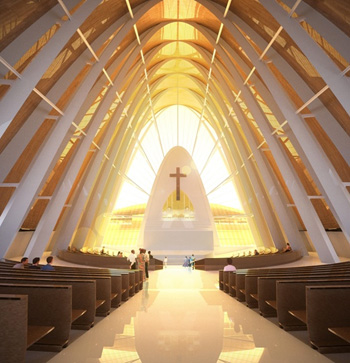 The 1956 reforms paved the way for the church of the future – empty and stripped of sacrality