

Of Claudio Risé
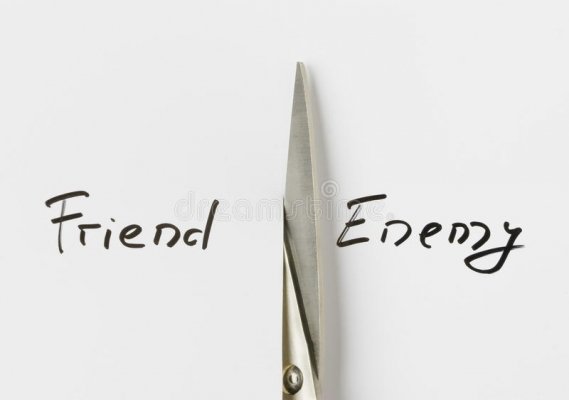
Source: Claudio Risé
Breathe fresh air. The words prove it: those repeated to the point of exhaustion decay and to the general amazement old ones return. Drier, irritating, but perhaps even truer. For example, the word enemy is back in vogue, said so, without much fuss. As Donald Trump did from Helsinki, before the meeting with Vladimir Putin, when in an interview with American television CBS he said: “I think the European Union is an enemy. You wouldn't believe it, but Europeans are enemies”. The statement is not presented as a personal matter, even if the large inflated puppet with a Trump-infant with diaper and cell phone in hand, hoisted into the sky for 16 thousand pounds in front of the Parliament in London with the blessing of the mayor Sadiq Khan will certainly have had his part in the matter, as well as the anti-Donald marches in the streets of Helsinki from where the President gave the interview. But Trump reassures: enemies exist, it's not a scandal, nor anything new. On the contrary: “It doesn't mean they're bad.", continued the US president. “It means they are competing with us”. Here again is the child with his scandalous cry that is changing the world: the King is naked.
We are not all friends. But let's not make it a tragedy. It was the story they told us before that was a farce. The displeased European establishment then immediately intervenes with heartfelt denials and firm condemnations, as per the script: the President of the EU Council, Donald Tusk assures us that no! “The US and the EU are excellent friends! Anyone who says they are enemies spreads fake news”, brandishing the most used and worn cliché of the moment to try to fix everything. In reality the fake news, lasted far too long, it's the one that: “we are all friends”. The absolute novelty is the great return of the linguistic category, affective and cognitive of the friend-enemy, which has always presided over human life, to relationships between people, and of course also between states. Well yes: It's true that we don't always love each other; but there's nothing wrong with that and there's no need to make a big deal out of it. Generally, as Puer Robustus says Donald Trump is simply because “we are competing”: better to admit it, rather than cheating the cards.
For example with commercial treaties scam where some are fine with it, to others much less, and producers who have no say in the matter risk heavily, like those of certain pit cheeses, or Colonnata lard, (fraction of Carrara), which however is also well produced 12 Italian regions, but perhaps also in Bulgaria, Romania and Croatia; precisely because we are all friends. The expulsion of the friend-enemy category from public life, from politics and from the thought of the good citizen it is a fairly recent issue, and arises from the twentieth-century attempt to deny that every order arises from a previous conflict, which must be regulated. It's not just about good manners. Say that we all love each other, Indeed, it is not a matter of education but a cultural and anthropological program based on the falsification of reality.
It's the opposite of yes, and, no, unchristian, of Jesus' declaration: “I did not come to bring peace but the sword”, symbol of discrimination between good and evil, as well as a masculine principle. This is a central question: political correctness is not only the “semantics of euphemism” presented (much better) in the book by Nora Galli de Paratesi, but the new linguistic and human relationship code on which to base new laws and regulations of coexistence, far from human nature which is now even in bad taste to talk about. It is the indispensable tool for that weakening of the human subject and his personality produced by the late modern transition from decision to discussion, from action to “speech”, from love for the friend and hostility for the enemy all’ indifference for both and withdrawal into oneself and one's own exclusive interests. It is the politics and morality of compromise. They are also democratic parliaments as the Frankfurt school philosopher Walter Benjamin described them a century ago, noting that indecision and compromise killed any authentic hope and at the same time fueled an underground and dangerous anger and violence. These reflections were written in the years in which the great totalitarianisms were being prepared which then transformed the permanent indecision of democratic parliaments into the dictatorships of “State of exception”. Using “purities” ideals, generosity, right, solidarity, equality, the political leaders of the latest versions of globalism and globalization, as Carl Schmitt already showed, they have emptied the categories of friend and enemy to harness citizens with good feelings and thus neutralize them, taking away their ability to decide. The results obtained do not encourage us to continue. In fact, totalitarianism emerged from all this kindness and friendship, two world wars, widespread disorder and loss, and a general weakening of the Western world.
How to avoid history repeating itself? Exit from the falsification of “we are very good friends”, declaring diversity and even conflicts and restoring the eternal category of friend-enemy perhaps will not be enough, but it is a necessary step to put natural man back in contact with authentically social man. Who is not the obedient and politically correct subject but the one who believes in what he does, he gets passionate, it comes into play in reality, even getting angry. And afterwards he is happy or maybe furious, however not hidden behind ambiguity, which makes him lose strength, to each other and to society as a whole. A more frank position in relationships with others does not only have effects on politics, but on every aspect of the experience, starting with emotional life and sexuality. It's the mystery, the charm and also the restlessness of the difference that arouses the passion for the other and therefore the generation of the new (the children), which otherwise terrifies. The energy of discovery and conquest that moves man towards woman is closely related to the friend-enemy dialectic.
The drive that pushes us towards the other is in fact the same in love and in war (as it says – among others a French saying: ” in love and in war”). In both cases the protagonist force is Eros, a god armed with a bow and arrow, as Franco Fornari also recalled in his studies on the war, often conducted with international pacifists. If you forget it you fall into that “petty romance” (as Pierre Drieu de La Rochelle called him) which inspires not only bad literature but also the bad politics of modernity, who tries to hide their conflicts of interest behind good feelings. A counterfeit that pays off “weak” the man and woman of today (satisfying the “weak thinking” theorized by Gianni Vattimo ), and ends up extinguishing the Eros aimed at generating children and new worlds, to fall back on technicalized sexuality, selfish and afraid of any change, renewal and self-giving, like that of couples “free child”, “free from children”, masterfully told by Borgonovo a few days ago on “La Verità”.
The impetuous Trump, which in the morning restores the categories friend and enemy, placing the hypocritical and polite Europe among the enemies, and in the afternoon a cold war ends (in place for years 50 of the 900), which not even the end of the Soviet Union had managed to put an end to, irritates and scandalises the power elites. Ma (as both the profound and delicate Walter Benjamin and the tough Carl Schmitt noted), you can die of frivolous superficiality and heavy and well-hidden interests.
Similar Posts
