

Of Fulvio Scaglione
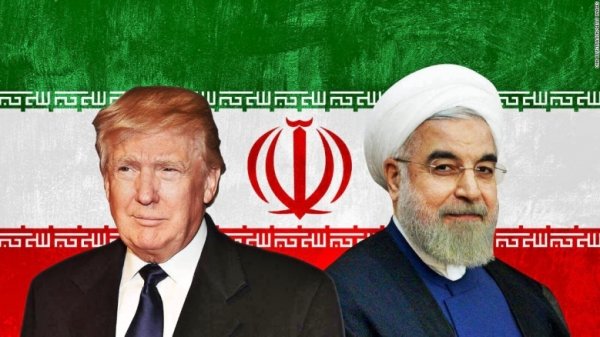
Source: Fulvio Scaglione
The Iranian crisis, much announced and finally exploded, will test the European Union. It is not the first time that the EU has had to demonstrate its virtues, and the results were not brilliant. This, but, it could be the last because the cancellation of the Treaty signed in 2015 with the government of Hassan Rouhani it could decree the end of any attempt to give Europe a political physiognomy.
The question is very simple. According to the European Union (and also the UN and Russia, moreover), the agreement of 2015, built to block Iran's path to military nuclear power, works, Iran respects the pacts and there is no reason to cancel it after such a short time. According to the USA (and also Israel and Saudi Arabia), on the contrary, the agreement is full of holes, it offers no security guarantees and Iran lies, because he continues to try to prepare the atomic bomb.
It would be difficult to imagine a sharper difference of opinion than this. Which is furthermore broadened by questions of economic interest. The USA wants to favor traditional partners in the Persian Gulf, who are, among other things, much richer than the Iranians. Europe has a long and cordial commercial tradition with Iran, enjoyed above all by Italy and Germany. Our country is now the second largest exporter to Iran (especially mechanical and chemical industries) and the second importer (especially oil) after Germany, first in both sectors. In the 2011 commercial relationships between Italy and Iran they reached their peak, with a value of 11 billions of euros. In the 2012 sanctions, also imposed by the EU, they caused the value of a to collapse 1,3 billion, but the projections for the 2018 they talk about 3 billion, therefore we are rapidly regaining our former positions.
So, now what is Europe doing? Trump said he was ready to "punish" non-American companies too, but somehow present in the USA, who will have business relations with Iran. To say: they could strike, his measures, also Eni, who works a lot with Iran. But not only that. Between the USA and Iran, through Israel, a low intensity war has been taking place for some time, mainly in the skies and on the territory of Syria. If this conflict became an open war, following the crisis opened by the cancellation of the agreement?
Which side would we Italians be on?, after having said and repeated that Iran respected the Treaty? We would grant men and means for yet another failed undertaking, as we have already done in Afghanistan (2001), Iraq (2003) and Libya (2011) and as we responded with the recent bombings on Syria after Assad's alleged chemical bombings? Or we would agree to come into conflict with our more traditional allies?
It's a real and risky dilemma, that of Europe. In turn, it is the result of too many internal divisions and too many concessions to an American policy that seems to have truly lost its bearings.
