

Of Sergio Romano
Source: Corriere della Sera, 8/04/2018
After the collapse of the USSR and the end of Soviet hegemony in Central-Eastern Europe, the United States believed it had won the Cold War. It seemed to me that they made a mistake and that the causes of the collapse were different; but the world, since then, he had to note that there was no important event in which America did not feel called to make suggestions, impose solutions or make judgments. The style could change from one president to another (Barack Obama's style was very different from that of George W. Bush) but America had become, as defined by Madeleine Albright, the "indispensable nation". His wishes were not always granted and his orders followed, but there was no table in international diplomacy without a seat reserved for the United States.
It seems that the picture is changing and that there are now events in which the great North American state is more a spectator than an actor. A few days ago we saw images of three leaders (the presidents of Iran, Türkiye and Russia) who had won the Syrian war and had gathered to divide the spoils. A few months earlier we had learned that the main Chinese political leader had implicitly challenged American power with a constitutional amendment that guaranteed him a sort of imperial annuity. The reasons for the change are numerous.
The wars fought by the United States in recent decades have not helped its military credibility. The crisis of 2008 it demonstrated that alongside the power of Washington there existed on Wall Street another power that the president and Congress were unable to control. It had already happened in 1929, but in times when America did not have the global responsibilities that it had after the end of the Second World War. Since then, globalization has favored the birth of new powers. The more the United States reveals its shortcomings to the world, the more the number of those ready to defy its will grows.
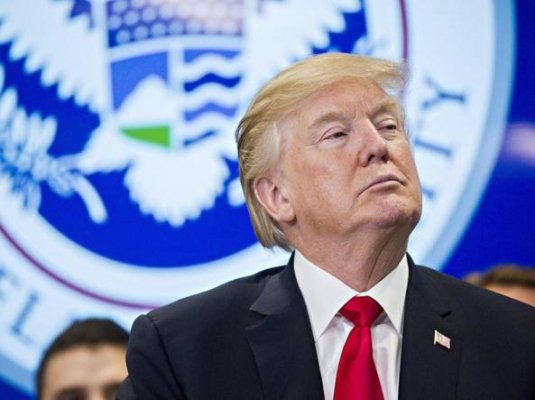
In this framework the president elected at the end of 2016 it is simultaneously a symptom and a cause. A country cannot have a global role if its leader has a unilateral vision, narrow-minded and short-sighted of international politics. A country loses authority (an indispensable virtue for all states that have imperial ambitions) if its president makes promises and threats every day that will be systematically denied by the next day's decisions. In the past few days, Donald Trump declared that the time had come to withdraw American troops from Syria. It's possible, as Franco Venturini recalled in yesterday's Corriere, that he only wanted to please the voters to whom he had made this promise during the election campaign. These are the traits of a man who considers himself the leader of the world's greatest power?
We know that the modern state is a large administrative machine, capable of guaranteeing its main functions even in moments when politics has temporarily stalled. We also know that officials and advisors very often manage to exert a positive influence on the head of government when he runs the risk of making a misstep or making a wrong decision. In some cases Trump listened to his advisors and corrected his line. But in his fifteen months in the White House, not a single one went by without him firing an employee, should appoint another or should deprive himself of a person who had decided to abandon him. They were not modest travets. Among those who have left the White House or state service, for one reason or another, there is a head of cabinet in this interminable carousel, a chief of staff, a national security advisor, a director of the Federal Bureau of Investigation, a strategic advisor, only one secretary of state and one communications director remained in office 10 days. Someone observed that what happened on a television program is happening today in the White House (The Apprentice, a cruel parody of the business world) of which Trump was the producer and protagonist. It seems that the moment of greatest satisfaction for the all-powerful Trump was when he could fire an inexperienced or unlucky player. If this is the political philosophy of the American president, it is not surprising that many protagonists of international life (including the European Union) must think about the best way to fill the void left by American power.
Similar Posts

that this article comes out of the Courier's filth, It says a lot about how lost these newspapers feel when they base their analyzes on suggestions from the CIA, Mossad and similar !