

The “Our Father” in Bergoglio's sacrilegious version
 of the Prof. Luciano Pranzetti
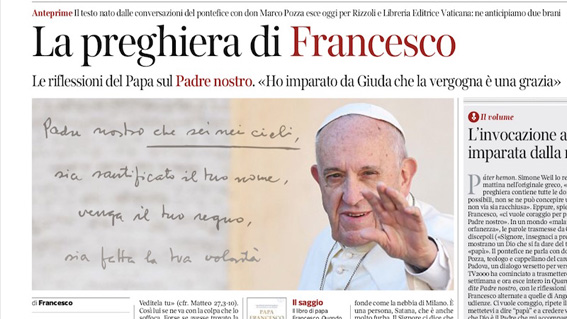
In the interview with Cardinal Giuseppe Betori – Avvenire 10/7/2017 – there is confirmation of a forthcoming correction of the Gospel text, as desired by Pope Francis I, in agreement with the most learned biblical scholars around. “Teamwork”, the Florentine prelate observes pleased, which he determined to be, the passage from Matthew 6, 13 “And do not lead us into temptation” is completely unacceptable because – Pope Francis reasons, Cardinal Betori and the team of biblical scholars – God, which is supreme goodness and infinite mercy, it can never 'lead' into temptation. Therefore, post this 'truth', the offending verb must be replaced with another more corresponding to the aforementioned divine goodness and mercy.
And here it is, At that time, get out of the cylinder of the conciliar vocabulary the magical substitution solution: “Do not abandon us to temptation”, formula that, despite not being – in September 2018 – was sanctioned in AAS, it is recited here and there. A formula, as we said above, which determines a double disastrous drift: theological and semantic and for which we are preparing to give an account and reason.
He N. T., come to, it is written in the Greek language that, although different from the Aramaic spoken by Jesus, it is the canonical text on which the entire Revelation and the 'Depositum fidei' are based. This is to say that, Greek or Aramaic version, nothing changes for the purposes of the inerrancy of the Word of God made man. Read More
 We read the statement from the Society of Saint Pius “canonization” of Montini is valid or not. We have listened to this homily and the invalidity appears obvious in the clear exposition of the Catholic argument. We remain convinced that the solution cannot be the Cassiciacum Thesis, but in this homily we find the immutable Magisterium of the Church.
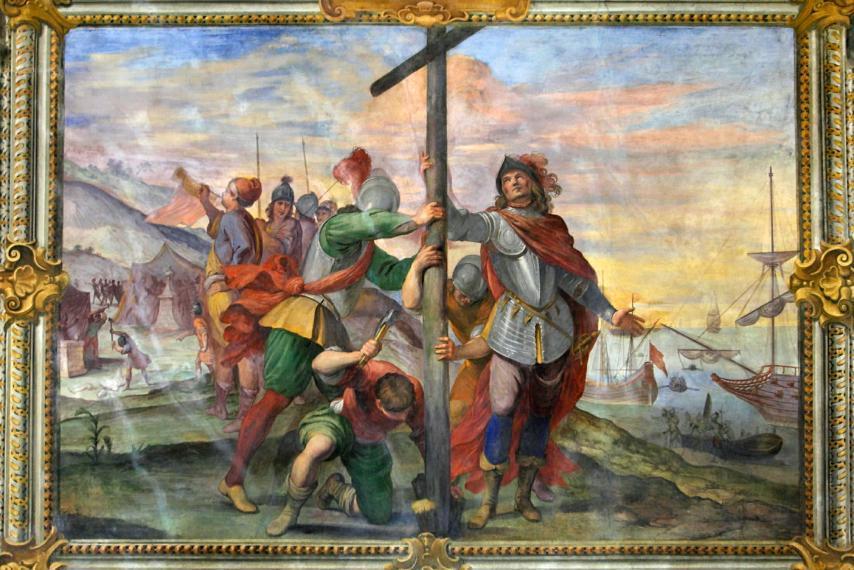 Reporting of Federici Studies Center

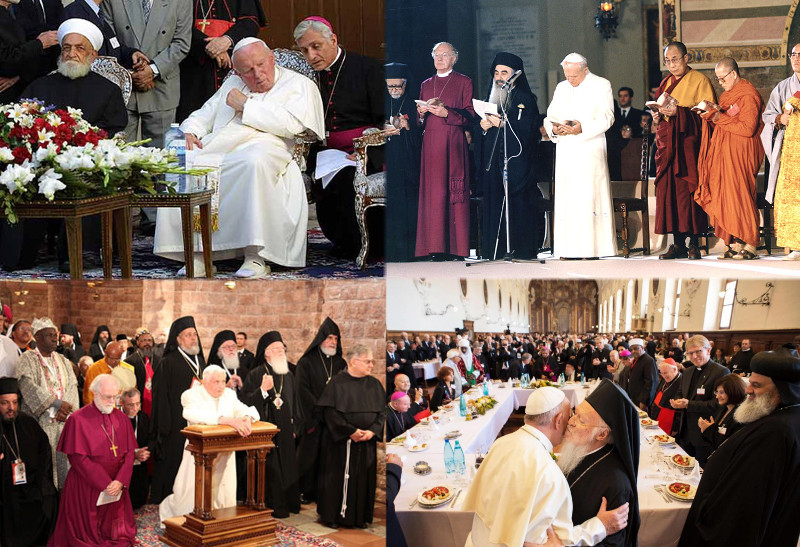
 Intense weekend for some of us at Christus Rex-Traditio.
  The. is available on the site
 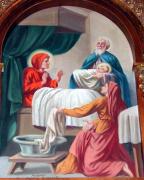 Today the churches of the East and West celebrate the birth of Mary, the mother of the Lord. The first source that recounts the event is the so-called Protoevangelium of James according to which Mary was born in Jerusalem in the house of Joachim and Anna. Here in the 4th century the Basilica of Saint Anna was built and on the day of its dedication the nativity of the Mother of God was celebrated. The festival then spread to Constantinople and was introduced to the West by Sergius I, a pope of Syrian origin. «Those that God has always known, he also predestined them": Dante almost seems to paraphrase Saint Paul's verse when he defines Mary as "fixed term of eternal counsel".