

These are the questions any journalist should ask the Israeli army
Of Tossi Gurvitz
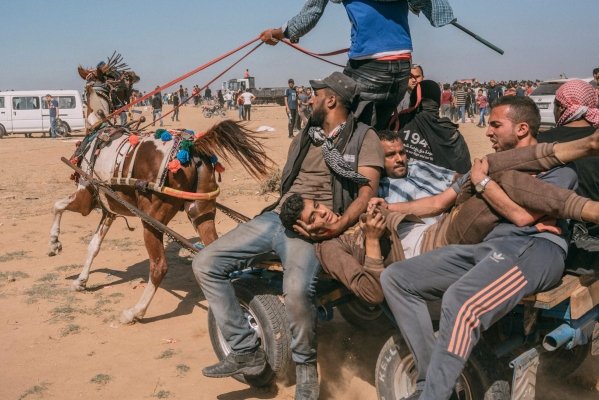
Source: Comedonchisciotte
As these lines are written IDF snipers have killed more than 40 Palestinians near the Gaza barrier and injured others 2,200, a dozen are believed to have been mortally wounded. At the same time you read these words, the numbers have probably already gone up. IDF spokesman used to claim his snipers were 'in danger'. When you hear these words, think aboutoperazione Speedy Express.
Speedy Express was flown by the US Army's 9th Infantry Division in the Mekong Delta in 1969. The US military claimed to have killed 10,899 opposing fighters. He just suffered 244 losses. Being in Saigon, a young genius called Alexander Demitri Shimkin, a veteran of civil rights marches, he perplexed his fellow journalists with a strange pastime: he took the trouble to actually read the official press releases and tabulated what was written.
After a few months, Shimkin put together a strange statistic: the 9th Division claimed to have killed 10,899 fighters but had only captured 748 weapons. Shimkin's conclusion was simple: the disparity between deaths and captured weapons means that the majority of those killed in Speedy Express were not combatants but civilians. It was problematic for Shimkin to find a publisher willing to publish this first example of data journalism and Newsweek published it only in 1972. Nonetheless, the publication caused a political firestorm, with the US military forced to take refuge in the desperate claim that “many guerrilla units were not armed with weapons”. Read More