Il Vicepremier Salvini consacra l'Italia al Sacro Cuore di Maria

Our Matteo Castagna had asked for the gesture in the next section of his book “Catholics between Europeanism and populism”
by Lucia Rezzonico
Yesterday 18 maggio 2019, at the end of an electoral rally for the European elections in Milan, in Piazza Duomo, League leader Matteo Salvini has often cited Catholicism.
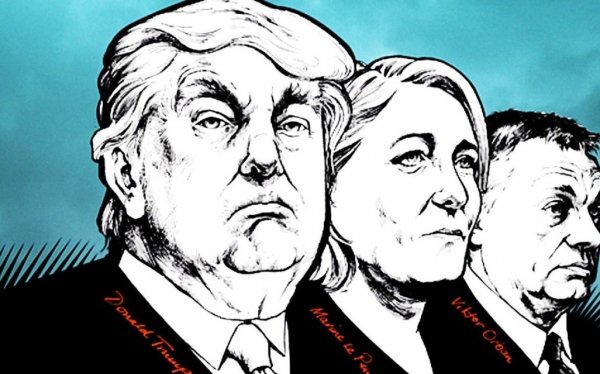
Next to him, 12 leader of European Sovereignty. In front of him, despite the rain, a square overflowing with people.
And he entrusted Europe to his people 6 great patron saints and placed Italy under the protection of the Sacred Immaculate Heart of Mary. After a speech focused on “Dio, Homeland and Family”. A historical speech, of such a Catholic nature, which have no equal in republican history.
A speech, whose doctrinally or historically imperfect points or references pass, in the background with the grand finale. Which corresponds to what our Matteo Castagna asks the Government in his book “Catholics between Europeanism and populism” on the last page of the essay presented on 14 January 2019 in the Chamber of Deputies, thanks to Salvini.
Read More

Share

Catholics: Globalism or Tradition?

By Lucia Rezzonico

The League invited our National Manager Matteo Castagna to present his book, which continues to be successful (so much so that the first reprint has already almost sold out) and to cause discussion in a religious context, political and media.
This time, he is a municipal councilor of San Zeno di Montagna (VR) to organize with guests, as well as Castagna, l’On. Vito Comencini and the Verona city councilor Anna Grassi, as per the poster.
MONDAY 25 FEBRUARY HOURS 20.30 everyone in the mountains for an evening dedicated to traditionalist culture.
Share

The Spiritual Primacy of Rome Capital in an essay by Matteo Castagna, presented at Palazzo Montecitorio

THE REVIEW
Written by Massimo Fulvio Finucci and Clarissa Emilia Bafaro il . Published in Actuality, Media and Publishing.

The Italian challenge to European Nihilism

It happened, at the Press Room of Chamber of Deputies, a Palazzo Montecitorio, an interesting presentation of the book by Matthew Castagna entitled "Catholics between Europeanism and Populism”, published by Solfanelli. Introduce the author, the editor and three competent speakers Vito Comencini, Giacomo Bergamaschi e Andrea Bacciga.
From the choice of the title, the book is already part of a very current dialogue, in view of the next European elections. As the author himself points out: “Reading the book will help to understand which side to take in politics: Sovereignty and Identity (or “Populism”) o Cosmopolitanism and Europeanism (ovtrue conciliatory progressivism?)”. Read More

Share

What is Fascism (Z. Sternhell) and the 21st Century

Of Giacomo Bergamaschi

We talk about Fascism every day, not only in the West but also from Brazil to Argentina, from the Philippines to China. Almost always inappropriately, skillfully decontextualizing and confusing. As if inappropriately, there was talk of Napoleon and the Bonapartist "Old Guard" after the Congress of Vienna, the Yalta Pact of the 19th century, wanting to venture a strong and deliberately provocative comparison.
Zeev Sternhell's essay "Birth of Fascist Ideology" certainly remains the most profound and objective one for understanding the fascist phenomenon, with some clarifications, which we will attempt to advance below. Zeev Sternhell, far-left Israeli, anti-fascist and historical materialist, in addition to the one mentioned, he dedicated many essays to the issue: Neither right nor left, The revolutionary right, Against the Enlightenment: the history of ideas, Birth of Israel and many other articles and writings ranging from the American to the French Revolution.
The Israeli author is more of a political philosopher like Del Noce than a pure historian like De Felice, for this reason some of his intuitions are in my opinion brilliant and not outdated on the question of Fascism. We cannot even consider Guido Melis as the first authors of Fascism, nor an Emilio Gentile, as their empiricist vision, reductionist, phenomenological (especially that of Gentile, which merely transfers to the Italian case the method that Mosse applies to the German case), does not allow us to understand the phenomenon in depth.
Read More
Share

A new crisis: we are at the end of the globalist era?

Of Luigi Tedeschi
A new crisis is coming to Europe, but the crisis of 2008 has not yet been overcome. Recurring crises are the clear symptom of the incipient decadence of the global neoliberal model.
The shadow of recession has returned to the Italian and European economies. The effects of the slowdown in the global economy are clearly being felt. Italian GDP decreased by 0,1% in the third quarter 2018 compared to the previous one. It is expected for 2018 an Italian growth of 0,8%, decreasing compared to previous estimates, which predicted growth of 1.2%. This is the first setback in growth since 2014. Read More

Share

"Cattolici tra europeismo e populismo. La sfida al nichilismo", the book by Matteo Castagna | lafedequotidiana.it

THE REVIEW
Of Michele M. Ippolito, director of “Daily Faith”
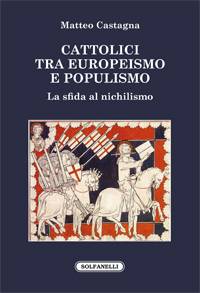
“Catholics between Europeanism and populism. The challenge to nihilism” is the new book by Matteo Castagna (Solfanelli Editions, pages 248, € 17).
Although the author is not a professional historian, Castagna making use of the comparison with the best contemporary theoretical production, try to understand Italian history, Western and Catholic by reducing the unilateral and misleading interpretations of those who tend to smooth over the great conflict between integral Catholicism and modernism, flared up at the end of the nineteenth century, “which then continued in the final conflict between the Pacellian front and Montini's Christian Democratic front, great politician but weak theologian, disciple of Maritain's secularist and globalist ecumenism".
Veronese, married, class 1976, collaborator of Veronanews, Vvox e The Truth, Matthew Castagna, He defines himself as one of the Catholics faithful to Tradition who began to be interested in politics 14 years (until he is elected, In the 1998, as councilor of the third district of Verona, being the youngest in the city).
In this, his first book as a single author, which contains a post by Giacomo Bergamaschi and an array of notable quotations, the final proposal is remembered by Castagna himself: “the models of Italian and Portuguese Fascism intended to oppose a model of modernist and revolutionary civilization through a clear counter-revolution, with the affirmation of a modern counter-reformist political and social culture, not theocratic or merely neo-medieval, aimed at the modern establishment of a Catholic corporatist state".
Castagna defines these two fascisms as neither reactionary nor conservative but traditionalist and counter-revolutionary regimes "that is to say orthodoxly counter-reformist since, although they recognized themselves in the values ​​of tradition, they did not consider it appropriate to restore the old regime sic et simpliciter in the context". Read More

Share

Populism: between rebellion and construction

“We Catholic traditionalists give the metaphysical reason for the existence of populism. Like it or not. In the long term, the right path of sovereignty and identity will converge, even unconsciously, in the restoration of the Papacy, as a transcendent condition for the reordering of society” (Matthew Castagna, Christ the King-Tradition)
Of Roberto Siconolfi
Populism: between rebellion and construction
Source: over the line
Today the entire establishment is moving full steam ahead in opposition to the nascent populist movement. Populism, this derogatory term invoked for every maneuver, political or theoretical, which goes beyond EU directives and single thinking. A gap that opens within an increasingly complete and totalitarian system and which vehemently affirms the renewed needs of the European peoples.
In the preface to the essay “Populism – the end of the right and the left” by Alain de Benoist, Prof Zarelli states that it is also a mentality and a state of mind. And how could he not, from a conscious and rational point of view we can affirm that it is "the voice of the soul of the European peoples". A process that follows the awakening of the sacred feminine of the original metaphysical conceptions. A soul that revolts against the abuses of a society of obtuse bureaucrats, of a system of debtors and creditors (see Eurozone), of technocrats who have debased the best identity and cultural qualities of the peoples of Europe with the force of mass psychology.
But who is afraid of populists and why?? By analyzing the categories we can define a group of restricted oligarchies made up of: financial economics; mainstream (a vast category that includes both the world of media and mass culture); heteronomous centers of power (Bilderberg, Trilateral, Aspen Institute, NATO etc.). It is from here that the threads are woven as well as political domination, also of the attack on the entire populist movement as a whole. Read More

Share

Media versus people

FIFTH COLUMN
Of Marcello Veneziani
Media versus people
Source: Marcello Veneziani
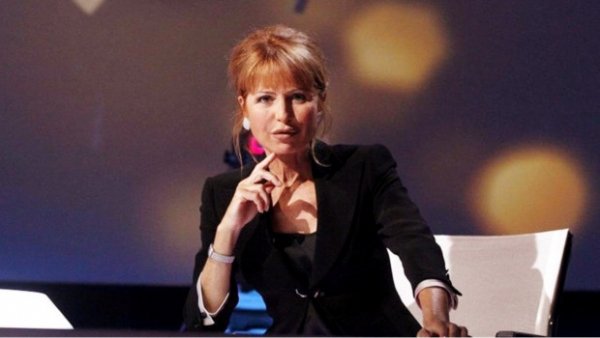
Cara Lilli Gruber, but how can Italians trust you if you write about itSet a comment with a title like that: “All populists lie. They are dangerous and opportunistic"? And the title faithfully responds to the development. He knows he's offending three-quarters of his viewers?
Like the 60% I feel like one of the Italians right now, with all the critical reservations that I do not hide, more on the side of the populists than their enemies. And I'm not just offended by his definition, how hurt by Italian, as a journalist and free thinker. I would never use a statement like that even for the worst enemies; I would distinguish, I wouldn't feel in possession of the truth. I don't bet on the success of this government, I say it every day. And it surprises me that the one attacking in that way is the one who was generous with the Grillini and their sponsors, to the point that often – even the other day with the embarrassing, rambling, Dibba's rant – gave the impression of being Grilli Uber. I don't hold the inconsistency against you, they are his business, I know that grillini are fine for her if they hang to the left, if instead they ally themselves with Salvini they become bad. There are people who still divide humanity into fascists and anti-fascists, and reality is lost, the present, the world, 70 years of history, communism even.
Through her, actually, I take it out on the media, the Press and TV which are offering a disgusting and desolating spectacle: the Italians on one side and them united on the side of the establishment. I wouldn't have expected the opposite but at least a variety of positions and the ability to distinguish and analyze; someone equidistant, someone else who understands people's reasons, someone who recognizes pieces of truth in the opponent. No, Nothing, a Chinese army, monolithic, monotonous. Like in war. Read More

Share

Identity exists (but there are those who deny it)

Of Ernesto Galli of the Loggia
Identity exists (but there are those who deny it)
Source: Corriere della Sera
Every time it decides to commit suicide, the Left knows that it can always count on those who are ready to help it get the shot in the barrel.: they are the intellectuals on his side. Who in turn know that whatever they say or do they can always count on the masochistic silence of their victim. This is the first reflection that comes to mind when reading Tomaso Montanari's long article «The invented identity of Italians» (The Fact, 10 September). And immediately afterwards one cannot help but think that on certain subjects in Italy any discussion is impossible since instead of trying to understand the other's reasons everyone repeats their own like a mantra for the public of aficionados. Montanari's thesis is perfectly expressed by the title of the article: the Italian identity does not exist. In his opinion, the term identity itself is a cursed term, serving only to fuel "the poison of identity rhetoric" and therefore to justify the "us" against "them", the doctrines of «rejection», «the concentration camps in Libya», the «foreigner as enemy» as well as obviously «the cultural paradigms (…) connected to the ghosts of Nazi-fascist nationalism", the "Italians first" and so on sermonizing. All infamies attributable precisely to the infamous concept of identity. Read More

Share

European elections, Casini tifa per l'accozzaglia: "Tutti uniti contro i sovranisti"

A historical exponent of what in his book “Catholics between Europeanism and populism” Matteo Castagna calls “white international” (liberal modernism in politics) or Pierferdinando Casini, “democristo doc”, ex forlaniano, he reveals the cards and demonstrates what is one of the theses of Castagna's essay: il “center which inevitably leads to the left” and sides with the worldists/globalists/Europeanists (n.d.r.):
The senator elected with the Democratic Party calls for a single list in view of the May elections
Emma Bonino, Laura Boldrini, Beatrice Lorenzin and Carlo Calenda. Pier Ferdinando Casini he looks at them and asks them, in view of European elections of May 2019, to create a common front against all sovereignists.
The senator, elected at Palazzo Madama with the support of Democratic Party – he won in the single-member constituency of Bologna – makes his appeal from the columns of Republic. Interviewed by the newspaper, l’ex Dc, unveils his anti-populism recipe, so as to better address the Salvini-Di Maio axis. With a jumble of many different souls, very different. Read More

Share
1 2