Italy challenges the EU with Marshall plan from 82 billion

Italy challenges the EU with Marshall plan from 82 billionReport Wall Street Italia
After the collapse of the Morandi Bridge, which resulted in the death of at least 43 people, the Conte government has developed a maxi investment plan from 82 billion to renew Italian infrastructure.
Shortly after the collapse of the A10 viaduct in Genoa, the Minister of the Interior Matteo Salvini, leader of the League, attributed the responsibility for the catastrophe to the austerity policies imposed by the EU.
From there the idea of ​​the yellow-green government was born: invest all the money necessary to ensure the safety of the roads, of the railways, of schools, of hospitals, regardless of the limits of the budget constraints deemed "crazy" by Salvini and other Euro-skeptical representatives of the majority.
At the same time the EU denied any culpability, recalling that the European Commission had actually assigned 2,5 billions of euros in subsidies to Italy between 2014 and the 2020 within the framework of piano Juncker aimed precisely at financing works to improve infrastructure or create new structures.
An investment project from 82 billions of euros

After the tragedy of Genoa the Minister of Finance Giovanni Tria, which so far has shown itself to be relatively accommodating towards Europe, he mentioned the so-called “golden rule” dear to former Prime Minister Gordon Brown and urged the national authorities and his colleagues to put in place an ambitious plan to renew the country's transport system and infrastructure, without dealing with the Italian budget deficit.
By resorting to the golden rule, the government temporarily authorizes itself to exceed budget constraints, but limited to investment expenses. The Italian coalition wants to take back the project of the previous government led by Prime Minister Gentiloni, which he predicted 82 billions of euros of long-term investments.
But the government's strategy for dealing with these huge expenses is not yet known.
Source: http://www.wallstreetitalia.com/italia-sfida-ue-con-piano-marshall-da-82-miliardi/?utm_source=newsletter&utm_medium=email&utm_campaign=Newsletter:+WallStreetItalia&utm_content=23-08-2018+italia-sfida-la-ue-con-piano-marshall-da-82-miliardi+primo-piano
Read More

Share

Becchi: «E invece io dico attenti a quei due che resteranno alleati a lungo»

THE OPINION
Luciano Tirinnanzi intervista Paolo Becchi su Panorama N. 34, 09/08/2018
«According to the authors, è in atto un passaggio dalla Seconda alla Terza Repubblica basato su un dato che – credo anch’io – non può essere contestato. The inability of the so-called "progressive" forces to serve the interests of workers and small and medium-sized businesses, in short, of the majority of Italians. […] I believe Becchi is right when in one of his articles on the "sovereignist revolution", collected now in this book, maintains that the opposition between "right" and "left" has now been overcome by that which in my opinion sees people and elites opposed. […] I want to give new impetus to popular sovereignty. “Italians first” means nothing more than this. They left us a country with little hope for the future and with few smiles. Rebuilding it won't be easy. But I promise you that I will give it my all".
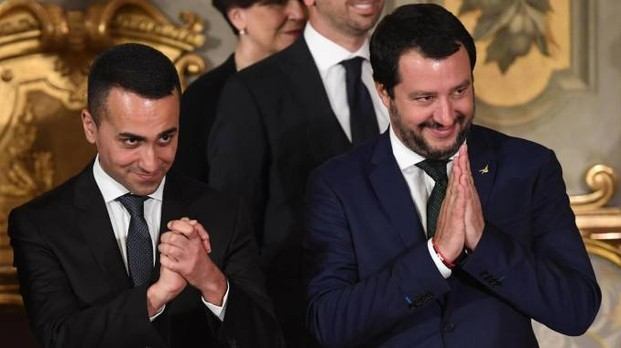
It is an extract from the preface signed by the Minister of the Interior and Deputy Prime Minister Matteo Salvini, which baptizes the political essay by Paolo Becchi and Giuseppe Palma, From the Second to the Third Republic, appena uscito per Paesi edizioni (304 pp., 12 euro). A book that, first, recounts the birth of the Lega-M5s government and frames it as a definitive overcoming of the political past. Ma è davvero così? We asked Professor Becchi, first ideologist of the Cinquestelle and now closer to the positions of the League.
«Il passaggio dalla Seconda alla Terza Repubblica è avvenuto senza coinvolgere la Costituzione, therefore it is partly an improper definition, but which nevertheless tells of the exhaustion of a political process that began in the 1990s. As I write in the book, il suo aspetto innovatore è nella sintesi tra sovranismo identitario, that of Salvini's League, and social sovereignty, proposed instead by Di Maio and the Cinquestelle. Non a caso l’uno si è preso il dicastero dell’Interno e l’altro quello del Lavoro. Terza Repubblica significa avere un governo che sta facendo nascere qualcosa di nuovo, without throwing the constitutional rules to the wind". Read More

Share