The powder keg Libya: we risk losing Tripoli too. And migrant trafficking has become an industry

Of Alberto Negri
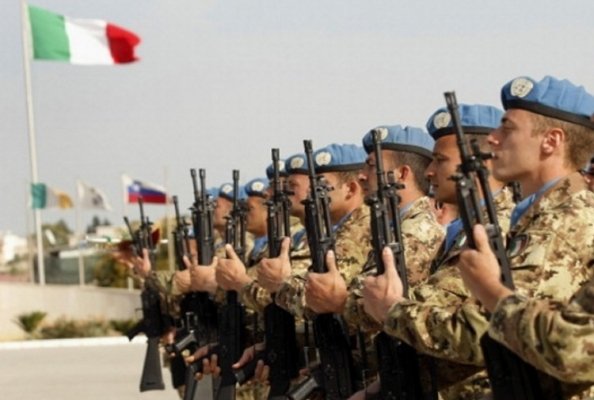
The powder keg Libya: we risk losing Tripoli too. And migrant trafficking has become an industry
Source: Alberto Negri
Italy also risks losing Tripoli? Fayez Sarraj's government, supported by the Islamist brigades but under constant attack from the other militias _ despite yet another fragile truce _ appears increasingly weak, General Khalifa Haftar in Cyrenaica is increasingly threatening towards Italy, Macron's France increasingly determined to pursue its agenda to call elections by the end of the year.
But what is Italian policy in Libya? No one is really able to answer despite Salvini and Moavero's visits to Tripoli. Indeed, Italy seems almost isolated, despite the Tripoli government being the one recognized by the international community as opposed to Haftar's power, backed by France, Egypt, Russia and the United Arab Emirates. In reality, American support for the Italian positions also appears very evanescent: the impression is that Trump told Prime Minister Conte the same nonsense about Libya that Obama told Renzi, that of our pre-eminent role in Libyan affairs which in practice the other powers do not recognize in us except in words. Even the publicized conference on Libya in Rome, to be held in October, it appears incongruent if the French and Haftar position prevailed in order to hold new elections, even just presidential ones (without legislative and constitutional reform). Read More
Share

Come funziona l'industria delle fake news

Of Alberto Cossu
How the fake news industry works
Source: Vita
False polarizations
Prestigious national and international newspapers present themselves to the public as the guardians of democracy and freedom of the press. They attack the producers of fake news in both print and digital media and assert that their behavior is execrable because it destroys the essence of democracy. They represent the reality of the mass media as divided between those who are intent on fabricating false stories, and those who, Instead, they are moved only by strong moral principles and immune from this vice. Their editorialists and journalists report political facts with extraordinary objectivity and woe to anyone who tries to question this fact. The media lynching follows, which ranges from the accusation of attacking the freedom of the press to the classic one of being a fascist and if the unfortunate person does not resign himself and insists he is addressed as a neo-Nazi. The media tribunal works and is very efficient and does not spare anyone who has the courage to raise their voice above the chorus. But things are not as the masters of communication want us to believe.
The Juncker case
A striking case was offered at the NATO summit in Brussels. In the aftermath of the meeting, various traditional and digital media spread images of President Juncker who, pretty beat up, appears staggering at the closing ceremony of the Summit. He has difficulty climbing the two steps of the main box, when he manages to do so he kisses, staggering, everyone who is within earshot of him and exchanges slightly excessive affectionateness which is certainly not foreseen in the official protocols. Read More

Share