

"Cattolici tra europeismo e populismo. La sfida al nichilismo", the book by Matteo Castagna | lafedequotidiana.it
 THE REVIEW
Of Michele M. Ippolito, director of “Daily Faith”
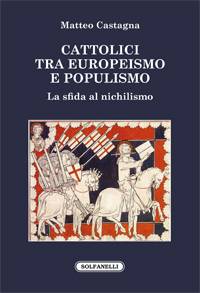
“Catholics between Europeanism and populism. The challenge to nihilism” is the new book by Matteo Castagna (Solfanelli Editions, pages 248, € 17).
Although the author is not a professional historian, Castagna making use of the comparison with the best contemporary theoretical production, try to understand Italian history, Western and Catholic by reducing the unilateral and misleading interpretations of those who tend to smooth over the great conflict between integral Catholicism and modernism, flared up at the end of the nineteenth century, “which then continued in the final conflict between the Pacellian front and Montini's Christian Democratic front, great politician but weak theologian, disciple of Maritain's secularist and globalist ecumenism".
Veronese, married, class 1976, collaborator of Veronanews, Vvox e The Truth, Matthew Castagna, He defines himself as one of the Catholics faithful to Tradition who began to be interested in politics 14 years (until he is elected, In the 1998, as councilor of the third district of Verona, being the youngest in the city).
In this, his first book as a single author, which contains a post by Giacomo Bergamaschi and an array of notable quotations, the final proposal is remembered by Castagna himself: “the models of Italian and Portuguese Fascism intended to oppose a model of modernist and revolutionary civilization through a clear counter-revolution, with the affirmation of a modern counter-reformist political and social culture, not theocratic or merely neo-medieval, aimed at the modern establishment of a Catholic corporatist state".
Castagna defines these two fascisms as neither reactionary nor conservative but traditionalist and counter-revolutionary regimes "that is to say orthodoxly counter-reformist since, although they recognized themselves in the values of tradition, they did not consider it appropriate to restore the old regime sic et simpliciter in the context". Read More
