They were a disaster for 40 years… and now they are in a hurry. (That is to say, every time the media loves someone, this someone does damage...)

Of Marco Giannini
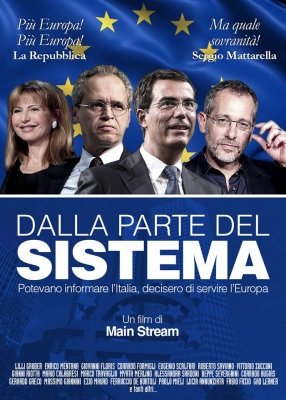
They were a disaster for 40 years… and now they are in a hurry. (That is to say, every time the media loves someone, this someone does damage...)
Source: Comedonchisciotte

Italy is a strange country, we see "unified networks" broadsides raining down on the Government in the process of being formed and this happens precisely from people like Monti, Berlusconi, Bossi, Renzi, Study Program, Veltroni, Padoan and Cottarelli (FMI…), who since the time of the Moro murder have contributed to devastating the country, in ideology and practice, polluting its culture and exporting its well-being.
To name a few, the “Riforma Treu” of work which has brought precariousness to monstrous levels, compressing the economy and causing insecurity, the rules of entry of foreigners functional to the downward competition between Italians and foreigners regarding wages and social rights, the knowledge reforms which have weakened the role and figure of the teacher (inwards and outwards) and destroyed the civic sense of the country as well as the quality and meritocracy of the school, the contemporary and dramatic comparative flattening of the level of competitiveness of our universities implemented at the beginning of the millennium which made, moreover, i university baronies even more "expensive" and politicized, the “Divide et Impera” implemented by 1994 (acting on obsolete grudges and ideologies) which polarized Italians into "right" and "left" (theoretically appropriate dynamics) but transversally (!) given that the main division should have been between city instances (contemptuously defined as “populist”) real economic and those of speculative income, primarily those of the large financial corporations (rooted abroad) with their very powerful political-institutional-lobbying apparatus (…), the Bank of Italy/Treasury divorce, the privatization of banks and shares of Bankitalia (…), the next one theft of our gold reserve, the wild liberalizations of capital and supplies which have increased the cost of living, the emptying of the CGIL now reduced to a moribund business committee, the Franco-German financial technicalities passed off as “Europe” which have uprooted and are uprooting huge slices of well-being (tens of billions a year) with pro-bank and pro-multinational rules that have high unemployment and high taxation as their "net profit"., the ideological exaltation of globalization.

Read More

Share

The how and why of Populism

Of Umberto Bianchi
The how and why of Populism
Source: Heretically
At the end of a decidedly close electoral contest, the verdict that came out of the polls has, indiscutibilmente, rewarded all those formations that, somehow, they imitate or are themselves considered “populist”. The reference applies to both the League and the Movement 5 position, US President Trump, the transalpina Lady Marine Le Pen, That, in the most recent past for the Forza Italia of the golden times and, really, in very recent times, as if by someone risky, also for Renzi of the original "scrap" version. A term whose meaning has included a bit of everything and its opposite.
But what exactly do we mean by “populism”?? What is the exact political meaning in which this term should be placed, very fashionable nowadays? If we want to refer to the letter of the history of political movements, by “populism” we mean a series of movements that, at the end of the nineteenth century they developed in disparate contexts. In Russia, Populism was represented by the “narodnjki”, whose most authoritative exponents were the colonel and mathematics professor of the Military Academy Pyotr Lavrovič Lavrov, supporter of populism in a socialist key, together with its popularizer and idelogue, the sociologist and literary critic Nikolai Konstantinovič Mikhailovsky, having as its object the emancipation of the peasant masses, starting from the rural/"obscina" community. France instead, began with Paul Deroulede's League of Patriots, che unitasi ad un altro movimento populista di massa, Boulangism (named after Georges Boulanger, charismatic general of the French army) he became an advocate of a radical and revanchist nationalism, always connected to the increasingly widespread discontent of the masses, towards the young French parliamentary republic, much to achieve in 1888-89, after obtaining the support of the monarchists, of significant electoral victories. In the United States it was the People's Party (People’s Party), also known as Populist Party (Populist Party), summarily called "Populists”, which party was established in 1891 in the United States of America which, during the “populist” period, took hold towards the end of the 19th century. Supported by the lower classes, especially by cultivators hostile towards elites in general, had its peak between 1892 and the 1896. Read More

Share

Pensions, alert Ue: Fornero reform should not be touched

Pensions, alert Ue: Fornero reform should not be touchedReporting of Wall Street Italia
Of Alessandra Caparello
ROMA (WSI) – The European Union launches a new warning on the Italian social security system. In the report adopted on our country as part of the winter package of the European semester, the European Commission is betting the fates on Italy and the Fornero reform in particular indicated as untouchable.
The albeit partial changes made by Renzi governments and Gentiloni on the social security reform adopted by Italy in 2011, under the technical government led by Mario Monti, they would have in fact partially canceled the pension reforms that were made in the past with the consequence of increasing spending for the average period.

“The long-term sustainability of public debt Italian, ensured by pension reforms done in the past, It is slowly deteriorating, so much so that the European Commission's risk indicator went from low to medium (S2). Spending on pensions in relation to GDP increased by around two percentage points, as a result of the crisis and the consequent fall in nominal GDP. Italian pension spending is now the second highest in the EU and in theOECD, after the Greek one (…) The increase in implicit liabilities resulting from the aging of the population had been limited by past reforms of the pension and healthcare systems, which had improved Italy's long-term sustainability.

Read More

Share

Renzi is finished? Ok, but spare us Prodi, Veltroni e tutto quello che c'era prima

Image results for Renzi is finished
Report Linkiesta
You may like it and you may (very legitimately) don't like Renzi's style. But if the alternative is a return to the old guard of the left, then it means that the Democratic Party deserves grillism and anti-politics
Of Francesco Cancellato

That Renzi is in bad shape, politically, it is a fairly incontrovertible fact. That the Democratic Party around the 22/23% in pre-bloc polls is objectively a party in a devastating identity crisis, pure. That the future of the main Italian center-left party – assuming that it will have a unitary future – must be something different from Leopolda, it is self-evident. Let no one think of it, but, to go back, to the pre-scrappage ruling class.
We say it, reading about noble fathers like Prodi who position themselves, of hypotheses of Veltroni secretariats, or Franceschini. Of returns to the fold, as protagonists, by D'Alema and Bersani. No, Thank you. If there is something that could be even more harmful than Renzi bolting to the Nazarene, it is the return of the Second Republic-model Democratic Party.
We say it by remembering – to them, above all – That the Renzi phenomenon was born precisely from a crisis of rejection of a large part of the democratic electorate towards them, of that immobile power block, self-referential, exhausted, incapable of building a political vision that was such, let alone make it attractive in the eyes of voters.
Even the Five Star Movement, in conclusion, it began to germinate precisely on the radical criticism of the centre-left ruling class of the second republic, unable, according to Beppe Grillo, to constitute a real alternative to Berlusconi and centre-right governments. The Monti government, the first great coalition, it was an all too welcome gift that produced the exploit of 2013.
Agree, Renzi has not reversed course, and the Democratic Party continued, with him too, its unstoppable fall. But if Renzi hadn't been there, probably, we would be talking about even worse numbers. Without Renzi, for example, the Letta and Gentiloni governments would have been perceived for what they really were, two inconclusive and excessively timid executives, without any idea – right or wrong – on the future of Italy. Without Renzi we would be talking about a Christian Democratic and seaside legislature, of pure management of the existing, without any spectacular failure, Perhaps, but without any planning impetus.

Read More

Share
1 2