Here is finance without even financiers anymore
Comment and report by Marco Milioni
It sounds like a science fiction novel set in a dystopian future… or the incarnation of an inhuman entity with diabolical traits? (M.M.)
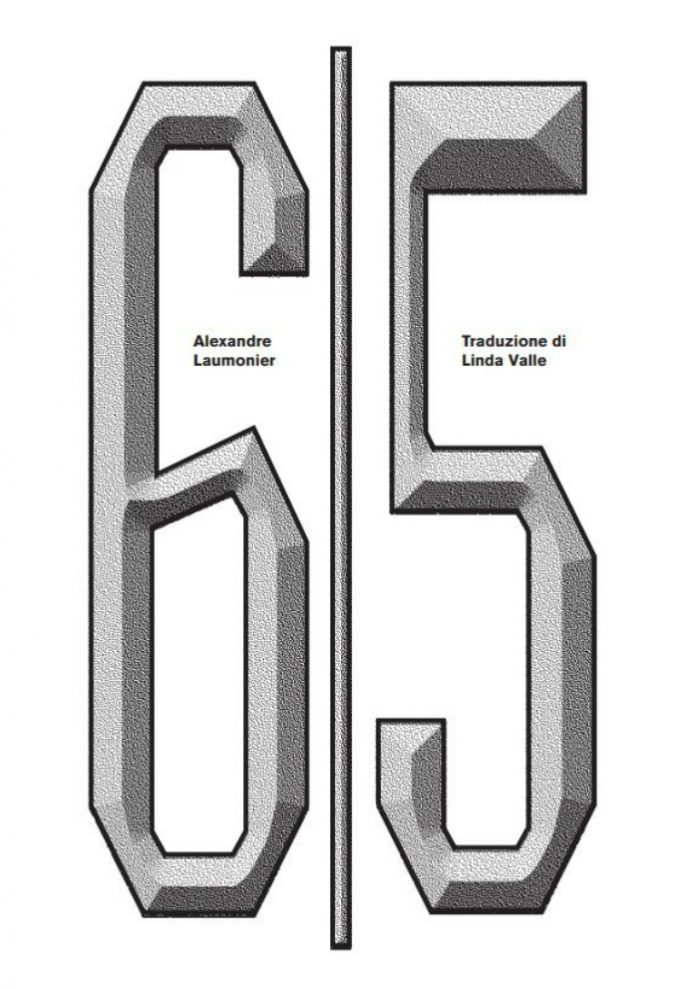
Alexandre Laumonier is an expert in high frequency trading and artificial intelligence. He is the author of 6|5, a book that describes the history and protagonists of a story that seems to be told in a novel by Philip Dick. And which instead is terribly concrete, real, especially given the results of the crisis 2008. And Sniper tells it, a financial algorithm that can determine the successes and failures of entire companies in a few nanoseconds
The financial market crisis told by those who invented it. Who is not a broker and not even an unscrupulous capitalist. In fact, he's not even a man: it's just an algorithm. It's the idea he had Alexandre Laumonier, expert in high frequency trading and artificial intelligence. His blog Sniper in Mahwah it is among the reference sites in studies on current economic flows. It may be for this reason that Leumonier wrote 6|5, the Revolt of the machines, just translated into Italian by Linda Valle for the series Not of the publishing house Nero. Read More

Share

Argentina turns to the IMF and people take to the streets

Argentina turns to the IMF and people take to the streetsReport Wall Street Italia
Of Alessandra Caparello
A financial debacle that reopens old wounds for Argentines in recent days with the national currency, the weight, under the threat of hyperinflation and a president Mauricio Macri which to save the economy and spare its people from a new financial crisis is asking for help from the International Monetary Fund.
Although the central bank of Argentina has decided for a huge increase in the rates three times since 27 April, issandoli al 40%, the peso continued to collapse and the president had to do resort to International Monetary Fund, looking for a standby agreement for a loan of at least 30 billions of dollars (although other sources even talking about 50 billion). Which means on standby? Which wouldn't be cashed in right away, but used if the situation worsens further. Read More

Share

The economic background behind Skripal's poisoning

Of Michael HudsonMichael Palmieri
The economic background behind Skripal's poisoning.
Source: Comedonchisciotte
Left Out, a podcast produced by Paul Sliker, Michael Palmieri and Dante Dallavalle, hosts in-depth conversations with the most interesting political thinkers and heterodox left-wing economists.
The Hudson Report is a new weekly series, with legendary economist Michael Hudson. In each episode we tackle an economic or political issue that has been ignored – or much debated – in the press that week.
In this episode we discuss the economic and political implications of the attempted assassination of former Russian double agent Sergei Skripal. We also mention the long history of collaboration between Russian oligarchs and Western banks, and how this fits into the broader neoliberal project pursued after the collapse of the Soviet Union.
Michael Palmieri: Professor Hudson, Welcome back to the third episode of The Hudson Report. It's a pleasure to have you here.
Michael Hudson: Thanks for the invitation.
Michael Palmieri: At that time, In the last week a lot has been read about the case of Sergei Skripal and his daughter. It is said that Russian intelligence attempted to poison him, he who was a double agent of British intelligence. Although much of the media has already condemned Russia, she has a different perspective. So could you explain to us what is happening? Read More

Share

The political reasons behind Trump's tariffs

Of Alberto Cossu
The political reasons behind Trump's tariffs
Source: Beyond the Border
The decision of the president of the United States Donald Trump to put duties on steel and aluminum imports it generated strong reactions from many countries. In particular the European states, with Germany in the lead, they invoked the exemption in the name of the alliance that binds the USA to Europe. Trump's move, already anticipated by the New York tycoon during the election campaign, comes after a thorough investigation – requested in April of 2017 by the president himself - to ascertain the causes of the American trade imbalance and prepare appropriate measures to reduce it.
We are, Indeed, in front of a act of an exquisitely "political" nature which aims to protect the United States from the significant overproductive imbalance in the steel sector generated mainly by China. Beijing has caused the growth of imports and the subsequent destruction of US companies in the sector. That is, as well as posing a national security problem for the United States, it has compromised the production capacity aimed at serving the country's strategic industries, also generating negative repercussions on employment levels.
According to the neo-liberal approach, a country specializes in productions in which it has a comparative advantage over others e, if it fails, productions decline and disappear. This rule should, so, also apply to the US steel sector. But the economy is not just about efficiency and productivity, political reasons also have an impact on it. Read More

Share

Trump trade war: the bitter lessons of protectionism

Protectionism: Paolo Raimondi talks about it, former undersecretary of the Economy
Report Wall Street Italia
The care of Mario Lettieri* e Paolo Raimondi**
If the United States, the world's leading economic and military power, they launch one protectionist policy imposing high tariffs on imports, they evidently intend to start a real trade war. Trump's recent statements towards China and the European Union are proof of this.
Yet Washington knows that, when similar policies have been introduced in the past, they have only exacerbated the ongoing crises by making them worse international political tensions.
This happened after Wall Street crash of the 1929 resulting in the Great Depression. In the 1930 President Herbert Hoover and, even more, the American Congress, then dominated by the Republican Party, they passed the Smoot-Hawley Tarif Act (from the names of the two parliamentarians who presented it) which imposed heavy duties on over 20.000 imported products.
It was a kind of "America First” which was supposed to relaunch productions, consumption and employment, sbarrando la strada ai prodotti provenienti da altri paesi. It was the negative response to the general appeal made previously, In the 1927, by the League of Nations, precursor of the UN, That, on the contrary, asked to “put an end to the tariff policy and to go in the opposite direction".
Until then the USA had had a positive trade balance, with an export surplus. Duties imposed on goods included in the list, which on average were of 40,1% In the 1929, they reached the level of 59,1% In the 1932, with an increase of 19%. Obviously many studies have been done on these restrictive policies. But no one questions it the recessive and depressive effect caused by duties. Read More

Share

The Vatican has the largest gold reserve in the world

The largest and single holder of bullion (ingot/bullion) than any other organization in the past 1.000 years is, and always has been, the Roman Cult that controls the Catholic Church.
The Roman Catholic Church (better to say the Vatican, in these times of occupation by the Roman Catholic Church, n.d.r.) check approximately 60.350 tons of gold, twice the size of the world's total official gold reserves, or approximately the 30,2% of all the gold ever mined/produced. At current prices, it is possible to estimate the value of these assets which constitute the greatest treasure in the history of humanity 1.245 billion US dollars ($).
Nowadays, the Roman Catholic Church returned to numbers that once again led it to a dominant position in the gold sector that had not been witnessed since the fall of the Holy Roman Empire (around the 1100), phase in which It controlled little less than 30% of the total gold present in the world.
For most of the past 1.000 years, the Catholic Church assumed a dominant position that allowed it to control gold markets worldwide, in relation to having owned over the 50% of all the gold, and in such a dominant position, starting from the 14th century up to the 17th century, to be checked beyond 60% of all the gold ever mined.

Read More

Share

Trade war: Trump is right (and we Europeans are not innocent at all)

Report Linkiesta

Image
Trade war: Trump is right (and we Europeans are not innocent at all)

The tariff war is only the latest chapter of a global liberalism that has always gone in fits and starts. Trump has his reasons for shutting down free trade. And that's not necessarily Europe (much less innocent than it seems) cannot take advantage of it. (Of Stefano Cingolani, LAWS)
Share

Financial Dictatorship: The elite's secret plan to seize power!

Reporting of The Garden of Books

The Garden of Books

Novelty - Financial Dictatorship

The elite's secret plan to seize power…

Dear Matteo,
Never before has the world been experiencing a phase of profound discomfort like today: economic crisis, terrorism, battle against fake news, anxiety and fears for the future.
Francesco Toscano, journalist, in this book he argues how the “economic crisis” is the shelter behind which an evil intentionality that wants to dominate is hidden.
It's about the financial dictatorship, the oligarchic elite that influences and directs the markets, as well as the destiny of peoples.
A book full of information, which passes from the case Greece used as “laboratory guinea pig” to the promoters of terror in the Middle East.
Happy reading!
Luca Gori and Rosa Tumolo – The Garden of Books
P.S. By clicking here you can read a preview of the book

Financial Dictatorship

Financial Dictatorship

The elite's secret plan to seize power

Francesco Maria ToscanoOne Publishers – 2018
Book – Format: 14 x 20 – 245 pages

€ 11,82 instead of € 13,90
(you save € 2,08 = -15%)

Buy Now

This book intends to offer a shrewd look at contemporaneity capable of demystifying the prevailing narrative, which tends to reduce the “crisis” a mere economic fact almost independent of the will of men.
To this end the reader will come “invested” and a series of insights that will range from macroeconomics to geopolitics, from sociology to anthropology, without neglecting to mention some references “esoteric” generally indigestible to the supposedly enlightened establishment that holds power in times of decadent globalization.
The book attempts to recognize against the light a line of continuity that secretly links the classic Nazi epic to today's technocratic one, highlighting the role played yesterday as today by some “secret doctrines” which influence the actions of dynasties of industrialists and financiers inertially coordinated within a global control room.
The first chapter identifies the constituent elements of the phenomenon studied; the second analyzes in particular the case of Greece, nation used as “laboratory guinea pig” for the experiments of modern alchemists; the third explains the dangers that Europe must face in the near future, while the fourth investigates the co-interests that exist between the promoters of the “economic terrorism” in the West and the directors of “political terrorism” in Middle East.
The book ends with a fifth chapter which, after completing the diagnosis, strives to offer possible remedies.

The author

Francesco Maria Toscano

Francesco Maria Toscano was born in Gioia Tauro on 28 May of 1979. After obtaining his classical high school diploma at the Liceo N. Palm trees, he enrolled in the law faculty of the Alma Mater University of Bologna, where he graduated in March of 2004. He has been a lawyer since 2007. Freelance journalist, collaborated with “Southern Gazette”.

Index

Deconstructing the new glamorous and liberal-libertarian Leviathan
Introduction
1. Constitutive and recognizable elements of technocratic Nazism
2. The Greece, “the greatest success of the euro”
3. In Greece today, everywhere tomorrow. Because Europe is a continent held hostage
4. Economic terrorism in Europe and political terrorism in the Middle East. Two sides of the same coin
5. What to do?

  • Spiritual plane
  • Ideological plan
  • Geopolitical plan
  • Political/programmatic plan
  • Cultural plan, media and organizational

Buy Now

Read More

Share

Europe: perspectives in 2018, three possibilities for change

Artemis' outlook for EuropeReport Wall Street italia
Of Paul Casson (Artemis)
In the 2017 a began to appear fundamental change globally. Growth has accelerated in all regions of the global economy. Signs of inflation ineurozone were such as to induce the ECB to consider the possibility of gradually reducing its purchases of securities.
In many cases, however, it appeared that investors had passed a good part of the time 2017 to remain anchored to deflationary fears of the past rather than taking note of the new economic reality. Indeed, there have been long periods where the value of expensive stocks with slower growth (ma less sensitive to the economic cycle) earnings rose more than that of stocks with cheap prices but faster earnings growth.
When i interest rates they went down, buying secular growth or bond-like stocks worked, thanks precisely to low interest rates and a low inflation rate. Such stocks typically do not perform well when interest rates instead rise. So, if he 2017 it was the year in which economic conditions began to change, it is possible that the 2018 is the year in which investors in Europe begin to adapt to new macroeconomic reality? And what others changescould have in store the 2018? Read More

Share
1 2 3 4 5 6