
Of Michael Hudson – Michael Palmieri
Source: Comedonchisciotte
Left Out, a podcast produced by Paul Sliker, Michael Palmieri and Dante Dallavalle, hosts in-depth conversations with the most interesting political thinkers and heterodox left-wing economists.
The Hudson Report is a new weekly series, with legendary economist Michael Hudson. In each episode we tackle an economic or political issue that has been ignored – or much debated – in the press that week.
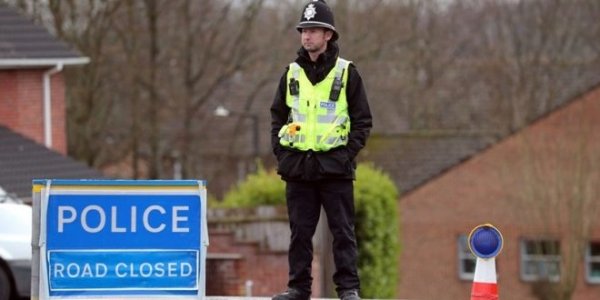
In this episode we discuss the economic and political implications of the attempted assassination of former Russian double agent Sergei Skripal. We also mention the long history of collaboration between Russian oligarchs and Western banks, and how this fits into the broader neoliberal project pursued after the collapse of the Soviet Union.
Michael Palmieri: Professor Hudson, Welcome back to the third episode of The Hudson Report. It's a pleasure to have you here.
Michael Hudson: Thanks for the invitation.
Michael Palmieri: At that time, In the last week a lot has been read about the case of Sergei Skripal and his daughter. It is said that Russian intelligence attempted to poison him, he who was a double agent of British intelligence. Although much of the media has already condemned Russia, she has a different perspective. So could you explain to us what is happening?
Michael Hudson: Beh, at first I was perplexed, because the reaction was so disproportionate that it is obvious that the problem does not concern the event itself. First of all there is no evidence to prove Russian involvement. The important thing to understand, however, is that even if there was an attempted state murder, the reaction was completely illogical. This is actually a matter of international diplomacy. NATO is making moves to reposition itself militarily. The reaction has no connection with poisoning, they are just using it as an excuse to implement an already planned policy. Anyone who has seen the James Bond films knows that 007 can kill one's enemies. And the United States has been killing people for years, see Allende and the tens of thousands of trade union leaders and university professors. The Obama administration has even targeted foreign countries for its own drone strikes, discounting civilian casualties as collateral damage.
No foreign country has severed its relations with Great Britain, United States, Israel or any other country that uses targeted assassination as a political choice. This claim, without any proof, that Russia killed someone is therefore inadmissible.
The question then is: why they are doing this? Because they are imposing sanctions and mounting a huge advertising campaign? To get the answer, Let's take a step back and analyze this reaction better, which seems so out of the ordinary for British people, Americans and NATO. For newbies, the sanctions are part of a diplomatic game designed to counter Russian gains. When the US and Britain imposed their own banking sanctions, they justified it by saying that it was a demonstrative act: if you Russians think you can make profits, we will make you lose even more than you could gain. We should understand what benefit killing a former British government spy gives Russia, returned to the West in a spy exchange and that, from what is said, he wanted to return to Russia. Of course there isn't any. The sanctions are therefore independent of this event. Furthermore, Western law is based on the presumption of innocence and the certainty of evidence. No judgment should be made without the aid of evidence. Otherwise it is based on hearsay.
The second principle of Western law is that both sides can present their own version. In the Skripal affair Russia cannot do this, as she was not given samples of the poison that could exonerate her. They weren't even allowed to see Skripal, although he is a Russian citizen, or his daughter, who is now awake and on the mend. The British will not even allow his relatives to come to Britain. The reaction is so disproportionate that it is obvious there is no logical relationship. This is a good double standard. I therefore think that instead of retaliation there is a predetermined anti-Russian strategy, and an attempt to isolate its economy.
The question is: why it's happening? And what are the ultimate objectives? At first, I thought it was revenge for the failed American attempt to use ISIS and Al-Qaeda as a foreign legion to replace Assad. Or maybe it's an excuse to steal his oil? Or the frustration with Crimea's choice to join Russia?
What is certain is that there appears to be an economic cold war that is intensifying. The result is that Russia, China and Iran are getting closer. So what we have is a threat to isolate Russia if it doesn't do certain things. And so to resolve the Skripal affair we need to ask ourselves: what are these things that the US and Britain want? Beh, one is for Russia to push North Korea to dismantle its nuclear program, thing that, as is normal, it will only happen if the US army leaves the peninsula.
Another goal of Washington is for Moscow to leave Syria. Trump said last week that he wanted to withdraw from Syria. The question though is: if America leaves, what Moscow will do? These sanctions are a signal: you've seen what we can do to hurt you, we will leave you alone if you leave Syria. Another goal is perhaps to make Russia desist from helping eastern Ukraine.
Michael Palmieri: Professor Hudson, I was just about to ask you... if you were to open the New York Times or other mainstream newspapers that gave a lot of prominence to the event... one of the reasons why they might have used chemicals, and I would like to hear your opinion on it, it's simply to send a message. This is what much of the press is saying is the reason Russia should have done such a thing.
Michael Hudson: The United States, when they want to isolate a country, they usually accuse it of chemical warfare. Just think about when Bush said that Iraq had chemical weapons of mass destruction. We know it was a lie. Or to Obama when he said that Russia and Assad were using chemical weapons in Syria. So I think that when they say that Russia or Assad or Iraq are using weapons, this is a way to generate fear, so that the army can be deployed.
Ora, Last week Trump repeated what he said when he was running for president. He wants European countries to pay more for NATO's military costs. He's been saying this for more than a year. And I think this is the real crux of the Skripal affair. Using something as vile as chemical weapons, they want to create an anti-Russian hysteria that allows NATO governments to raise much more military budget than they do now from the United States. It will force all their countries to pay the 2% of its GDP to the American military-industrial complex. So, essentially, the Skripal affair was set up to scare the populations and allow NATO to increase military spending in the US defense industry. When the populations say... wait a minute, European budgets cannot monetize a budget deficit… if we raise more military spending for NATO then we should reduce our welfare spending. The Skripal case is therefore an excuse to try to mollify the European people, to scare him by saying… yes, we better pay for guns, we can do without the important things. It's the same situation the United States was in in the 1960s, at the time of the Vietnam War. I believe these accusations also serve to impose sanctions that interrupt Western trade with Russia and China, preventing insurance companies such as Lloyd's from insuring shipments and transport. The banks would say they will no longer provide these services to Russia. And the parallel sanction would be to block US banks.
Michael Palmieri: I intervene to underline the irony compared to what happened a year ago. There were a series of articles in the Guardian showing that billions of dollars were taken out of Russia in what they called a "global laundry" operation., to anonymous British companies and banks, con Lloyd’s, Barclays and others who played a prominent role… I even believe that Citigroup and Bank of America were also involved. They were authentic documents that practically attested to this type of operation. When it happened there... there wasn't the same scandal. Can you therefore tell us more about these connections between Western banks and Russian oligarchs?
Michael Hudson: Dal ’91, year the Soviet Union was dissolved, the outflow of capital to the West was around twenty-five billion dollars a year. That's a quarter of a trillion dollars in a decade and a half trillion dollars in 20 years. The outflow continued until recently at the rate of 25 billion per year. Just in the last two weeks you have read in the newspapers about the hullabaloo about Latvian banks, vehicles for Russian money laundering… as if the West is truly surprised. It is the exact reason why Latvian banks were established! Even before the fall of the Soviet Union, in '88 and '89, Grigory Luchansky, who worked for the University of Latvia in Riga, was the carrier that started Nordex as a way for the KGB and Russian military to move their money out of the country. Billions of dollars a year have flowed through various Latvian banks in recent times 25 years. Their main activity was to receive Russian deposits, and then transferred them to the West in British banks or Delaware corporations. I was a research director and professor of economics for the Riga law school for a while – about six or seven years ago – so I had regular dealings with the Latvian government, with the prime minister and the bank regulators. They all explained to me that the main aim of the Latvian banks was to encourage capital outflows from Russia to the West. From the American point of view, this was a way to drain the enemy. The idea was to push neoliberal privatization on public services, Russian natural resources and real estate. It was said: "first of all, privatize public assets like Norilsk Nickel and oil companies like Khodorkovsky… now that you have them in your hands, the only way to earn money, since there is no money left in Russia, is to sell them to the West". And so, in practice, they sold off these companies, accumulating enormous capital, through false export invoicing, moving money mainly into British banks. This is why you see Russian kleptocrats buying very large properties in London and bidding up the price of London real estate.
Now all this has tremendously drained Russia, which now threatens to confiscate the assets of the kleptocrats. The latter are now scared and are taking their money back to their homeland, away from England, from the United States, by Delaware corporations, from the Cayman Islands or wherever they put them. This is while there are sanctions against those American banks that lend money to Russia. We are therefore witnessing this immense influx of dollars and pounds into Moscow, which is now using them to build its own gold reserves. In an attempt to hurt Russia, threatening their oligarchs, in reality the exodus of capital is stopping, and this is happening as a consequence of privatizations.
Michael Palmieri: Wow. A vision that is certainly not superficial. And that's why we invited her, Professor Hudson. So thank you again for giving us this multifaceted and certainly non-trivial point of view.
Michael Hudson: I'm happy to have been able to delve deeper into this news.
Source: www.counterpunch.org
Link: https://www.counterpunch.org/2018/04/06/the-economics-behind-the-skripal-poisoning/
Translation for www.comedonchisciotte.org care of HMG


Here is an economic vision that shows clearly what happens under the façade shown by the newspapers ! Just that we're talking about “threatens to confiscate assets…” not that it's a reality, therefore they are hypotheses that should be verified over time.