

Of Francesco Lamendola
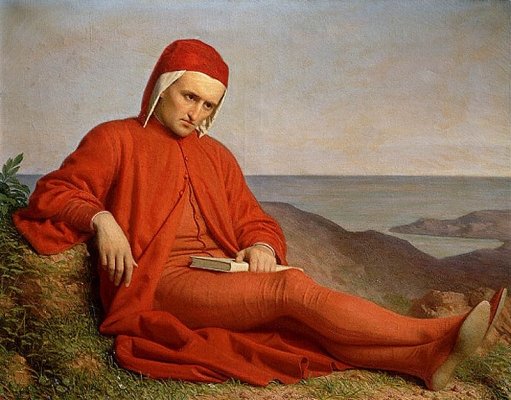
Source: Francesco Lamendola
We talk a lot about citizenship and we tend to identify citizenship with nationality: if a person has the citizenship of the Italian Republic, then that person is certainly Italian; Ultimately it's very simple, no? Precisely: And too simple. Yet it is clear that things are a little more complex, just think about it for a moment. The Italians who couldn't, or they didn't want to, leave Venezia Giulia, In the 1947, at the time of the signing of the Treaty of Paris and the definitive cession of those lands to Yugoslavia, they no longer deserved the name of Italians, despite having lost, evidently, Italian citizenship and having acquired Yugoslavian citizenship? Of course not: so much so that, at least on paper, in Yugoslavia they enjoyed the recognition of a certain cultural and linguistic autonomy, however, it soon remained a dead letter. And the Swiss citizens of the Canton of Ticino, who have never been Italian citizens, nor of the Kingdom, nor of the Republic, they do not deserve to be called and considered Italian? Of course yes: so much so that Italian is recognized as one of the four official languages of the Swiss Confederation. Evidently, you can be Italian, incontestably and truly Italian, despite not having Italian citizenship: This point seems to us to be sufficiently clarified.
But the opposite is also true, that is, that one can have Italian citizenship without being, therefore, truly and incontestably Italian? This is a question with a very high level of political incorrectness: because in the country of inviolable and unquestionable rights, in the country where ideological disputes are won with complaints and court sentences, as the left at Boldrini teaches; in the country where seventy years after the end of fascism the resurgence of fascist "barbarism" continues to be exorcised, and there are municipal administrations which have no better pastime than to revoke the honorary citizenship granted at the time to the knight Benito Mussolini, and press organizations that have other subjects to deal with than a lifeguard devoted to the memory of the Duce, the very fact of asking such a question already smacks of racism terribly and therefore, by logical and ideological contiguity, of fascism, and it's not long before it comes to mind, to someone, the racial laws and the horror of Auschwitz. Why, there's no point in going around it, ask that question, these days, it means putting the burning issue of granting citizenship to immigrants on the table: concession too easy, in the opinion of some, or, on the contrary, too slow and laborious, in the opinion of others, who would like it as a legislative automatism, you are born in Italy and zac!, Italian citizenship is assured. No one can be so insensitive as to deny citizenship to a poor person, little child who is born in our country and who reminds many left-wing priests and progressive theologians, who knows why, the Baby Jesus in the stable in Bethlehem, who was also a migrant, On the contrary, even a refugee: or at least this is what the false Pope Bergoglio stated in the homily of the Christmas Mass; moreover, immediately being denied by serious theologians, even if he drew the inevitable applause from his usual fans and aficionados of the southern curve.
In due time, we had already asked ourselves that question (cfr. our article from over two years ago: What does it mean to acquire citizenship?, published on the Arianna Editrice website on 17/12/2015), arguing that the granting of citizenship cannot be reduced to a merely opportunistic fact, that is, based on the convenience and interest of the person who requests it (and perhaps of the one who grants it, i.e. the State, as can be deduced from the statement of the ineffable Tito Boeri, according to which Italy needs migrants to pay pensions to its citizens; forgetting, however, that migrants too, after a certain number of years, they will become citizens and that they too will have to pay pensions). Anyway, that question came back insistently in our ears after watching the usual report on the regime's news, we don't remember whether it's public or private TV, there is no longer any difference anyway, which reported on the demonstration that took place in Macerata last Sunday, 18 February. This event was conceived by the mayor of that city, Romano Carancini, with a real stroke of genius: in an Italy that is splitting, more and more, among those who mourn the terrible fate of the young Pamela Mastropietro, murdered and cut into pieces, which were then hidden inside two suitcases, by drug dealers of the Nigerian mafia, and those who want to express all their solidarity with the victims of the lone gunman Luca Traini, who has traveled the streets far and wide, shooting at all the dark-skinned immigrants he saw within range of his gun (and the state authorities took action especially for the latter, as if only those people had been victims of a very specific violence, and poor Pamela instead died of some sort of tragic fatality, in short, at the hands of some evanescent entity), the mayor of Macerata called out his fellow citizens in the name of a city free and anti-fascist. Brilliant: Freedom is a precious commodity for everyone, and anti-fascism is a precious asset for those who matter, that is, the state apparatus and the entire culture and information bandwagon politically correct. Two birds with one stone: enough to avoid any accusations of bias, from left or right, in a climate that is now becoming almost unsustainable, it is enough to mention the kids from the social centers who are right there, in Macerata, they paraded singing joyfully, il 27 January, remembrance day, how beautiful it is to do the foibe from Trieste down, evidently to honor, spitting on the memory of the victims of the foibe, the victims of Luca Traini's shooting, and reassure all immigrants that Italians, in their healthy component, they are so anti-racist that they have no hesitation in becoming racist towards their own compatriots who, on the goodness of unlimited immigration, they have ideas that are a little different from theirs, full of optimism and confidence.
Sunday 18 February it was raining cats and dogs and it was cold, nevertheless, as all the media reported, the participants in the demonstration organized by the mayor did not hesitate to heroically challenge the prohibitive weather conditions to let the world know how anti-fascists and lovers of freedom they feel. There were “several hundreds”, television and newspapers said, to magnify their contempt for cruel weather: which, for a municipality of approximately 42.000 inhabitants, provincial capital, not to mention the presence of the "comrades" who, without fail, on similar occasions they are mobilized almost everywhere and brought in from outside, It seems a bit small to us: but be careful not to say it or insinuate it, it would be an attack on freedom and anti-fascism. The diligent politically correct journalists recorded, and had it aired, two interviews (oh, two among many, chosen absolutely at random, am s'intende), caught on the spot by the participants in the procession: a middle-aged Italian gentleman, beard and mustache, well dressed, who spoke very appropriately, like a high school teacher, and a rather young woman, of color (Yes, It is true: of color it doesn't mean anything, It's not clear whether Japanese or Moroccan, but in short it's not to say "black", which might seem offensive, and not even "black", which brings to mind a fresh paint job, damn, a suitable adjective doesn't come up for the need, of these times in which the thought police monitor the use of language more than ever, ready to sue the unfortunate racist on duty). A young woman dressed with propriety, even elegant, with very fine lines, perfect makeup and lipstick, who spoke impeccable Italian, in short, the true prototype of the D.O.C. immigrant., more polite and civilized than many Italians, impeccable, law-abiding, no difference except skin color: no veils, Nothing burqa, no awkwardness, or impropriety, or distrust, and an enviable readiness and self-possession, even in front of the cameras. In short, the female equivalent of Sidney Poitier's Guess who's coming to dinner?, where Spencer Tracy and Katharine Hepburn discover that their blonde daughter has become engaged to a black man, Yes, but more beautiful than an Apollo and more elegant than a Hollywood fashion model, not to mention the profession (He is a highly respected doctor), of the social level, of linguistic refinement, a hundred times higher than those of a white worker from the Deep South.
And what they said, for the benefit of viewers, these two people certainly chosen at random from the crowd of demonstrators, in the rain last Sunday, through the streets of Macerata? Not even doing it on purpose (when it comes to combinations!), exactly what those in power want citizens to hear, from morning to evening, every single day, possibly without cross-examination: that everything is fine like this; that we live in the best of all possible worlds; that there is no invasion, no Islamization of Italy; that we need to be open and welcoming towards foreigners, angels sent to us by the Lord God; that anyone who thinks differently can only be a fascist and a racist, and it would be right and proper to outlaw all groups and movements in which there is a certain reluctance to accept all this colossal nonsense. The gentleman, polite and with a professorial air, said, pointing at people with open umbrellas, that this was the real Macerata; that the real Macerata is like this, open, welcoming and tolerant; that it is a real crime that the isolated gesture of a deranged person has brought his city to ruin dishonor of the chronicles (he used precisely this refined expression). And the African lady, in eleganttailor rosso, on your part, he deplored the intolerance of certain people, he claimed the rights of immigrants and concluded peremptorily, with a triumphant air: Like it or not, I'm Italian! Ecco: this last sentence particularly made us reflect. Like it or not, I'm Italian! But already in the fact of stating it like this, as something that may also displease some Italians, and yet slam it in his face, you have to accept this thing, whether you like it or not, it means betraying the true spirit of citizenship: because the acquisition of citizenship cannot and must not be brandished like a club over the heads of Italians who were born as such, due to millenary tradition and full ethnic belonging, linguistics, cultural. You don't become Italian with an act of authority or with the display of a piece of paper: because it is one thing to be an Italian citizen, and another thing is to really be Italian, that is, in the depths of the soul. And the first requirement to be a true Italian is not of a legal or formal nature, but moral and substantial: it means loving Italy and what it represents: its civilization, its culture, his people, his language, his art, his story, its beauty, all his immense spiritual heritage. Of which Christianity is an inseparable part, whether you like it or not – one has to say, imitating that kind lady – to the Freemason bureaucrats of Brussels, all intent on scraping away what little remains of Christianity in societies which, to their misfortune, have joined the economic and political project of the European Union. Ora, we do not know whether the lady in question has Italian citizenship or not; what we know is that his way of expressing himself is already in itself an incorrect way of positioning himself as part of the Italian people. Who arrived yesterday in a house that is many centuries old, can't tell the other tenants: Whether you like it or not, I'm here now, because this is arrogant talk, an attitude of challenge and provocation. If the newest arrival really loves that house, if he thinks he is worthy of becoming its new tenant, the first thing he must do is arm himself, not of the culture of rights, but of a sense of humility and respect: humility because he is the last to arrive, and finds himself reaping what others have sown; respect because he arrived as a guest, that is, he was welcomed out of pure benevolence and pure generosity, therefore he owes gratitude to the other tenants, like a child towards his parents: nothing but tell them: whether you like it or not, here I am!
In ancient Athens, cradle of democracy, foreigners, the metics, they had no political rights, not even after ten generations; they were foreigners and remained so, tolerated, not fully accepted, if not in terms of their economic activity and related legal protection. But citizenship is something else: is to exercise full rights and, Therefore, participate in decisions about the future of the homeland. The Athenian Democrats, they did not grant this except to a very few metics, based on special merits purchases towards polis. No Spartans, o tebano, or Corinthian, he would never have allowed himself to say: Whether you like it or not, I am Athenian!, whether he had, whether he did not have citizenship: they would have sent him back to his homeland in no time. Citizenship can be obtained, but possession of nationality cannot be imposed, that is, true belonging to a people, which is above all an internal fact. It's not something you can do on your own, it is others who give it, just like in a family. If a foreigner shows that he loves and respects Italy as his new and true homeland, then the Italians will notice, e, a little at a time, they will accept him as one of their own. But this cannot happen if we are dealing with masses of millions of people, absolutely refractory to integration and, On the contrary, firmly determined to colonize Italy, using the number of their children to carry out a bloodless conquest. It's like with friendship: others must recognize that you are a true friend; It doesn't matter if you proclaim yourself as such...
Similar Posts
