

 Reporting of F.F.
Archistar & he asked. Dio, forgive them: they don't know what they are building
Of Angelo Crespi
We publish here an extract from Angelo Crespi's essay «Constructed by God» (Johan&Levi, pages. 138, euro 11). The book will be presented today in Milan at the Mondadori Megastore (Cathedral square 1, ore 18,30) and Wednesday at Cantiere Galli Design in Rome (via A.Pacinotti 63, ore 18,30).
And if you want to tell us your ugliest churches, send a photo tosegna@ilgiornale.it. They will all be published online (guard).
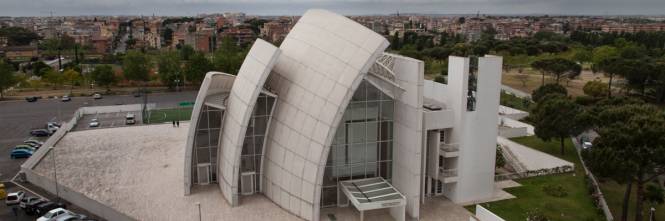
One might say: Dio, forgive them because they don't know what they do. On the contrary… they build. Because the new churches designed by the most appreciated star architects (and pay) the world seems to have lost the sense of the sacred and above all of the beautiful. Extravagant to a fault, some are sheds or cubes, or they have toilets near the altar; places where everything is celebrated, except worship. E, meanwhile, every self-respecting city wants its own "museum of the contemporary" as the bell tower once aspired to.
 The ugliest churches reported by readers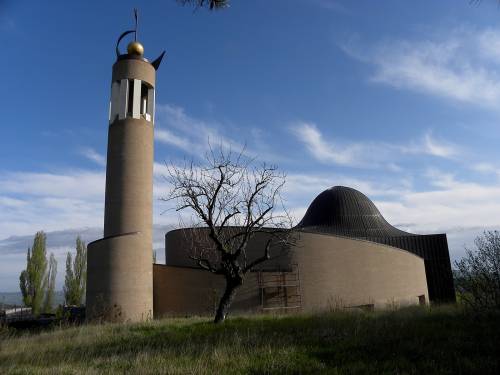
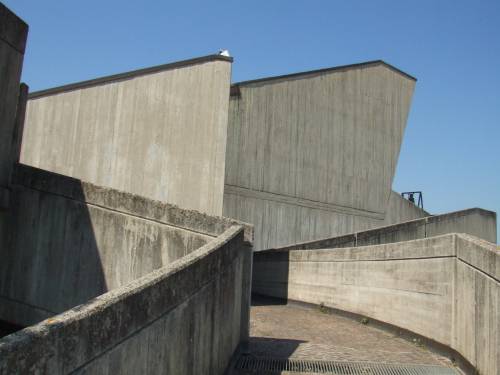
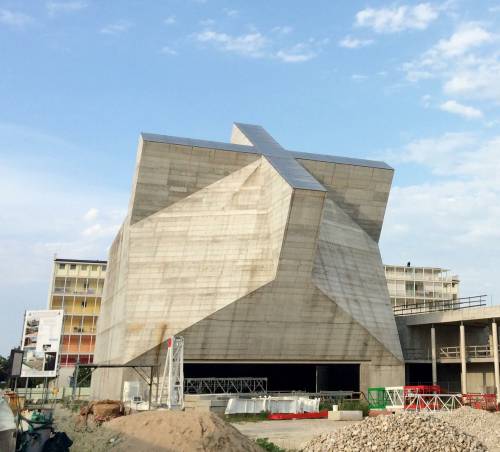
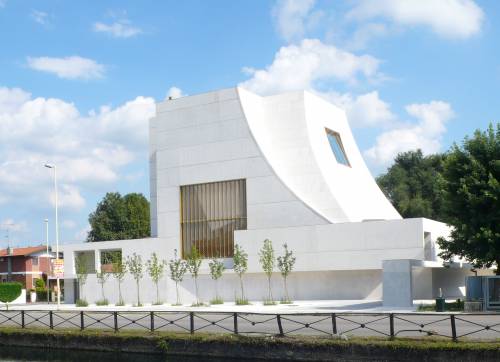
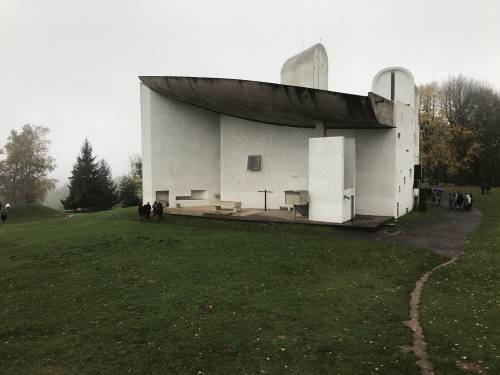
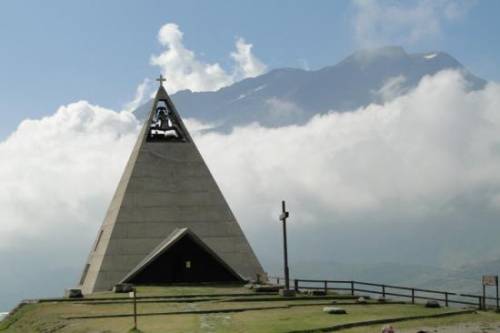
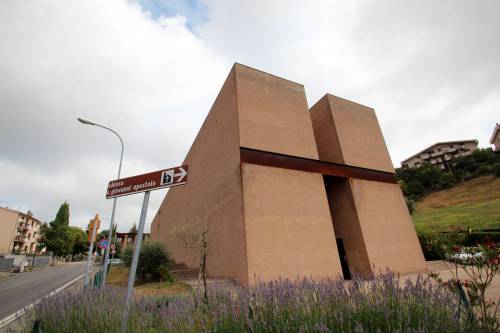
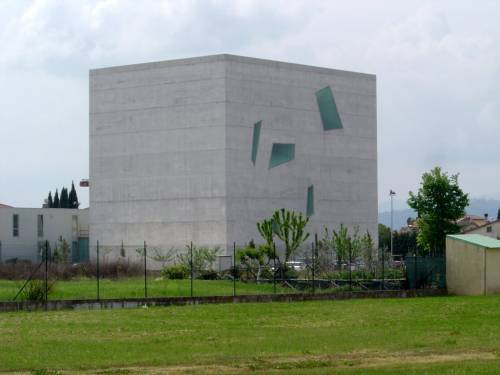
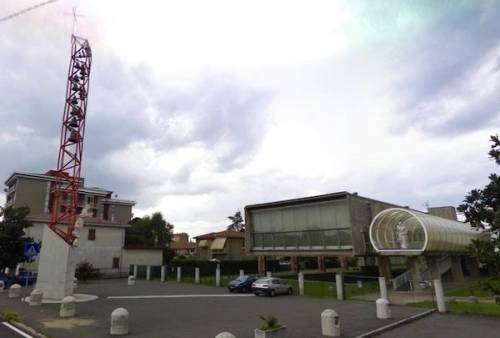

In the remote industrial province of the deep north of Italy you can admire what is considered by many to be the ugliest modern church in the world. I happen to pass by it every now and then and it always gives me the same feeling of disbelief and horror. Describing its architecture is not easy: a kind of concrete box raised on columns, the façade made up of worn-out 80s windows, alongside which runs a transparent oval tunnel which culminates with a statue of the Madonna; in front of, the bell tower made of orange Innocenti tubes inside which a carillon of many bells is caged, while at the base stands an unlikely archangel Gabriel; to delimit the churchyard, In the end, a series of gray panettones. It doesn't look like a church, I actually couldn't even say what it looks like, the central parallelepiped could be mistaken for the warehouse of a furniture factory, or for an office location, while the long plexiglas telescope on the side appears, however you look at it, incomprehensible in its function, liturgical or esornative.
I never thought I'd write about it, also because of the disorientation that religious buildings of this type generate, scattered almost everywhere, it prevents any reflection that does not generate pure metaphysical horror. One day, invited to a ceremony, in one of these post-conciliar churches, while the choir sang a pop song accompanied by a couple of guitars, and the atmosphere was terrible, similar to the August evenings spent on the beach singing Venditti and Baglioni, I noticed that the toilet was located a few meters next to the altar. At first it seemed impossible to me, so much so that I got up and without disturbing the rhythm that the jubilant faithful kept clapping their hands I reached the door. It felt like being in one of those village pizzerias with the services next to the tables, a proximity that generates embarrassment both in those who are eating and in those in the procession who need to retreat. What a terrible feeling to taste the margherita or the capricciosa while hearing the sound of the toilet flushing, seeing the customer come out of the bathroom and try to dry his hands on his trousers; what a strange sensation the Eucharist celebrated near the toilet. But maybe it's not a coincidence: the toilet is the symbol par excellence of modernity. In London, a room in the Tate Modern, the most influential museum in the world, it is dedicated to the toilet that Duchamp elevated to a work of art: millions of faithful stop in front of the urinal under the display case every year, as if it were a sacred relic, and they venerate him.
Why contemporary churches are ugly and why contemporary museums have become cathedrals is therefore an easy dilemma to understand, more complex to explain. The theme, even before architecture, it would pertain to philosophy, indeed to theology and could be resolved by indicating the persistence of the devil in the world, its prevalence in this particular age, the emergence of what Saint Augustine defined as the "earthly city", that is, the mythological Babel where chaos reigns supreme and the ugly is considered beautiful. May the devil have a hand in it, whose greatest deception is to demonstrate its non-existence, this is demonstrated by the disarming naivety and carelessness with which the hierarchies of the ecclesia proceed when they grant permission for the construction of new places of worship. Buildings distant from traditional forms, devoid of any idea of transcendence, which can be easily confused with constructions of other types, industrial warehouses, hospitals, discos, garages, pool. It is the tribute that the Church, after the Second Vatican Council, pay to modernity, to postmodernity, to the contemporary: in an attempt to be fashionable he jubilantly announces his submission to the century, also from an aesthetic point of view.
The other horn of the dilemma are museums. Any self-respecting city, for not every country, every remote village at every latitude of the globe, wants its own "museum of the contemporary" (an oxymoron) as he once aspired to the bell tower. And the most celebrated star architects are called upon for the construction, which usually offer absolute extravagance and are honored and financially rewarded for it. The aim seems to be to build cathedrals, as impactful as they serve to make profane content sacred, that is, contemporary art which often – being horrendous, report, organic in nature, and incomprehensible – it requires grandiloquent packaging to exist, of luxury packaging. In a nutshell, an attempt is made to resacralise objects that are desecrating by nature, which are the idols to be worshiped in a religion of the inhuman.
This second theme also only residually concerns architecture, more specifically to philosophy, even more closely to theology. The real problem is that there is a lack of theologians and philosophers, while they rage, cursed, the architects.
Source: http://m.ilgiornale.it/news/2017/12/04/ecco-perche-le-nuove-chiese-sono-cosi-brutte/1470236/
