

 Of Paolo Becchi e Cesare Sacchetti on Libero, 25/05/2017
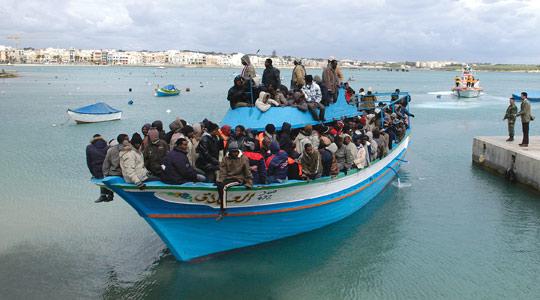
While the landings of migrants on the Italian coasts continue and controversies rage over the responsibilities of NGOs regarding their alleged collaboration with smugglers, more than a few observers have wondered why NGO ships don't even think of bringing migrants to Malta. The small island in the middle of the Mediterranean is no longer affected by the problem today, yet it is located closer to the Libyan coast than Sicily, and according to the rules of international law, migrants should be accompanied to the closest and safest port of destination for their safety. Malta has all the characteristics required by the case, but NGO ships do not even consider approaching Maltese ports. The issue reopens a debate that began last year, when the leader of the opposition and the Maltese nationalist party, Simon Musuttil, in a statement quoted by The Independent, he openly accused the Maltese government of treason for having signed a tacit agreement with Rome.
Which agreement is the Maltese politician referring to?? According to Musutti, Rome and Valletta have reached an agreement which provides for the interruption of the arrival of migrants on the Maltese coasts in exchange for the concession of oil exploitation rights in the stretch of sea south-east of Sicily, halfway between this and Malta. On this point there was a bitter dispute between the two countries which reached its peak in 2012. In that period, in fact, the government of Rome extended the stretch of sea where oil drilling was carried out until it reached, according to Valletta, in Maltese territorial waters. According to an independent study carried out by the company ERC Equipoise, the stretch of sea in question could yield a quantity of oil equal to approximately 260 million barrels. From here the clash between Rome and Valletta arose.
But according to Musuttil, the Maltese government would have given in to Italy's requests for oil exploitation rights in exchange for the reception of migrants at the exclusive expense of the Italian authorities. The tacit agreement was apparently reached by former Prime Minister Renzi last year and his Maltese counterpart, Prime Minister Joseph Muscat, who has now been forced to resign due to the Panama Papers financial scandal. An authoritative voice from the Maltese government initially confirmed this exchange, the Minister of the Interior Carmelo Abela, who had spoken of an agreement in this sense on the transfer of oil rights disputed by Malta in exchange for the Italian commitment to receive irregular immigrants. At a later time the same minister had backtracked and spoken of "close collaboration" between Italy and Malta, dampening the gravity of the previous statements.
However, this did not serve to silence the controversy over Malta's absence in the migrant crisis. Dal 2015 of approximately 142.000 people who left from the North African coasts only 100 they arrived in Malta. Two years earlier, In the 2013, Malta received 2.008 migrants while Italy took care of approximately 150.000 Arrivals. The disproportion in landings between the two countries was evident even at the time, but it is even more evident after the 2015 the vertical collapse of migrants arriving in Malta. Il 99% less than two years earlier.
A clear disparity also reported to the European Parliament by the Forza Italia MP, Elisabetta Gardini, who had asked the EU institutions for explanations on the reasons for the lack of commitment by the Maltese. After an initial silence, Europe responded to Gardini's question, but the answer was that Brussels simply knew nothing about it. The Commissioner for Migration and Internal Affairs, Dimitris Avramopoulos, in fact he replied that he was "not aware of any bilateral agreement between the Maltese and Italian authorities regarding recovery operations in the Mediterranean". So Brussels does not deny the existence of such an agreement, and adds that by a strange coincidence the area affected by oil exploration overlaps with that where the migrants are recovered. Rome therefore continues to receive thousands of migrants, while Valletta remains safe from the phenomenon. If this pact really existed, the person primarily responsible for the landings, in addition to NGOs, it would be the Italian government that exchanged oil for immigrants.
Source: https://paolobecchi.wordpress.com/2017/05/25/il-patto-con-malta-che-ci-rifila-gli-immigrati/
