

 Of Antonio Pannullo
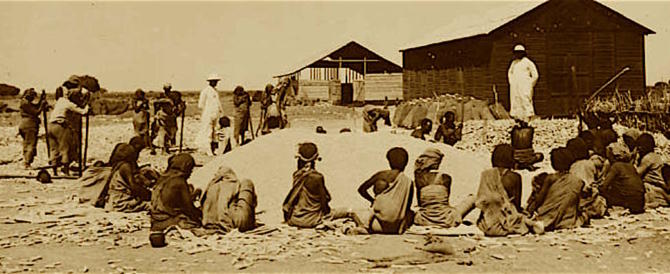
Il "corporal" he is the figure of an illegal intermediary between landowners and unskilled labor. It is a plague that has always been present, and in Italy it has joined forces with organized crime, especially in the centre-south. The word "caporalato" has returned to the spotlight in recent days due to the incidents involving foreign seasonal workers in Puglia, ma è un male antico, a “liberal” evil. In the 2016 the Chamber approved the so-called anti-corporal law, which however evidently had no effect on the phenomenon, probably due to poor controls by the authorities. The magazine and blog Colonial Italy but, directed by Alberto Alpozzi, reminds us that the gangmaster was fought and defeated, like the rest of the mafia, from fascism, that in 1926 I passed the law 563, called "union law", perfected and modified until 1938 with other rules aimed at “balance the interests of employers with those of workers in an equitable manner by protecting, in any case, the superior interests of production". Colonial Italy, in the piece by Maria Giovanna Depalma, also remember that these revolutionary regulations, included in the fascist corporate and labor code, they were valid not only in Italy but also in the colonies, which contributed to abolishing slavery and serfdom in Italian Africa, flourishing until the conquest of East Africa by Italy.
The gangmaster had completely disappeared
In particular, he says again colonial Italy, two were the most incisive measures: “collective labor agreements and free employment offices for unemployed workers. The former had to be drawn up and approved by the trade union (body that also provided for the continuous improvement of the professional training of workers implemented through professional education bodies) before starting any employment relationship", provisions not existing in previous liberal legislation. In short, the entrepreneur could hire labor only through these offices, choosing among the registered workers; vice versa the latter, to look for a job, they had the obligation to make use of them: otherwise, pecuniary sanctions were foreseen for both, says the historical magazine again. Under no circumstances could the entrepreneur hire workers through private intermediaries, considered by fascism no more and no less than social parasites. Furthermore, he tells us colonial Italy, manpower requests could not be nominative but numerical, to avoid any type of clientelism. If a worker was fired without reason, could appeal to the Labor Court. Gangmastering and mafia, the latter thanks to the prefect Cesare Mori, they were banned from Italy for a few years. Until September 1944, when the Badoglio government with the decree 287 abolished all the laws of the Labor Charter with the consequences that we find ourselves fighting today.
