

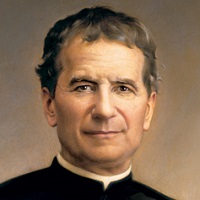
 Reporting of BastaBugie editorial team
We have already underlined the inspiring principles of Don Bosco's Preventive System, widely and effectively applied across time and space (the Salesian family and the work of the oratories are a widespread reality in many countries around the world, that never stops bearing fruit), find complete application and usefulness not only in the field of pastoral action in favor of the education of young people in parishes, in the oratories, in the activity of catechesis, but like these “key principles” have undisputed educational validity in all educational contexts, including family.
It is our belief that the pedagogical directions of the Saint pedagogue are not only transferable to parent-child relational dynamics, but that precisely they can constitute those correctives that are so indispensable in ours, often dramatic, educational emergencies, in addressing the educational problems that challenge us and often defeat us as parents. This is the thesis that is closest to our hearts: Don Bosco is a shining light in our families too: he also guides and restores our children to goodness, if we understand, we welcome and apply the message it communicates to us.
REASON, RELIGION, LOVINGNESS
We have already argued “passing by” on the three key words that inspire his thinking: reason, religion, kindness, and how these three aspects, if well combined in the teacher-student approach, ensure the trust of our children towards the educator, achieving the much desired “educational success”. I wondered which of these three elements our current reality is most lacking in, farthest from the proposed model: in reason, in religion, in loving kindness? I tried to hypothesize what Don Bosco would tell us today by observing our boys, looking inside our families.
A first awareness: Perhaps, in our experiences as educators there is no lack of reference to “reason” e all'”kindness”, but it is no longer central there “religion”. It actually happens, in an increasingly convinced and widespread way, That, in the name of an undisputed principle of secularism of the public school service, for example, or in the name of freedom of choice of one's religious belief, of the fundamental inspiring values of one's life, be overlooked, even setting aside the spiritual aspect of the education of our children, delegating all responsibility to the parish and entrusting a blank delegation to the catechists who work in the area, or waiting for our boys, once they grow up, do “freely” their own choices.
Don Bosco teaches us that this is a failure, if immediately, and permeating every experience, activities and knowledge, a dialectical connection is not created between what is immanent and what is transcendent, if we don't give to our actions, choices, plans the direction that God, in His infinite goodness he inspires us, if in our daily reality we do not enter into dialogue with Him.
MATERIAL AND SPIRITUAL DIMENSION
Don Bosco himself makes us understand how there cannot be a balanced growth and formation of the person if this is not perceived in its psychophysical and spiritual unity: it is difficult to deny that man takes substance, as well as its material dimension, also of a profound aspect that induces it, from an early age, to ask meaningful questions and express its spiritual component.
Yet paradoxically it is much easier, Today, that our son is cared for in his bodily growth, in the psychic one, but neglected in spiritual growth. We provide our children with legions of paediatricians, of specialists in every sector, we treat and prevent any small or large ailment they may have, as it should be; we resort more and more to the advice of the psychologist, if we notice an inconvenience, a difficulty; we use the private repeater, if he got a five in math, we ensure that every type of education and teaching is ensured, that the world of culture be opened to him, the possibility of fully enjoying all the advantages that modern society offers; but like our son he is often ignored, forgotten, as it is unknown to us from the spiritual aspect! Let's play with him, but we do not pray with him; we talk to him about many topics, but we don't talk to him about Jesus; we tell him many fairy tales, we give him many teachings, but we don't tell them about the Holy Family, we do not lead him to understanding the Word of God, to discover the evangelical precepts. We know and note the stages reached by our children, the illnesses suffered, measurements of their body growth, but we ignore or underestimate their sins, we don't catch, or we just don't care, how it is measured in choices, in actions and projects with divine precepts, with core values, such as charity, patience, friendship, loyalty, justice, honesty; we do not know what his doubts are regarding faith nor do we set ourselves the goal of removing any obstacles that are holding him back on the path of the spirit.
A HIDDEN UNIVERSE
When we ourselves do not suggest behaviors and shortcuts to deal with the small and large difficulties of living. How our child relates to his neighbor, who is less capable and is marginalized by the group? He is capable of authentic friendship? Our boy grasps the weight of responsibilities and takes them on or has already learned to “be smart”? He copies the test in Latin class or loyally commits himself to giving the best of what he is capable of? Does it have its own inner life or is it all about appearances? If we go deeper, a wonderful and unsuspected hidden universe is revealed to us, we realize that each of our children has different vocations and different spiritual depth, their different way of communicating and addressing God.
Don Bosco also teaches us parents that it is not enough to welcome, feed, ensure education and culture for our children, but that they must be constantly oriented towards the good, followed closely to be supported precisely in the falls, because it's normal for the boy to make mistakes, if it is left to itself, especially in his spiritual journey. It certainly stresses us parents, or grandparents, in the family the first spiritual guides of our children; encourages us not to delegate a role that only the family can interpret fully and effectively; he who had his mother Margherita as a very effective spiritual guide. Don Bosco explicitly invites us, not just as educators, but above all as parents to give centrality to religion, to encourage and facilitate our children "in their approach to Jesus by pointing out the beauty and sanctity of that religion which offers such simple means for building a civil society".
