Migrations: l'insopportabile ipocrisia dell'accoglienza

Of Maurizio Pallante
Migrations: the unbearable hypocrisy of hospitality
Source: Maurizio Pallante
The current situation
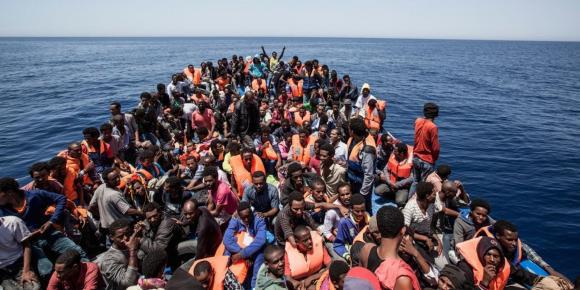
Migrations constitute, together with the greenhouse effect and the economic crisis that began in 2007, the most serious problems of this period of human history. In the countries of departure they are caused by profound upheavals in the production structure, of social relationships and environmental conditions that prevent populations from continuing to obtain the necessary living in the places where they live, as their ancestors did for millennia. In the countries of arrival they generate three types of reactions: one of refusal, which takes the form of support for xenophobic parties;
a welcoming one interested in the contributions that migrants can make to the economic growth and monetary wealth of the natives; one of disinterested and generous welcome, based on solidarity towards the people most affected by life and on the drive for greater social justice. Xenophobic parties emphasize the problems created by the arrival of an ever-increasing number of migrants without professional and economic resources, highlighting the insecurity and degradation that inevitably generates in the places where they somehow camp and make do to survive. Supporters of self-interested hospitality downplay them, insisting on the economic advantages that would derive from their regularization: growth of gross domestic product, increase in tax revenue, payment of pensions. Supporters of disinterested welcome leverage the feelings of brotherhood that, they persist in the human soul despite decades of consumerism, materialism and selfishness that have characterized industrial societies. And they dedicate their energies, their intelligence, their creativity to seek solutions to help the migrants they come into contact with find decent housing and work. Hidden in the shadow cones between these dynamics, two categories of profiteers operate: those who speculate on the desperation of the weakest, exploiting their workforce in despicable ways, until they die; and those who, acting in the hidden depths of politics, they manage to get hold of the funds allocated for reception facilities, leaving only crumbs to the desperate people for whom they were intended.[1] Read More

Share

La direttiva Salvini che affama la bestia del business dell'accoglienza

Starving the beast of the hospitality business is possible. And now there is also a directive signed by the Minister of the Interior Matteo Salvini, which wanted to redefine the current model of welcoming migrants, with a view to optimizing services and containing costs. The North Star is now this: different methods of assistance for asylum seekers and rationalization of spending. “The lines of intervention outlined today with the directive – said Minister Salvini – will allow us to rationalize spending by aligning ourselves with the average of European countries”.
The news fits like a piece into the mosaic of recent weeks, together with another piece of the puzzle made official today: Anac and the Interior Ministry have in fact signed an agreement for the development of new standard specifications for the procurement of goods and services in the migrant reception sector. The directive signed by the Interior Ministry is the first and immediate effect of that agreement, with the Anac which will provide technical-legal support. Have you ever seen any other corruption case come up? Just in case, it would be surprising?

Source: http://www.qelsi.it/2018/la-direttiva-salvini-che-affama-la-bestia-del-business-dellaccoglienza/?cn-reloaded=1 Read More

Share

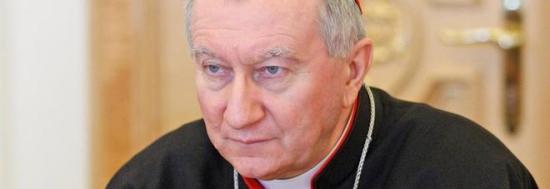
Il "cardinale" Parolin to the League: we will insist on preaching in favor of migrants

Of Franca Giansoldati
Vatican City - The day after the electoral exploit of the League which set up the electoral campaign against migrants, the Vatican Secretary of State has made it known that the Holy See will continue to preach as it has always done in favor of welcoming and opening Europe's doors to migrants. «The Holy See knows that it must work in the conditions that arise. We cannot have the society we would like, we cannot have the conditions we would like to have. So I believe that, even in this situation, the Holy See will continue its work of education, which takes a lot of time". Cardinal Pietro Parolin, Secretary of State of the Holy See, he comments with the bishops' agency Sir – on the sidelines of the meeting of the International Catholic Commission on Migration – the results of the political elections.

CONTINUE ON:

http://m.ilmessaggero.it/primopiano/articolo-3589405.html Read More

Share