Germany is the real sick person in Europe

Report Linkiesta

Image
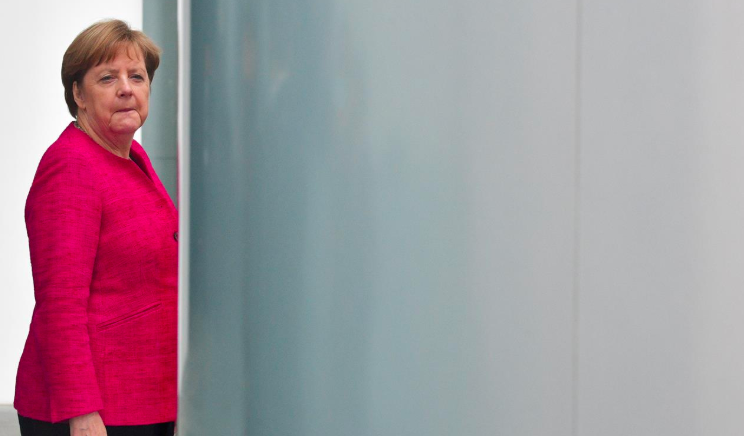
Germany is the real sick person in Europe (and if it becomes serious there will be trouble for everyone)

It is the economy that drives the Old Continent, but it is under attack from Trump's tariffs. It is the dam and the bogeyman of the populists, but it is threatened by the growth of Alternative fur Deutschland: journey into the cracks of a clay giant. And in the risks we all run if it collapses. (by Fulvio Scaglione, LAWS)

Read More

Share

What is torn to pieces. The Khashoggi case, a world of silence

Of Fulvio Scaglione
What is torn to pieces. The Khashoggi case, a world of silence
Source: Fulvio Scaglione

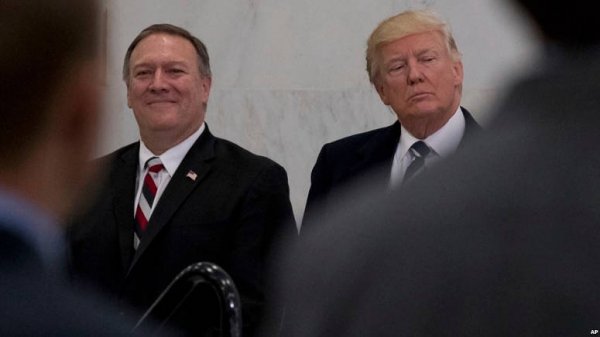
If we lived in a more or less normal world, today all Western chancelleries would be busy asking for clarifications and sending protests to the royal house of Saudi Arabia. And some governments that are more decisive than others could perhaps summon their ambassador for explanations. Instead almost everything is silent and, apart from the indiscretions artfully filtered by Turkey's secret services, a slightly embarrassed silence accompanies the fate of Jamal Khashoggi, well-known and appreciated journalist in Saudi Arabia and beyond, given that he had recently also become a columnist for the "Washington Post". Donald Trump, great supporter of the Saudis, he was silent for days and then said he was "worried", leaving it to Mike Pompeo, the Secretary of State, the task of challenging ridicule and calling on the Saudis for a "thorough investigation" into the journalist's fate.
The problem is that there is little to investigate. Khashoggi entered his country's consulate in Istanbul on 2 October, leaving his Turkish girlfriend on the sidewalk waiting for him. And it never came out why, the Turks let it be known, he would have been killed, then actually torn to pieces and finally taken away by a commando of fifteen agents who arrived on the same day on two private flights taking off from the Saudi capital Riyadh. There are the names, there are faces, it is known that some of them are part of the personal guard of Crown Prince Mohammed bin Salman and that an anatomopathologist was also traveling with them, apparently charged with supervising the dismemberment of the body.
Khashoggi, moreover, he was not a fanatical opponent either , to say, some subversive who wanted to undermine the foundations of the Sunni-Wahhabi kingdom. On the contrary, he was an experienced journalist and, in his time, very inserted in the circles of the Saudi royal house. He had been part of the small delegation that accompanies the prince on his international travels several times. Unfortunately for him, in recent times he had begun to express some doubts about the validity of Mohammed bin Salman's policies. The war in Yemen, which leads to nothing among a thousand atrocities. The plan for the economic reform of the kingdom, called “Vision 2030”, that makes water. The purges against the old guard Saudi notables. Too, apparently. Not even the fact that he moved to the USA saved him.
What else is needed for a minimum of indignation? Especially in America and Europe, where the freedom of the press and journalists is an asset considered precious and as such always defended. Instead nothing or almost nothing, also by Governments as well, now it's not much, they harshly criticized Turkey for the journalists put on trial and then forced into exile. sad destiny, their. But not like being hacked to pieces with a saw in a diplomatic compound.
What happens, or rather it doesn't happen, these days it perfectly reflects the state of international relations, in which all the talk about rights and values ​​does not apply to "friends" but only to "enemies". And Saudi Arabia is too important a friend for everyone. Trump (but also Obama before him) it earns billions by supplying it with weapons and considers it fundamental, together with Israel, in the axis that should oppose the growing influence of Iran. Last April, Mohammed bin Salman made a visit to the USA in which he was honored not only at the White House but also by the super-intelligent and super-democratic bosses of Silicon Valley and Hollywood. Before landing in the USA, moreover, Salman himself had stopped in London where, bringing as a dowry 100 billions of investments for post-Brexit England, he had been welcomed with all honors, lunch with Queen Elizabeth included. And we could say more or less the same for almost all European countries.
Saudi Arabia knows this and takes advantage of it with the arrogance of someone who feels untouchable. Now there is the Khashoggi case, but it is only the latest in a long series. In August Cynthia Freeland, Foreign Minister of Canada, had dared to ask in a tweet for the release of a group of Saudi women arrested for their campaigns in favor of women's rights. In response, the Saudis kicked out the Canadian ambassador, they blocked all flights to Canada, they froze economic relations and invited thousands of Saudi students to return home.
In the 2016, because of his actions in Yemen, Saudi Arabia was included in the UN list of countries that violate the rights of children in war zones. The blackmail started immediately, later admitted by Secretary Ban Ki-moon himself: either you remove us from the list or we cut funding to the UN. And cancellation it was. With Khashoggi's disappearance it will end the same way. Too bad it goes, Mohammed bin Salman will make some phone calls, he will remember this or that matter, he will talk about the price of oil or terrorism in the Middle East. But he won't even have to bother himself, the world works like this and everyone who needs to know it already knows it

Read More

Share

Why Israel struck Syria immediately after the Idlib agreement

Of Fulvio Scaglione
Why Israel struck Syria immediately after the Idlib agreement
Source: The eyes of war
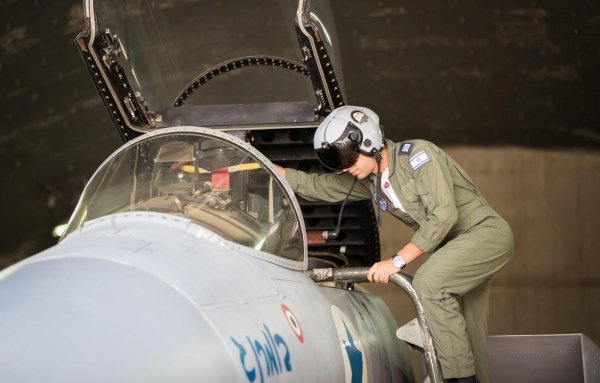
The news of the latest events in Syria, from the first Russian bombings on Idlib province to American threats, from the Russian reconnaissance plane shot down by Syrian anti-aircraft due to the maneuvers of Israeli fighters to the missiles on Latakia to the phosphorus bombs dropped by the Americans on Deir Ezzor, it's obviously dramatic.
But the political background is more complex than it seems, in a certain sense, even less worrying. The game is the same as usual: control of Syria. Or better: the control of its fragmentation. A very powerful coalition for seven years, which goes from Saudi Arabia to the USA, from France to the United Kingdom, from Türkiye to Qatar, passing through a long series of countries that have been or are "de facto" accomplices, works to disintegrate the political and territorial unity of Syria.
These countries have not always shown perfect unity of action or political vision. Turkey, for example, after the failed coup of 2016, which Recep Tayyip Erdogan considers inspired by the USA, it took an autonomous path and built a sort of understanding with Russia and Iran. Nonetheless, that has always been the goal, under the slogan “Assad must go”. Such an important goal that, to reach it, the strange coalition has gradually bet on different horses. Read More

Share

No, Steve Bannon is not the boogeyman. But he will win easily, against the Europe of happy hours

Report Linkiesta

Image

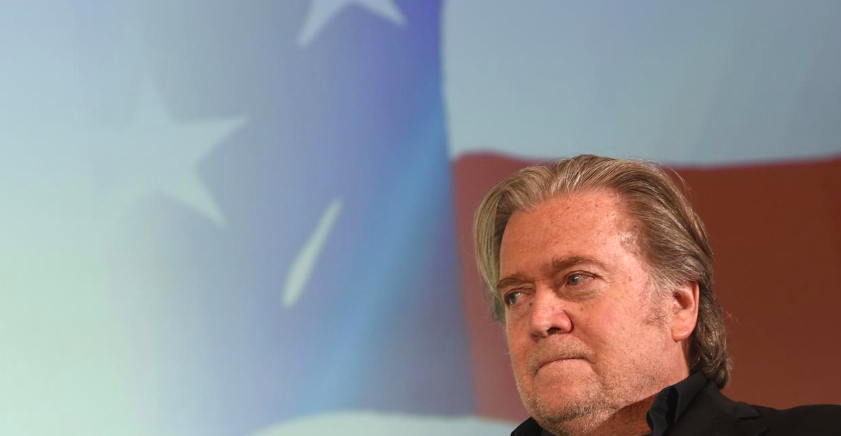
No, Steve Bannon is not the boogeyman. But he will win easily, against the Europe of happy hours

It is true, the former Trump election campaign strategist wants to influence world politics (and even that of the official Church). But his movement is much less wealthy and powerful than other pro-establishment movements. And if the West veers to the right it is useless to cry "wolf". (by Fulvio Echelon, LAWS)

Read More

Share

The new war in Libya? It's just the old one, dirty, French colonialism

Of Fulvio Scaglione
The new war in Libya? It's just the old one, dirty, French colonialism
Source: linkiesta
The new one, yet another crisis in Libya, with the government of Fayez al-Sarraj on the brink of the abyss due to the attack by rebel militias, It has a very complicated outline, which includes historical rivalries between tribes, the role of Gaddafi's former hierarchs, the sharing of oil revenues, the interference of a long series of countries ranging from the USA to Great Britain, from France to Italy, from Russia to Egypt, from Türkiye to Qatar.
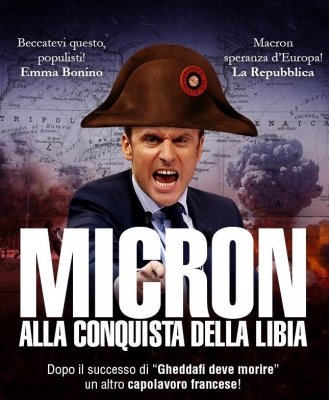
But the substance, at least in the reality of recent years, it's much much simpler: there is a very weak and almost impotent Government, the one led by Al-Sarraj, which acts under the auspices of the United Nations and is recognized by the international community; and there is a country, the France, who works for that Government to fall, even at the cost of plunging Libya back into total chaos.
Emmanuel Macron did his part when, last July, he called a unilateral summit to bring together Al-Sarraj and his sworn enemy, the former Gaddafi and former CIA general Khalifa Haftar, with the obvious result of delegitimizing the first and legitimizing the second. And he's still doing it, given that the moralizing militias (they say the Government is corrupt, think about that pulpit) they went on the offensive between our Prime Minister Conte's trip to Washington, where Donald Trump had gone so far as to propose an Italian-American "control room" for Libya, and the conference on Libya organized in Rome for 10 November. His plan is clear: eliminate Al-Sarraj and go to those elections in December that no one except him wanted and which would end up crowning a vassal of Paris.
The substance of this conflict is very very simple: there is a very weak government, the one led by Al-Sarraj but recognized by the international community. And there is a country, the France, who works for that Government to fall, even at the cost of plunging Libya back into total chaos. Macron's plan is clear: eliminate Al-Sarraj and go to those elections in December that no one except him wanted and which would end up crowning a vassal of Paris: Khalifa Haftar. Read More

Share

Fuori l'Europa, inside Putin: so Trump shuffles the cards

Report Linkiesta

Image

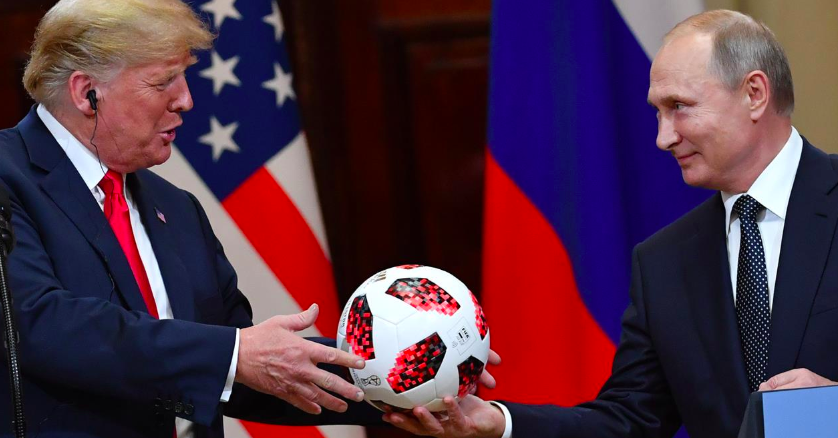
Outside Europe, inside Putin: this is how Trump changed the world (and he got into trouble)

Angry reactions in the US after the Trump-Putin meeting. And it's understandable. The Helsinki summit marks a huge change, already in place, for world balance. The USA is no longer anyone's friend and runs alone. And for Europe and the Atlanticists it is not a good moment. (Of Fulvio Echelon, LAWS)

Read More

Share

Migrants, selfish and divided Europe will make Salvini triumph

Report Linkiesta

Image

Migrants, selfish and divided Europe will make Salvini triumph

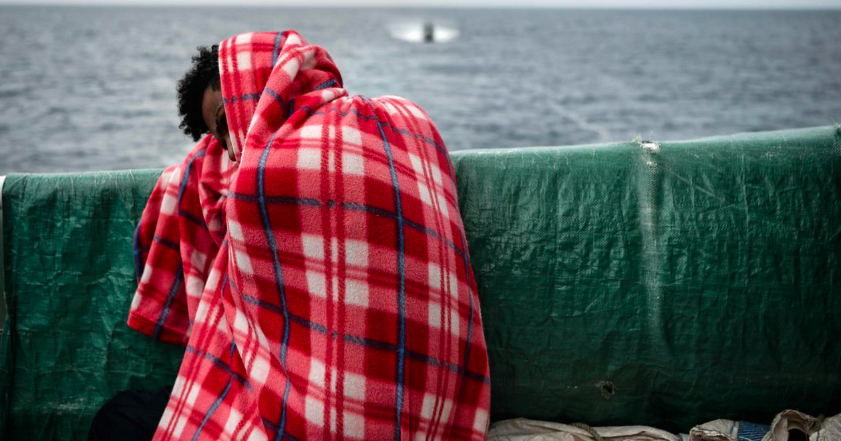
The Aquarius affair has shown that Italy can pound its fists on the table and make itself heard. But the migrant issue is a structural crisis and cannot be addressed as a humanitarian emergency: everyone must take their own responsibilities and the flows must be governed. (Of Fulvio Echelon, LAWS)

Read More

Share

The United States is tearing us apart, but in Italy no one noticed

Of Fulvio Scaglione
The United States is tearing us apart, but in Italy no one noticed
Source: linkiesta

While bon ton Italy has a good time discussing populism and sovereignism, the Empire strikes again. Mike Pompeo, the secretary of state who came from the CIA (where it leaves, as new boss, tale Gina Haspel, at the time neocon very active in torture and now in fact confirmed in office with the decisive votes of the Democrats), announces "the harshest sanctions in history" against Iran, which could only be canceled if the ayatollahs took appropriate measures. Like disappearing off the face of the earth or converting to Buddhism. There is a basis for the disagreement with Iran, as is known, the Iranian nuclear deal signed in 2015 there USA, Ue, Russia in Onu. For almost the entire world the agreement works and, at a minimum, has blocked Iran's path to military nuclear power 15-20 years. For three countries, however, it is a dangerous disaster. Three against all, but in the three, alongside Israel and Saudi Arabia, there is the Empire, then the table jumps. Bad but that's how empires do it.
In the same speech, but, Pompeo, on behalf of the American administration, clearly explained the fate that awaits us: “We understand the financial and economic hardship this imposes on our friends, but you should know that we will hold accountable those who do prohibited business with Iran. I know that the Europeans want to preserve the nuclear agreement but now they know what our position is".
It's beautiful. Why Pompey, when he talks about “forbidden affairs”, means the businesses prohibited by the USA and the sanctions decided by them, not illicit or criminal business at all. 5 billions of actual trade, others 25 between protocols and agreements already signed and to be implemented. To give an idea: 30 billion was the value of the Italian Stability Law of 2018.

Read More

Share

United States and Iran: Europe to the test

Of Fulvio Scaglione
United States and Iran: Europe to the test
Source: Fulvio Scaglione

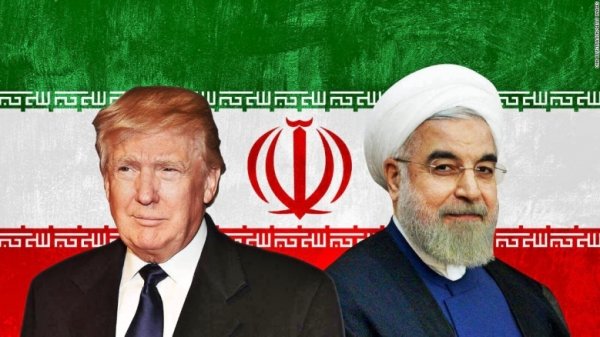
The Iranian crisis, much announced and finally exploded, will test the European Union. It is not the first time that the EU has had to demonstrate its virtues, and the results were not brilliant. This, but, it could be the last because the cancellation of the Treaty signed in 2015 with the government of Hassan Rouhani it could decree the end of any attempt to give Europe a political physiognomy.

The question is very simple. According to the European Union (and also the UN and Russia, moreover), the agreement of 2015, built to block Iran's path to military nuclear power, works, Iran respects the pacts and there is no reason to cancel it after such a short time. According to the USA (and also Israel and Saudi Arabia), on the contrary, the agreement is full of holes, it offers no security guarantees and Iran lies, because he continues to try to prepare the atomic bomb.

It would be difficult to imagine a sharper difference of opinion than this. Which is furthermore broadened by questions of economic interest. The USA wants to favor traditional partners in the Persian Gulf, who are, among other things, much richer than the Iranians. Europe has a long and cordial commercial tradition with Iran, enjoyed above all by Italy and Germany. Our country is now the second largest exporter to Iran (especially mechanical and chemical industries) and the second importer (especially oil) after Germany, first in both sectors. In the 2011 commercial relationships between Italy and Iran they reached their peak, with a value of 11 billions of euros. In the 2012 sanctions, also imposed by the EU, they caused the value of a to collapse 1,3 billion, but the projections for the 2018 they talk about 3 billion, therefore we are rapidly regaining our former positions. Read More

Share