

Of Fulvio Scaglione
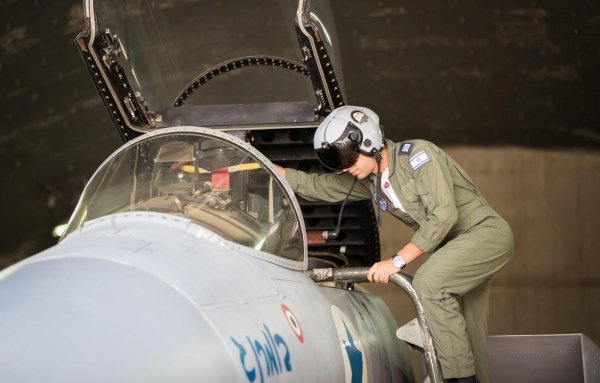
Source: The eyes of war
The news of the latest events in Syria, from the first Russian bombings on Idlib province to American threats, from the Russian reconnaissance plane shot down by Syrian anti-aircraft due to the maneuvers of Israeli fighters to the missiles on Latakia to the phosphorus bombs dropped by the Americans on Deir Ezzor, it's obviously dramatic.
But the political background is more complex than it seems, in a certain sense, even less worrying. The game is the same as usual: control of Syria. Or better: the control of its fragmentation. A very powerful coalition for seven years, which goes from Saudi Arabia to the USA, from France to the United Kingdom, from Türkiye to Qatar, passing through a long series of countries that have been or are "de facto" accomplices, works to disintegrate the political and territorial unity of Syria.
These countries have not always shown perfect unity of action or political vision. Turkey, for example, after the failed coup of 2016, which Recep Tayyip Erdogan considers inspired by the USA, it took an autonomous path and built a sort of understanding with Russia and Iran. Nonetheless, that has always been the goal, under the slogan “Assad must go”. Such an important goal that, to reach it, the strange coalition has gradually bet on different horses.
The Free Syrian Army, financed by Türkiye and not surprisingly ended up acting as a mercenary force in Erdogan's offensive against the Kurds of Rojava. L’Isis, financed by Saudi Arabia, against which it was pretended to be fought for a couple of years and which was abandoned only with the arrival of Donald Trump in the White House and above all with the Russian-Syrian victory in Aleppo. Al Nusra, the Al-Qaeda militia supported by the Gulf countries. Lately the Kurdish-Arab militias of the Syrian Democratic Forces, supported by the Americans and settled in the area between Syria and Iraq in the province of Deir Ezzor. In summary: anyone was fine as long as they declared themselves an enemy of Assad and managed to occupy a piece of Syria.
The Syrian army gradually recovers, supported by the Russians, by the Iranians and the Lebanese Hezbollah militias, he leafed through the daisy, until they didn't stay, in other hands, the area controlled by the Kurdish-Arab militias around Deir Ezzor e, above all, the province of Idlib. Not much for those who wanted to tear Syria into pieces and now have to face the prospect of total defeat. As, and obviously not by chance, the incursions intensified. Military and political.
A Deir Ezzor, as they said, American fighters arrived with phosphorus bombs. US ambassadors at the UN, France and the United Kingdom have raised a lot of fuss about the "humanitarian catastrophe" that a possible Russian-Syrian attack would have caused. A very hairy thing, given that these same countries cooperate with Saudi Arabia in massacring civilians and children in Yemen, but that's it.
And then came Israel's raids on Damascus and Latakia, shortly preceded by the agreement on Idlib between Russia, Iran and Türkiye. It seems like just one game but instead there are at least two games, intertwined but distinct. One concerns Iran, the other Syria. The Americans: they want a military base to control from (and maybe counter) Iranian presence and influence in Iraq and Syria.
This is what the Kurdish-Arab militias of Deir Ezzor are for, which the US protects with its fighters. It is an orthodox strategy, so to speak, the almost natural outcome of a series of decisions (starting from the enlistment of Sunni militias, called “sons of Iraq”, organized by General Petraeus in 2007, when even the Americans had understood that the invasion of 2003 had opened the doors of Iraq to Iranian influence, militias that in 2014 they looked with benevolent eyes at the arrival of ISIS) which had and have a single purpose: downsize Iran, break the Shia Crescent (Iran, Iraq, Syria and Lebanon), reassure the region's Sunni allies.
They concern Iran, more than Syria, also the Israeli bombings of Damascus and Latakia. There have been hundreds of Israeli raids that have hit Syria in recent years, but aiming at the Iranians. According to the infamous Syrian Observatory for Human Rights in Coventry, in the last five months Israel's bombs would have killed at least 150 Iranian flags in Syria. Behind all this is the anti-Shiite alliance signed by Israel and Saudi Arabia with the blessing of the USA, but also Moscow's strategy.
Vladimir Putin has so far managed to fight alongside Iran (and before that, to favor the agreement of 2015 on nuclear power) without becoming fully friends with him, and to fight against Saudi Arabia, major financier of ISIS and other terrorist groups, without becoming its enemy e, On the contrary, coordinating oil policies with Riyadh. The same goes for Israel: Netanyahu and Putin meet regularly and relations between the two countries are positive. Not even Putin, In short, likes excessive expansion of Iran in Syria, so much so that from the reconquest of Daraa, close to the border with Israel, Iranian militiamen were kept out.
It almost seems that the Kremlin leader is leaving the task of bringing the Iranians stationed in Syria back into the ranks to the Israeli air force, having in exchange obtained that Israel does not put a finger on the relationship between Moscow and Damascus. If he had wanted to clash with Israel and tighten relations with Iran even more, Putin also reportedly supplied Syria with the modern S-400 anti-aircraft system, which it has recently sold to Türkiye. Finally, Turkey. Erdogan is getting what he wanted, that is, a range of competence in Northern Syria, as established in the last meeting with Putin.
In the province of Idlib, a demilitarized zone wide will be created 15 a 25 kilometres, patrolled by Turkish and Russian soldiers. Away with the heavy weapons and away we go, above all, and Islamist militants. The agreement was made possible by the situation in the province, or rather by the balance of power between the rebel groups. I Qaedisti of Hayat Tahrir al-Sham, financed by the Gulf countries e, until a few weeks ago, also from the USA (Trump interrupted a stream of 250 millions of dollars distributed like a rain shower to supposed humanitarian organizations) they check about the 60% of the province, opposed only by the National Liberation Front, created and financed by Türkiye which brought together the remnants of the Free Syrian Army and smaller Islamist groups. If the agreement signed with Putin works, the Qaedists will be eliminated and, in fact, Turkey will have a big role (obviously played with an anti-Kurdish function) in the management of this portion of Syria. Erdogan won but Putin did not lose. The military reconquest of Idlib (where more than 50 thousand militiamen are hiding among 2,5 millions of inhabitants and refugees) it could become a massacre and require enormous sacrifices in lives and resources. If Türkiye and Russia succeed, Together, to eliminate the qaedists, they will still have destroyed the fifth column of Syria's fiercest enemies, the countries of the Persian Gulf, and consolidated a fundamental alliance for both. There will be time in the future to improve the agreement and decide the fate of that province. Also seen that, in the meantime, Erdogan has already forgotten that he served, a few years ago, in the “Assad must go” front.
Similar Posts

Erdo-chan has forgotten nothing and is only acting as a cunning man by meddling in nations without competence or authority ! The story of the Kurds is just an excuse to piss off Syria, given that Syria already kept the Kurds in order. These same ones who hang on the lips of the USA and sign agreements with US mercenary troops. In short, they insist on considering the USA as their benefactors. In short, the columnist briefly paints scenarios and gets them right 70%. The rest is political fiction.