Nigeria: a country devastated by its "wealth"

Of Except Ardizzone
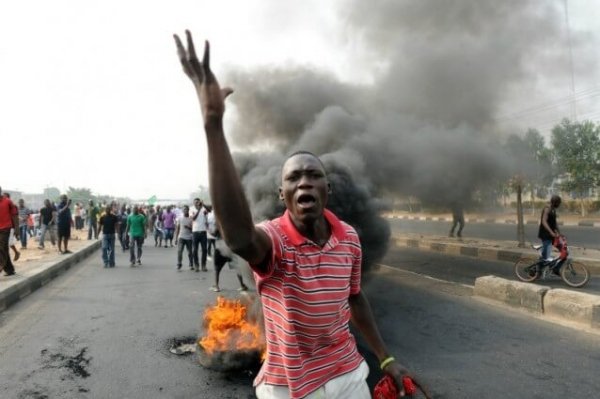
Nigeria: a country devastated by its "wealth"
Source: The Lighthouse on the World
The Nigeria it is a country larger than France and Germany combined, with above 170 millions of inhabitants who lead a miserable life (54% of the population below the poverty line) despite being above a sea of petrolium (extraction, although slowed down by many problems, it is approximately two ml of barrels per day) and say gas; and said incidentally, this is where 80% of tax revenues come from and the 95% of exports, because the rest is the desert. The GDP, which is the second largest in Africa, it is divided in the most unequal way not only among the people (the rich are there, yes!), but also between regions (which are called states there) and region and between ethnicity and ethnicity. And there are many ethnic groups in this state (circa 250!) cut, like many in Africa, based on the whims of the colonialists (they were English there); the most important are five: Comment (21% of the population), Igbo (18%), and Ijaw (10%) who are in the south; Hausa Fulani (20%) it's Kanuri (4%) who are in the north. Read More


Share

Libya in the hands of traffickers now looks to Italy for a turning point

Of Alessandra Bocchi
Libya in the hands of traffickers now looks to Italy for a turning point
Source: The Lighthouse on the World
Migrations for Libya and from Libya are still a problem and, to pay for it, it is the same local population. “The Libyans want the immigration phenomenon to be stopped”, Jamal Adel tells us, a boy who is part of the Tebu tribe in Kufra in the south-east of the country.
“It would be a great thing if the new interior minister Matteo Salvini could stop the migration problem", another boy who requested anonymity for security reasons and who works for an organization that monitors conflicts in Sebha tells us, a town destroyed by human trafficking.
The boy then adds that “few newspapers are interested in what Libyans think about the migration phenomenon but, actually, we want this phenomenon to stop because it is seriously damaging our country".
Mac K. B. Simpsons, Ghanaian and migration expert who lives in Tripoli, he tells us: “It is important that this trafficking is stopped before the migrants even enter Libya”.
For many Libyans the problem is to be found above all in the NGOs operating in the Mediterranean: “Traffickers rely on NGOs, it has already been proven that they collaborate. They also feed the Libyan and Italian mafias", says Adel. Read More

Share

Forty-year-olds today: a generation of precarious workers

Of Massimo Caruso
Forty-year-olds today: a generation of precarious workers
Source: The Lighthouse on the World
Life begins at forty. Those of my generation often heard this as children, perhaps from the forty-year-olds of the time who, already at that age, they smelled of retirement. The same pension as my generation, a generation of precarious workers for life, he will see very late or perhaps he will never see.
We don't want to rant, but data in hand, the age group come on 35 ai 49 years has in fact found itself entangled in a dramatic situation from which it will be difficult to escape without facing the consequences and related expenses. The deep wounds caused by this terrible social butchery already have a cost and the bill that will arrive in the years to come will be even saltier.
The costs that are already faced are economic, social and health. The costs that will be faced will be predominantly political, because the same policy that created this huge trap and has still not managed to defuse it, will have to make sure to put together the pieces of a generation shattered already from its first foray into the world of work. Precisely, a generation of precarious workers.
The numbers are merciless: in Italy, since December 2016 in December 2017, employed people aged between 35 e 49 years have waned 2,1%, for a total of approximately 204 thousand people. The worst result among the various age groups, if you consider that, in the same period, the band between 25 e 34 years, recorded losses for the 0,7%. Read More

Share