
Of Except Ardizzone
Source: The Lighthouse on the World
The Nigeria it is a country larger than France and Germany combined, with above 170 millions of inhabitants who lead a miserable life (54% of the population below the poverty line) despite being above a sea of petrolium (extraction, although slowed down by many problems, it is approximately two ml of barrels per day) and say gas; and said incidentally, this is where 80% of tax revenues come from and the 95% of exports, because the rest is the desert. The GDP, which is the second largest in Africa, it is divided in the most unequal way not only among the people (the rich are there, yes!), but also between regions (which are called states there) and region and between ethnicity and ethnicity. And there are many ethnic groups in this state (circa 250!) cut, like many in Africa, based on the whims of the colonialists (they were English there); the most important are five: Comment (21% of the population), Igbo (18%), and Ijaw (10%) who are in the south; Hausa Fulani (20%) it's Kanuri (4%) who are in the north.
But imbalances and divisions are not just a geographical fact: the colonialists stopped on the coast or just inland, and they concentrated their activity there, laying the foundations of that minimum development and above all establishing missions; they went very little to the north, and the territory remained abandoned to itself. Thus they contributed to Nigeria's most deadly divisions, even more than ethnic groups: Christians are concentrated in the south (+/-40% of the population), in the north the Muslims (+/-45%) with about a 15% of animists scattered in the middle band. Plus, given that that minimum of modernization and education was in the south, those are the ethnic groups that (for a long time now) they have control of the administrative and economic apparatus of the state, especially the Yoruma; all north, to count something (and also for tribal culture), the only path was that of the Army, so he Hausa Fulani they took control of the Armed Forces, inaugurating a diarchy between the two major ethnic groups over the others.
It must still be said that the state is little more than a formal framework within which very different dynamics operate; officially it is a federal state and the states that compose it enjoy great autonomy, either by law or by force of long custom; they confront the President (what powers he has) and parliament (bicameral) it has only mild prerogatives over budgets and laws. The weight of other institutions is much more incisive, for example, in the Islamic north the population recognizes the authority ofBorno Emirate (north east) and of Sokoto Caliphate (a nord ovest); the same happens among Christians and in other parts of the state.
As you can see, the ingredients are all there: weak state, very strong inequalities, widespread poverty, ethnic and religious divisions, and above all one of the worst corruptions in the world. Rebellions could not be missing; the Igbo began with the civil war between '67 and '70 (the Biafran War, remember?), erupted after the coup by Hausa Fulani officers. Since then, and for decades, Nigeria was governed by an iron dictatorship that nipped any dissent in the bud; but when, around the 2000, a timid transition towards democracy began, the desire to rebel came back to the surface.
In the South East of the country, between the Igbo and Jiaw populations, dal 2004 emerged Mend (Movement for Emancipation of the Niger Delta), an eco-terrorist organization that fought against the devastation and robberies of oil and gas multinationals, Eni in the lead (for decades very different from what it was at the time of Mattei). They had reasons to rebel (and they have it) really many; throughout the Delta there is a succession of environmental disasters that will mark that nature forever: forests reduced to a quagmire of crude oil, barren fields, waters covered in layers and layers of oily waste, disappeared fauna and the population is prey to a thousand diseases due to the fumes of unsafe systems. And not even crumbs for those people reduced to poverty, even those are engulfed by a frightening corruption that makes everything rot only in bribes.
Attacks on mining plants and platforms (often defended by authentic private armies) they followed each other, such as the kidnappings of technicians and staff, and as always happens in such a context, terrorism and crime have ended up mixing on the heads of the populations. Police and Army responded in the only way they know how: with a brutal and bloody repression that added harassment to harassment; only in 2009 the government proposed an amnesty for the guerrillas, than in several, tired of an impossible life, they laid down their weapons. But the attacks and especially the kidnappings continued; and development, for the people who survive in that hell, today it is not even a dream.
In the North East the situation is more complex: they are arid lands like their neighbors Sahel, forgotten by successive governments, and the only help comes from Islamic organizations. In this area an ancient Salafist preaching (richly subsidized by the Saudis) it is welded to visceral hatred against the central state and the West. Over time it was born Boko Haram and then Answer, two movements that want to establish an Islamic state with Sharia as the only law; they are connected to the Al-Qaeda galaxy, and if the first is aimed only at the Kanuri ethnic group, the second makes proselytes among all Muslims, Hausa Fulani in the lead.
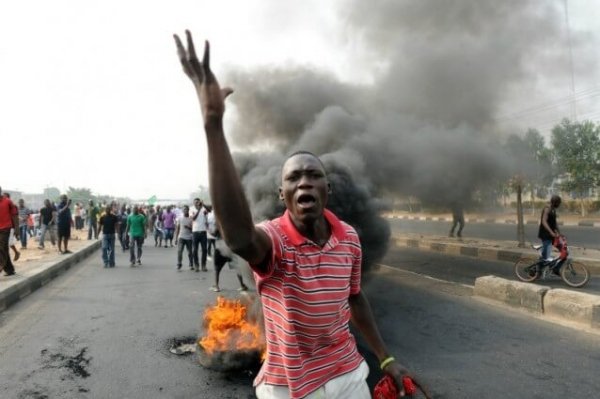
Dal 2010 it is open war with beyond 400 attacks and more than 18 thousand victims, and their influence is clearly expanding thanks to the more or less secret support of various politicians; the latter believe that by weakening the central government their maneuvers will be favored, but they don't think that in the end they will be the first to be swept away.
The rebels are financed by donations and aid, but above all with arms trafficking, drug, human beings, with kidnappings and imposing extortion even on the governors of the states, thus bonding with the gangs of marauders throughout the area. They control an abandoned territory and make it their own.
The government has only been able to give a military response that speaks the language of violence, and with blind repression it pushes the population into revolt. It has attempted to crush it several times by launching massive operations also with the help of Chad and Niger; together they inflicted heavy losses, destroyed camps and warehouses, ma, the soldiers left, the gangs return and reform. Rebellion cannot be won by brute force dully applied alone, a radical change in policy is needed which the government is unable and unwilling to make. And over time there are signs of a real genocide of the population caught between the two sides, with burned villages, deported populations, herds dispersed or exterminated, killings, rapes, violence that adds to the violence.
In the long run, while Boko Haram asserts control over the North East, Ansaru increases Salafist penetration among all Muslims, and the expansion of the rebellion places a heavy threat on the role that Nigeria would like to have as leader of the West African Economic Community (Ecowas). Furthermore, il diffondersi della violenza religiosa sta frantumando gli equilibri fra le etnie, e fornendo esca all’indebolimento complessivo d’un sistema già precario.
È un Paese mai nato come tale, che affonda in una crisi alimentata da troppi fattori: troppe diseguaglianze, troppe ingiustizie, troppa corruzione, troppa miseria, troppa ignoranza; power groups, troppo impegnati a preservare i propri privilegi (anche questi troppi), non sanno e non vogliono porvi rimedio.

