FB report by Matteo Salvini
Luigi De Ficchy, chief prosecutor of Perugia: “This is how the trafficking of young girls from Nigeria to Italy occurs”
Of Giacomo De Sena

Nigerian prostitutes
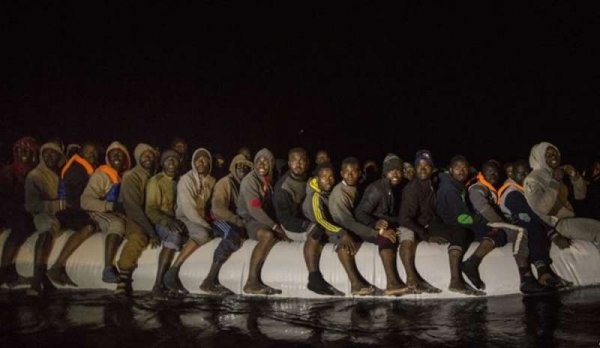
Eight people arrested, six women and two men, all Nigerians. This is the result of an operation by the Perugia Police Flying Squad in recent days, with the coordination of the District Anti-Mafia Directorate of the Perugia Prosecutor's Office, who dismantled a criminal organization dedicated to the exploitation of prostitution in the Umbrian capital. The group of men and women – starting from 2015 – he brought girls from Nigeria to Italy, through Libya, to make them prostitute. The young women climbed into packed trucks, then on the now well-known inflatable boats that sail in the Mediterranean to end up on Italian pavements. The investigation lifts the veil on a widespread and complex plague, on which On Earth he tried to shed light by interviewing Luigi De Ficchy, chief prosecutor of Perugia.
From this last operation emerge the profound commercial interests that transform these women into commodities to be placed on the various criminal markets: how widespread this phenomenon is in Italy and what can be done to stop it?
“First of all, the public must become aware of the fact that we are not facing an emergency, but to a permanence. There are elements, studies, analyses, investigations into this phenomenon for at least twenty-five years. Personally, according to the national prosecutor's office, I wrote about it twenty years ago. Right, Traffic patterns have changed, maybe once upon a time people arrived in Italy in a different way, migratory flows followed other paths, but human trafficking from Nigeria and neighboring countries is an ancient phenomenon".
The phenomenon has been underestimated?
“I believe that too many people had to face this plague, Unfortunately they put their heads in the sand. The judiciary does what it can, with investigations that are not easy, because they are largely transnational and international, which concern criminal organizations from different countries".
In general, how many criminal organizations are involved in these trafficking?
“If we talk about Nigeria's trafficking, There are organizations already operating in Nigeria. Then, Other organizations are already dealing with the movement of people from sub-Sahara to Libya. And again, in Libya, these people are taken over by Libyan groups who take care of the journey to Italy. Once here, many cells are activated to sort these women on the various markets".
There is also a strong link between drug trafficking and exploitation of prostitution…
“Right, there is a connection, often these same women are used to transport drugs. The Nigeria, of the rest, it is a crossroads of narcotics: Cocaine coming from Brazil and Colombia and heroin coming from South-East Asia and Pakistan pass through there, these substances are then stored and taken to consumer countries. In the 1980s Nigerians worked as couriers for other organizations, today they are managing this trafficking on their own because they have acquired greater criminal capacity. In Nigeria this activity is organized freely because there is considerable corruption and also because poverty is rampant".
How strong is the pseudo-religious aspect of prostitution trafficking?
“In the case of Nigeria it is very strong. In Nigerian girls there is a constraining force linked to voodoo rites. On many occasions, these young people know that they come here to prostitute themselves, while many others don't know it. In any case, However, they are aware that they have to pay a very high price, that of travel, that wanders among the 10 and 20 thousand euros. Money that must be paid under threat towards them and their family members. And then before they leave, often their personal belongings are stolen through voodoo rituals, maybe a tuft of hair or a part of a dress, making them believe that this is used to control them remotely. The figure of the maman should not be overlooked, the woman who goes to pick up these girls directly from the first reception camps to take care of them and force them into prostitution".
There are areas in Perugia, but also in many other areas of Italy, where prostitution is rooted, almost as if it seemed impossible to dismantle. How is this possible??
“Because there is great inattention to the phenomenon of prostitution. The criminal background behind it is often ignored, thus exploitation is seen as a minor crime, with relatively low penalties, hardly repressive of the broad phenomenon in question. And then there is a continuous and numerous demand: There needs to be greater awareness on the part of those who use these women that they are thus responsible for these sad and suffering-filled stories. I therefore consider it necessary to nip the question, but not with sanctioning means, but with culture".
What is the percentage, among the women who arrive in Italy on boats, of those that end up on the sidewalks? It is possible to make an estimate?
“It's not possible. However, keep in mind that, if we talk about Nigeria in particular, it is almost normal for women to be forced into prostitution, even if they are often promised, at the end of the trip, a different job, decent. As for men, most of them, arrived in Italy, they already know that they have no other job opportunities, they will have to join criminal groups or engage in begging".
From the interceptions used in the investigation, the concern on the part of the organizers emerges that these traffickings could be stemmed by the line of the new government?
“The investigation does not only concern the last two months in which the new government has been in office, concerns a previous period, therefore it is not possible to make these assessments at the moment. We'll see if in the future, somehow, the new line will influence the phenomenon”.
Read More