Globalism or Sovranism

Of Mario Porrini
Source: Italicum
A whole series of groups or movements coexist in the globalist galaxy, of apparently very different cultural and ideological backgrounds.
An important part of this front is made up of the ultra-liberal right, by the international banking and financial sectors and by large industrial groups that aim to eliminate borders and free exchange of goods without any type of obstacle or constraint. National states represent superstructures to be demolished precisely because they limit this freedom. It is the market that has to decide, in complete freedom, where to transfer production based on the lowest production costs. The plan to encourage mass immigration in every way, is aimed at exponentially increasing the supply of labor with a consequent reduction in wages and a dramatic reduction in costs. Another aspect not to be underestimated concerns the hospitality business which represents a source of income of colossal dimensions. Read More

Share

The peacefulness of good

Of Adriano Segatori
The peacefulness of good
Source: Italicum
I borrow the title of an article that appeared in "L'Espresso" of 30 September signed by Giuseppe Genna, but subverting the direction. He speaks of the peacefulness of Evil, flirting with the banality of Hanna Arendt; I prefer the Good one, given that the evil of disinformation is widely represented by him and his associates.
He further demonstrated that the technique of confusion and communicative falsification is an art 2500 years ago Sun Tzu placed it alongside that of war: Above all, you defame the good of your opponent; employ the meanest and most infamous individuals; be generous in paying for information, these and other gems were widely used by Mao himself. Ma “The Soviet Union was the leader” as Dario Fertilio highlights in an old essay entitled "The Devil's News", in distorting every form of truth and ethics.
Here then is explained the strategy that is deployed daily by the terminal Italian left, as if the gene - or the defect - of lying were transgenerational.
Not being able to analyze the cited article in its complex system for reasons of space, it is necessary to focus attention on some specific ideas. Read More

Share

Sovereignty cannot be negotiated

Of Adriano Segatori
Sovereignty cannot be negotiated
Source: Italicum
Sovereignty – this one with a capital S – is first and foremost a mental conception, a psychological attitude, a true spiritual style.
A characteristic of man is to talk about what no longer exists, and health is the most striking example of this. When people meet, they don't report good blood pressure data or the regularity of their bowel movements, but they list flaws, various annoyances and disorders. The exact same mechanism is in place for other issues that concern personal and collective life.
There has been rant about family and education ever since the family was decimated by individualistic selfishness and the exercise of the most disparate vicious rights, and education has been excommunicated by the exaltation of spontaneity and uncontrolled independence. Dozens of authorizations are required and school photos are prohibited in the name of privacy since everyone posts the most obscene revelations of their physical and mental life on social networks. We talk too much about freedom and democracy when houses are transformed into forts and the life of citizens is forced between cameras, grates and armored doors.
In short, the real void is always filled by an imaginary surrogate: it is the law of nature. Read More

Share

German financial terrorism against Italian sovereignty

Of Luigi Tedeschi
German financial terrorism against Italian sovereignty
Source: Italicum
Germany dominates Europe through financial terrorism, a weapon of mass destruction for states, which entails the abrogation of democracy.
It was all already planned, however, it was an easy prophecy.
Mattarella's veto is perfectly consistent with a practice inaugurated by Napolitano and now consolidated, that of the president's governments. That this practice is in open conflict with the constitution, that governments elected by the people are removed and other "technical" governments appointed by Germany and European diktats are put before national sovereignty is now clear to everyone. A de facto presidentialism imposed by Europe has emerged. But above all, appointing Cottarelli in Conte's place, Mattarella has made a political choice that clearly violates the Italian constitution.
That of the technicians is in fact an eminently political choice that deposes popular sovereignty. That's how he expressed himself Marco Della Luna in the book“Traitors in the government” (Arianna Publishing 2013), in relation to the appointment of the Monti government by Napolitano: “… In the case of the Italian situation, and in general of a complex system like every country is complex, the problems are many (not just cheap, but also sociological, hydrogeological, legislative), they are unclear but controversial in their identification and causes; there is no precise and shared technique (Why, even within technical economic science there are totally divergent schools both in the analysis of the causes and in the recipes, indeed the crux of the choices is between opposing economic models); it's not just about solving problems, but to choose which objectives to pursue, what priorities to set, which social classes to tax, which to deprive of assistance, which development model (or modestly survival) adopt, and perhaps even more whether to defend a certain national independence or not, whether to accept or reject a Euro-financial architecture under German hegemony, how to challenge and change the current structure of the Eurosystem. All these choices are choices purely political, non-technical; e, based on the Italian Constitution and the general principles of representative democracy, just a political government, with a popular mandate, can be legitimately placed to carry out them. Not a technician or a government of technicians. And in fact the Monti government has done so, with the explicit and repeated endorsement of Napolitano, a series of heavily political choices, ideological, classiste, and very little "techniques". The thesis of the government of the technicians is a lie to cover up a clear and fundamental unconstitutionality, cannot be remedied retrospectively by a parliamentary vote, especially since the parliamentarians and the parties were not free and serene, but they were held under various threats, internal and external, from the spread to early termination before the pension accrues". Read More

Share

Towards the end of the West?

Of Luigi Tedeschi
Towards the end of the West?
Source: Italicum
With the implosion of the West, Europe will also end?
Trump's decision to have the US withdraw from the nuclear deal with Iran, with the relative restoration of the economic embargo, could lead to a rift with serious consequences in relations between Europe and the United States. Probably Trump's breakup, with the doctrine of America First, compared to Obama's foreign policy, it will mean the end of the West itself, as a geopolitical area that identified itself in the Atlantic alliance between the USA and Western Europe, arose at the end of the Second World War.
With Trump, American unilateralism in foreign policy is reaffirmed and Obama's multilateralism declines, as a phase of American geopolitics characterized by the decline of the world primacy of the USA, due to the emergence of new continental powers, such as Russia, at dinner, India and to a lesser extent Iran itself. Emerging powers have brought about the end of the era of American expansionism on a global scale, established following the collapse of the USSR.
Europe's role in the world itself has undergone a drastic reduction, both economic and political. In fact, Europe is not a unitary political institution, but only an economic-monetary union, which from a geopolitical point of view has not been able to free itself from American dominance. Therefore Europe remained strongly involved in American decline in the world, paying the consequences of their subordination. Read More

Share

Plato's Republic: a philosophy against the modern world

Of Luca Leonello Rimbotti
Plato's Republic: a philosophy against the modern world
Source: Italicum
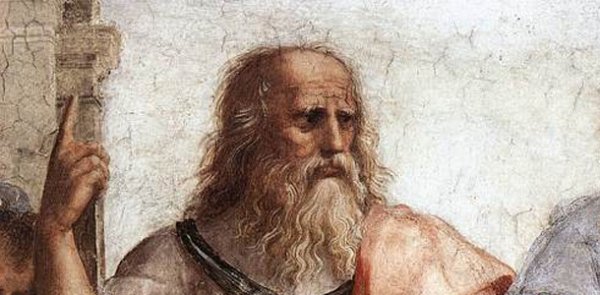
Literary utopia, or a true manual for building politicians? Criticism of Plato's most scathing and incisive work has often moved between these two poles, considering this capital text from time to time as a rhetorical exercise, or an ontological proof, or instead, something that is to be shared, a true manifesto of universal politics, capable of constituting at any time a code of exemplary social stability. Other times however, as in the case of the liberal Popper, Plato and his “Republic” played the part of public enemy number one, the ideology that, proposing a well-organized society in itself, firm and solid and therefore closed to external dangers and evils, more than others, it endangers the beatitudes of the "open society".
The catalog of positions that the Platonic "Republic" presents is one that is difficult to digest for those with an egalitarian stomach, pacifist and progressive. It is impossible not to see that ancient classicism and postmodern degeneration are in antithetical positions. For bourgeois and moderate eyes, cosmopolitans and "do-gooders", Plato's thought represents the greatest scandal: it outlines the community to the highest degree, and therefore dismisses individualism a priori, which instead is the great refuge of liberal impotence. These are some of the most qualifying points of Platonic politics, which constitute – as rightly so, from his point of view, Popper noted – how much more unassimilable to the mentality of post-modern "democrats".: the rigid and severe paideia, the education and selection to which Plato entrusted in the "Republic" the growth of the ruling classes of the ideal city; the suppression of individualism in the face of the prevalence of community interests; community, really, of women and property; the abolition of private property; the dominance of the "organic" State over the individual, whose rights are unknown, but only duties; the type of government, hierarchical, aristocratic and elitist, in which philosophers participate and not at all the mass of the people. All this scandalises the hypocritical and fraudulent nature of modern "democrats"., who pass off their upper-bourgeois oligarchies as governments "of the people" and exchange their financial dictatorships for services rendered to the majority. Read More

Share

Fake News and induced truths

Of Enrica Perucchietti
Fake News and induced truths
Source: Italicum
Interview with Enrica Perucchietti, author of the book “Fake News”, Arianna Publishing 2018, edited by Luigi Tedeschi

  1. According to the thoughts of Walter Lippmann, our perception of reality is conditioned by images, concepts, moral values ​​not directly acquired, but transmitted to us by others. Therefore, the narration of facts is necessarily subjective, a representation of reality formed through stereotypes, assumed as interpretative canons of reality itself. In the fluidity of today's telematic communication, therefore, new stereotypes replace old forms of manipulation of reality. It is therefore necessary to conclude that the perception of reality is always mediated by the uninterrupted succession of cultural stereotypes over time, every truth arises from selective parameters of interpretation of reality itself. In this case the post-virtual truths of media technology, they do not end up being equated with the metaphysical conceptions of philosophical knowledge and/or with the transcendent truths of religious faiths?

The risk exists. Yet the truth is one, with its infinite nuances, beyond the stereotypes or cultural archetypes that each of us has inherited or been indoctrinated into. I agree with the philosopher Alain De Benoist according to which the intent of post-truth would be to discredit the truth by presenting it as a "great story" which can no longer be believed precisely because everyone has constructed their own subjective truth. It would be the triumph of relativism: everything becomes “relative”, virtual and therefore chaotic. At this point of collective disorientation, Power guarantees the existence of its own truth through the supervisory action of the mainstream media and the laws introduced to guarantee order. That is, we want each of us to be increasingly wary of the news we can find on the web even if it is documented and true and, more generally, of alternative information to make exclusive reference to "certified" news.: we must only rely on what the Party says and has decided for everyone. The others will be conspiracy theorists, webeti and well poisoners. Read More

Share