

Of Luigi Tedeschi
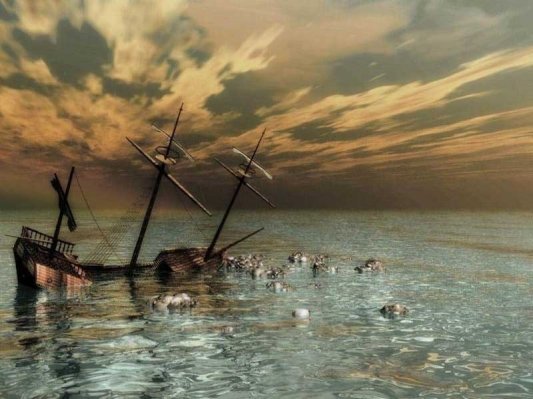
Source: Italicum
With the implosion of the West, Europe will also end?
Trump's decision to have the US withdraw from the nuclear deal with Iran, with the relative restoration of the economic embargo, could lead to a rift with serious consequences in relations between Europe and the United States. Probably Trump's breakup, with the doctrine of America First, compared to Obama's foreign policy, it will mean the end of the West itself, as a geopolitical area that identified itself in the Atlantic alliance between the USA and Western Europe, arose at the end of the Second World War.
With Trump, American unilateralism in foreign policy is reaffirmed and Obama's multilateralism declines, as a phase of American geopolitics characterized by the decline of the world primacy of the USA, due to the emergence of new continental powers, such as Russia, at dinner, India and to a lesser extent Iran itself. Emerging powers have brought about the end of the era of American expansionism on a global scale, established following the collapse of the USSR.
Europe's role in the world itself has undergone a drastic reduction, both economic and political. In fact, Europe is not a unitary political institution, but only an economic-monetary union, which from a geopolitical point of view has not been able to free itself from American dominance. Therefore Europe remained strongly involved in American decline in the world, paying the consequences of their subordination.
Trump's breach could cost us 30 billion
The consequences of the US breaking the agreement with Iran could prove to be very serious from an economic point of view for Italy and Europe. Italy has planned investments by large companies for the near future 30 billion, which could be affected by American sanctions.
The State Railways have concluded agreements for 1,2 billion for the construction of railway lines in Iran. Airbus had been commissioned by Iran Air to supply 100 planes. Current Italian exports to Iran amount to 2 billion, Iranian crude oil imports were in 2017 you seem to 3 billion.
The USA, by restoring the embargo against Iran they will apply the "principle of extraterritoriality" enshrined in American laws. That is, the USA will be able to sanction third countries that have economic relations with Iran, if they have relations with the United States or use the dollar in commercial transactions. Therefore the American sanctions on our exports to Iran for 2 billion, could put at risk Italian exports to the USA which instead amount to 40 billion. According to American laws, the USA can sanction countries that have economic relations with Iran and that use the dollar, which is a reserve currency in international trade and only American banks can authorize transactions.
However in Europe, In the 1996 a regulation was issued, on the occasion of the economic sanctions imposed by the USA in relation to violations committed by European countries regarding the embargoes against Cuba, Libya and Iran, which prohibits European companies from paying fines issued by the USA under American laws. BNP Paribas was sanctioned for 9 million and Intesa San Paolo for 3 million dollars. However, the sanctions imposed on companies are devastating, because they prevent making and receiving payments in dollars and inhibit the provision of credit. Therefore the European regulation does not represent an adequate form of defense against American sanctions, as companies that are prevented from accessing credit lines are not protected and therefore prevent any activity towards countries subject to American embargoes.
Europe can exercise some form of reaction to such embargoes, through state financial support for businesses, e a tal fine, should introduce exemptions from EU rules on state aid. New negotiations with the USA are hoped for in Europe in order to obtain changes to the rules on embargoes and possible exemptions from American sanctions, as Merkel and Macron attempted in their talks with Trump in recent days, but without success. This affair constitutes further confirmation of European weakness and irrelevance in world geopolitics.
The price of the Atlantic alliance
In reality, Europe is paying today, as always, the consequences of his Atlantic choice, of its perennial vocation to deny itself. Europe has never achieved its political unity, but it is and remains an economic-monetary union. In fact, it should have been established as an independent and alternative geopolitical entity to the USA. Instead, the EU was established within the West and therefore with the explicit acceptance of American primacy in the Atlantic alliance. The West was born as a bloc opposed to the USSR in the bipolar world of the Cold War that arose in 1945, with the end of the Second World War.
The West has always identified itself with NATO, Atlantic alliance remained in force even after the end of the USSR and the EU expanded by associating the countries already members of the Warsaw Pact, in conjunction with the expansion of NATO into Eastern Europe with an anti-Russian function.
Today Europe has become the "soft underbelly" of the West. Trump's USA, in addition to sanctions on European economic activities against embargoed countries, they want to impose tariffs 20% on the import of European cars. Furthermore, Europe is still suffering the repercussions of the economic sanctions imposed by the USA on Russia.
Europe from the second half of the 20th century onwards, it has made its economy prosper by virtue of acceptance / imposition of a state of limited sovereignty against the USA, to which defense with the Atlantic alliance and foreign policy has been delegated. However, Trump's America has no intention of further supporting NATO unilaterally. In fact, the USA demands from the European countries of the alliance a contribution to military expenditure equal to 2% of GDP.
Europe has petrified itself in this condition of subordination to the USA, without having understood the spirit of our times, that is, without taking note of the transformations that occurred at the dawn of the 21st century and are still underway in world geopolitics.
Europe lives from its internal conflicts
With the decline of American primacy, the strategic project of US expansion in Eurasia also came to an end, by virtue of Putin's Russia's return to the international scene. However, Europe has become complicit in America's policy of aggression against Russia in Ukraine.
Europe has made itself a prisoner of itself, immobilized by financial regulations that have undermined its economic development. The EU has only generated internal conflicts, between states, European peoples and institutions. The economic-monetary union has encouraged the selfishness and predatory instinct of Germany and its satellites, establishing relations of economic and political domination over the weaker states of southern Europe.
The EU, established on the basis of a neoliberal model, it has not even proven capable of dealing with the economic transformations resulting from globalization. Giulio Tremonti stated in this regard: “Europe deals too much and badly with the market and internal competition, too little, but still bad, of the market and external competition…… We already have 20 millions of unemployed. Little compared to what awaits us. In this way we will become an economic museum. Europe continues undaunted to make too many rules and therefore burden European industries and civil societies with artificial costs".
A Europe outside of history?
The West is waning in a world of constant transformation, just as globalization itself manifests increasingly evident contradictions, with the phenomenon of rampant populism and the return to multipolarity of states, of which not only emerging countries, but Trump's America itself is a clear manifestation of this.
Europe is now marginalized, foreign to itself, out of history.
The West has never been a geopolitical area of shared values and interests between Europe and the United States. On the contrary, divergences and conflicts have always been dominant. Europe has always accepted the dollar as a reserve currency, suffering the repercussions of the American economic crises and was unable to impose the euro as a currency for international trade as an alternative to the dollar.
The conflicts with the USA were very acute in the two Gulf wars, during the invasions of Afghanistan and Iraq. However, Europe shared the aggression against the countries of North Africa in the "Arab Spring". Today, after the end of ISIS and the failed aggression against Syria perpetrated by the USA, from Saudi Arabia and the United Arab Emirates, the United States, with the obvious pretext of Iranian nuclear disarmament, they lay the foundations for new conflicts by supporting Israel and Saudi Arabia against Iran. E’ the irreconcilability of European interests with American foreign policy is evident.
In reality it is the American protectionist policy with the imposition of duties and the denunciation of the nuclear treaty with Iran, they sanction the imminent end of the West, as a clear political and economic contrast emerges between the USA and Europe. But such events could turn into epochal opportunities for Europe. The end of the West could in fact represent the definitive liberation of Europe from American domination and favor the birth of an independent and sovereign Europe in the multipolar world that is emerging.
But a Europe outside the Western context is currently unthinkable. Europe, or better, its ruling classes, they are adverse to any sovereignist project, their power is structurally based on dependence on American financial capitalism.
We will therefore assist, with the implosion of the West, even at the end of Europe?
Similar Posts
