The geopolitical profile of Italian subjection

The geopolitical profile of Italian subjection
Of Paolo Borgognone
Source: Gefira

1) When (and how) it started there “unhooking” of the Italian left by the popular masses?
Left, as a party of the bourgeois classes, illuminists and owners since the end of the 18th century has not been established as a reference point for the popular masses, with which it is actually in conflict. The left has “debut” on the European scene with the Vendée genocide, in which the popular masses considered traditionalists were exterminated by the Jacobins... In the 19th century the left was, in Italy, the reference party of the new industrial bourgeoisie and socialism was not born, originally, as a left-wing but communitarian ideology. The left met next, let's say at the beginning of the 20th century, the popular masses and was the interpreter of the dialectical phase of capitalism but with 1968, founding moment of the new left as a party of the radical modernization of bourgeois customs and consumption, the convergence between the left and the people, between progressive intellectuals and the working classes, had already disappeared again. From there on, the streets of European left-wing intellectuals and those of the working classes, workers and subordinates were irreparably divided, at least from the point of view of the previous ideological alliance established in the culminating phases of the thirty glorious years of Fordist/Keynesian capitalism (1945-1975).
2) Because the left has "abandoned" the latter and has thrown itself onto the bandwagon of global turbo-capitalism?
Because today's European left is a form of Americanization, a prime example of “politica fashion” which looks to the metropolitan wealthy classes, cosmopoliti, gay-oriented and with intellectual pretensions. I believe that the reference ideology of the liberal and radical-chic left, that is, political correctness and the culture of supermodern mobility, constitutes the systemic side of global capitalism. Liberal democracy, that is, the self-government of the rich classes, it is the political model that the international ruling classes of "left" they proclaim, uncritically, like some kind of new “heaven on earth”. Ora, it is obvious that liberal democracy constitutes the best political framework within which today's capitalism can develop, financialized and digitalized. For this reason, liberal democracy is also the worst political model that the subordinate classes could hope for because in a context of real liberalism the claims, social, of the working and subordinate classes have no possibility of establishing themselves or finding acceptance among the dominant ones. The separation between left-wing culture and the popular classes is a historical phenomenon perfectly in line with today's capitalist reproduction cycle. Contemporary capitalism is in fact leftist, that is, animated by assumptions inspired by the principle of liberalization of customs, of consumption and bourgeois desires. The left considers workers' social rights as a statist and patriarchal legacy of memory “Soviet” and recognizes the pseudo-culture of mobility as the key to today's processes “liberal economic modernization” which European progressive parties wholeheartedly adhere to. In Italy, the PD is the “American Liberal Party” and he's happy to be. I take note of it. Peace to his soul...
3) Who benefits / who is behind the drums of anti-fascism in Italy (in the absence of fascism)?
The narrative of anti-fascism in the absence of fascism benefits those political forces, economical, media and academic institutions aimed at trying to shore up the balance of power and class balances existing in the regime of liberal capitalism and market society. In the 2018, in Italy, the mainstream has reactivated the political-ideological mechanisms of the strategy of tension, this time with an anti-sovereign function and, as indeed in the sixties/seventies of the last century, anti-Russian. Italy is in fact a defeated country with limited or non-existent sovereignty, a sort of NATO colony. The Atlantic Alliance cannot in any way allow a shift in Italian foreign policy in a pro-Russian direction. He couldn't allow it in the 1960s/70s and he can't allow it now. The recipients of globalist tension strategy policies are those parties and social actors that are outside the mainstream and that intend to establish relations of détente and collaboration with Russia. Russia is in fact the main geopolitical and cultural opponent of globalism and who seeks an alliance with Russia, on the right as well as on the left, he is demonized by the mainstream and ends up on the NATO and EU blacklist.
4) Can you summarize who is behind – in short – the M5S and its aims?
The M5S is the new party of the globalist left disguised as a mainstream community “anti-corruption”. Behind the M5S are the professional classes of the new digital economy who founded it and the liberal ideology that determines the liquid-modern society. The M5S is a neo-bourgeois party with a popular electoral base, southern, who asks for welfare. The M5S talks about the fight against caste, but which elite is he referring to when his spokespersons raise the tone on the subject? Certainly not to the international capitalist castes, to the lords of debt-issued money, to the pimps of the exploitation of flexible and precarious work and to the rainbow generals of NATO who wage wars to export abroad the gay-oriented and metrosexual foundation myths of Western society. The formal leader of the M5S, Luigi Di Maio, he is a mainstream politician. Talk about “fight against annuities” of parliamentarians, a topic that appeals to the general couch potato audience but which has no impact on the real economy of Italy e, contextually, he goes to the City of London to swear eternal loyalty to the regime of globalized capitalism. Furthermore, the M5S is a party in favor of policies of opening borders to immigration and, for this reason, is characterized as a political subject further within the liberal ideological mainstream. I believe that the M5S was formed by the transnational upper class that determines the processes of postmodern anthropological engineering as a political marketing tool and functional gatekeeper to intercept the sovereignist vote and to channel the spirit of rebellion of those penalized and disappointed by globalization in the direction of a liberal-globalist and "synthetic" party, more or less disguised as an interlocutor “anti-system” of the deprived and oppressed classes.
5) There are – at the moment – ​​credible political forces in Italy that are truly interested in protecting the interests of the poorest, of the poorest, of those who were once represented by the "left"
In Italy there are parties that preach a certain electoral sovereignty whose effectiveness needs to be verified by the facts. Personally, I appreciated the "national" turning point of the League and I consider Matteo Salvini to be a much more intelligent and prepared politician than the left-wing mainstream is portraying him as. However, the League remains a fundamentally liberal party in economics and pro-Zionist in foreign policy, therefore trapped in a whole series of political-anthropological contradictions which weaken the message of criticism of globalization which he sometimes conveys with good communication skills. I also consider it a notable step forward for the League compared to the mainstream past of this movement in having nominated important economists who are critical of the euro as an instrument of neoliberal governance of international private markets., like Alberto Bagnai and Claudio Borghi. Furthermore, the League has made a notable leap in quality on a cultural level by starting and deepening the comparison with thinkers of the caliber of Alain de Benoist and Aleksandr Dugin. I hope that the League continues, in the metapolitical context, on this path undertaken, fully incorporating the lessons of de Benoist and Dugin. Left, Instead, I respect Marco Rizzo, leader of the Communist Party. I do not share Rizzo's integral Marxist-Leninist ideological approach, but I consider this political exponent to be the most lucid opponent, coherent and combative of the regime of liberal capitalism and of “open society” among those who, in Italy, they refer to the legacy of twentieth-century historical communism.
6) You can explain to the average European what an organization like UNAR is and what it is used for in Italy?
UNAR is one of the public thought police apparatus aimed at repressing those who dare to dissociate themselves from the single and obligatory religion of left-wing cosmopolitanism. It is interesting to note how contemporary liberal governments act to promote the dictatorship of the new politically correct moral conformism calibrated to “gusto” from the “young globalized middle classes” and self-styled trendy, in a context of economic precariousness for the lower classes. The Italian case is paradigmatic in this sense. The PD has in fact launched almost simultaneously the UNAR which establishes the regime of moral conformism and the “Jobs Act” which nails future generations to the slavery of flexible and precarious work. The contemporary liberal regime therefore acts on two fronts: in culture, promotes the new politically correct morality, also providing ad hoc sanctions for those who contest or oppose the new moralism of manner. In economics, passes laws that implement the power of arbitrariness of capital which is self-sustaining and self-legitimizing within the perimeter of the “open society” in the name of the mainstream rhetoric of “freedom of profit”.
7) See a solution to the phenomenon of “migrants” in the short term? What are they for and who is behind NGOs in this business?
It is clear that the immigration business is extremely profitable for the upper classes, for the oligarchy, for new economy professionals who can benefit, thanks to the new industrial reserve army made up of illegal immigrants, of a substantial reduction in the prices of postmodern services of which they are avid users. Mass immigration is useful to the godfathers and godchildren of the liberal capitalist regime while the social costs of such policies of revoking national territorial borders are irremediably passed on to the working classes, those who have to live with immigrants without being able to take advantage of their low or no paid labor benefits. The theme, Anyway, I'm not very passionate about it because I'm practically not there, in Italy, at the political level “what matters”, parties and movements that propose credible solutions to the problem. Some European countries, those of “Visegrad Group”, they moved in time and, thanks to their monetary independence, have been able to launch effective policies to combat mass migratory flows. Italy, Instead, a country blackmailed by Brussels and administered by a non-sovereign government, it broke down its internal borders exactly as the European multinational business classes had asked of it. Furthermore, in Italy, the mainstream right-wing parties that claim to be anti-immigration have not yet wanted to understand that one cannot be liberal and libertarian but against mass migratory flows since today's migrations, entering or leaving the country, they are an epiphenomenon of capitalism. Why, these parties will be credible when they understand that the national sovereignty they talk about during the electoral campaign is not a historical category compatible with the opening of the state's borders to the so-called multinational investors of the new economy.
8) Quoting Warren Buffett's now famous phrase “there was a class struggle and we won it”, how to define the figure of Pope Francis (note the lowercase) in this class struggle? It is correct to say that this pope has absolved / it fulfills a useful task for the "class" that Buffett talks about?
Bergoglio inserted Emma Bonino and Giorgio Napolitano, that is, two Italian political exponents who wage class warfare on the side of the rich every day, in his very personal pantheon of the "greatest Italians". To those (Italian Episcopal Conference) it sided with the center-left led by Gentiloni-Bonino in the last political elections. Yes, essendo ormai una costola del partito transnazionale politically correct, and maybe even something more than just a rib, I think that the contemporary Vatican hierarchy has chosen a side in this gigantic class conflict that characterizes the global reproduction dynamics of capitalism “third phase”

Read More

Share

The how and why of Populism

Of Umberto Bianchi
The how and why of Populism
Source: Heretically
At the end of a decidedly close electoral contest, the verdict that came out of the polls has, indiscutibilmente, rewarded all those formations that, somehow, they imitate or are themselves considered “populist”. The reference applies to both the League and the Movement 5 position, US President Trump, the transalpina Lady Marine Le Pen, That, in the most recent past for the Forza Italia of the golden times and, really, in very recent times, as if by someone risky, also for Renzi of the original "scrap" version. A term whose meaning has included a bit of everything and its opposite.
But what exactly do we mean by “populism”?? What is the exact political meaning in which this term should be placed, very fashionable nowadays? If we want to refer to the letter of the history of political movements, by “populism” we mean a series of movements that, at the end of the nineteenth century they developed in disparate contexts. In Russia, Populism was represented by the “narodnjki”, whose most authoritative exponents were the colonel and mathematics professor of the Military Academy Pyotr Lavrovič Lavrov, supporter of populism in a socialist key, together with its popularizer and idelogue, the sociologist and literary critic Nikolai Konstantinovič Mikhailovsky, having as its object the emancipation of the peasant masses, starting from the rural/"obscina" community. France instead, began with Paul Deroulede's League of Patriots, che unitasi ad un altro movimento populista di massa, Boulangism (named after Georges Boulanger, charismatic general of the French army) he became an advocate of a radical and revanchist nationalism, always connected to the increasingly widespread discontent of the masses, towards the young French parliamentary republic, much to achieve in 1888-89, after obtaining the support of the monarchists, of significant electoral victories. In the United States it was the People's Party (People’s Party), also known as Populist Party (Populist Party), summarily called "Populists”, which party was established in 1891 in the United States of America which, during the “populist” period, took hold towards the end of the 19th century. Supported by the lower classes, especially by cultivators hostile towards elites in general, had its peak between 1892 and the 1896. Read More

Share

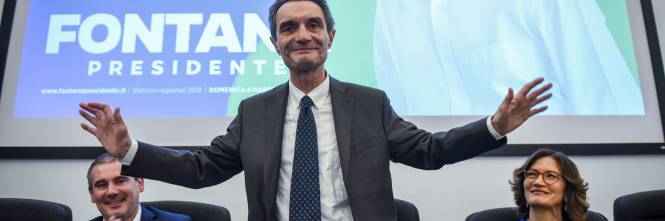
Lombardy: Fontana sceglie "No al Gay pride, yes to Family day"

No patronage at Gay Pride, it is a divisive demonstration and therefore should not be supported".
Governor Attilio Fontana does not intend to grant the regional logo to the rainbow parade scheduled for 30 June in Milan, he confirmed this in an interview published yesterday by the Lettera43 website.
It is the line that he also followed in Varese, where he was mayor for two terms. «I am heterosexual, but it's not like I'm making a demonstration to accredit my heterosexuality. Choices in this field must remain personal, flaunting them is wrong. Gay Pride is divisive and when demonstrations are divisive they should never be supported". Instead, it intends to confirm the choice of former president Roberto Maroni who on the eve of the march against the law on civil unions (the Cirinnà bill) In the 2016 lit up the Pirellone with the words «Family Day». Read More

Share

Salvini's real goal is to take over Forza Italia (and Di Maio is giving him a hand)

Image
Report Linkiesta
The leader of via Bellerio works on a center-right in his image and likeness. He wants to be Berlusconi's successor. And he needs not to break the coalition. The pact with Di Maio serves to consolidate a new bipolarism: their
Of Alessandro Franzi

Not the mortal embrace with the Movement 5 position, but the definitive conquest of the center-right. E’ This is the horizon that Matteo Salvini's moves seem to indicate, after transforming the League (Nord) in the first party of the first coalition that emerged from the elections of 4 March. The meeting with i 5 position – the first party – it is a necessity due to the lack of a numerical majority in Parliament. But it is also something more. Both Salvini and Luigi Di Maio intend to manage the birth of what they consider the third republic, no longer only disconnected from twentieth-century ideologies but also disconnected from ties with traditional political families. And to do it both leaders, Salvini and Di Maio, they banded together to weaken their opponents: on one side Silvio Berlusconi, on the other, the Democratic Party. And to rewrite the rules of the game: an electoral law with a majority bonus that can be certified in the next elections, when they will be there, a new bipolarism. Their. A strategy that may not even pass through a political government between the League and the M5S, which would kill off all the novelty in one fell swoop.
Who and how will go to Palazzo Chigi, but, we will only see it in the next few weeks. What is certain is that Salvini has had in mind for a long time a centre-right that some would rename "Lega Italia". The name is not important, as much as strategy. From the end of 2013, the secretary of the Northern League has worked on the construction of his national proposal, no longer limited to Northern Italy. It has adopted unifying slogans: against the sovereignty ceded to the European Union, against new migrations, against Islam. He caused scandal with his speeches based on the desecration of politically correct. And he inaugurated what he always does well: a permanent electoral campaign, which came down to the South, passing through the regions of Central Italy which rewarded him with often double-digit electoral results. Salvini represents the new right. Not just the radical one that has been talked about in recent months. His extreme message reached a moderate electorate left without references, and therefore ready to rely without intellectual hesitations. Salvini therefore also represents a new centre-right, which no longer has its totem in Berlusconi.

Read More

Share

Cinquestelle and Lega? They started out “solid” and old-fashioned (and they win elections because of it)

Report Linkiesta

Image

Cinquestelle and Lega? They started out “solid” and old-fashioned (and they win elections because of it)

The liquid party was an invention of the Veltroni in 2008 and it seemed like a revolutionary idea (but the Cavaliere also had this idea of ​​party). With the latest elections, Instead, “solid” parties have established themselves: Lega and M5S. (by Flavia Perina, LAWS)

Read More

Share

Bannon: "Salvini e Di Maio facciano un governo insieme"

THE POINT OF VIEW OF TRUMP'S FORMER IDEOLOGIST

Steve Bannon, the ideologue of the American ultra-right who dragged Trump to victory, he says he dreams of an Italian government formed by the alliance between the Movement 5 Stars and League
Of Raffaello Binelli
L'ex guru on Trump, the one who gave life to the “alternative right” americana, derogatorily branded by opponents as “populist”, focuses on Italian politics.
He does it with an interview with the director of The Press, Maurizio Molinari. “Salvini and Di Maio? My dream is to see them govern together”, dice Steve Bannon without hesitation. “Sono espressioni diverse dello stesso fenomeno e superano, together with other smaller formations, half of the voters”. Read More

Share

A real government

Of Giovanni Petrosillo
A real government
Source: Giovanni Petrosillo

The elections just concluded have decreed the victory of the 5 Stars in the south and the League in the North. F.I. is not doing well in the centre-right coalition., while Meloni's party strengthens. The Democratic Party has collapsed everywhere, even in the strongholds of yesteryear. Leu has just exceeded the barrier threshold. Ali estreme, Casapound and Power to the people, they practically do not exist as does the bogeyman of the fascism/anti-fascism opposition, with which the media tried to revive atavistic as well as imaginary diatribes (with the aim of channeling voters towards establishment groups).
Neither the Five Star Movement nor the centre-right have the majority to create a stable executive. The games are open for alliances that allow one or the other to settle in Palazzo Chigi. Salvini and his associates lack around fifty deputies and thirty senators to reach their goal. Many more at grillini. The latter, however, are the most voted movement in Italy and seem to have a better chance of making it by orienting themselves to the left. Renzi wants to prevent this from happening because he intends to create a personal party by splitting the Democratic Party. But if the latter enters the government no one would follow him anymore so he staged the first resignations-non-resignations in history.
In any case, both Salvini and Di Maio will have to come to terms with someone watering down their electoral promises, if not also their political vision which already wasn't that great.
The real crux of the matter is this: the world has the knife between its teeth again, dragged by the multipolar wave. Global power relations are changing. Russia creates unbeatable missiles. China increases its arsenals. Americans have never stopped spending on weapons and improving them. Other regional powers behave menacingly and flex their muscles where they can or where they feel they are entitled to. Italy is paying the price, both inside and outside the borders, weakening on all fronts. A threat from the markets is enough to change internal policy or a Turkish ship to reduce foreign policy.
In the face of these great issues that Grillini and Northern League supporters are saying? Di Maio flew to Washington and settled with some trilateral while Salvini went no further than criticizing the euro, to the EU and Germany, now they have also become more “constructive”. The rest of the programs are rubbish on citizen's income, Flat tax and other economic measures etc. ecc. which can soothe but not solve problems that are especially of a non-economic nature.
As Alberto Negri wrote instead: “Russia, Erdogan, the war in syria, Cipro, Israel, Egypt, Libya and Eni: a minute to understand the gas strategy. This is essentially how things are. If Russian gas goes to Erdogan, Russia will essentially bypass Ukraine and transfer a share of European dependence from Moscow to Ankara. The Tap project (gas dell’Azerbiajan all’Italia) it goes ahead anyway because it interests Turkey even if it competes with Moscow. But gas from Cyprus and the eastern Mediterranean disrupts Turkey's plans to become a decisive gas hub for Europe. If we then add gas from Israel and Egypt to this, Turkey's strategic position weakens. Worse still if Iranian gas one day passes from Iran to Iraq to terminals in Syria: This is one of the reasons for the anti-Iranian proxy war against Assad by Türkiye and the Gulf monarchies. And finally, let's also include Algeria and Libya, already connected by two gas pipelines with Italy: and now we understand well why they got rid of Gaddafi. Italy, with Eni, it enters into all or almost all of the projects mentioned and this evidently annoys various regional and non-regional players. None of these strategic topics for Italy entered the electoral campaign at all: they are not difficult to understand I have summarized them here in 18 lines, or a minute of reading".
And it's not just about energy strategy but, above all, of geopolitical relocation of Italy and Europe in a context undergoing profound transformation. On this our so-called populists have said nothing and have nothing to say. There is no hope. These gentlemen did not understand the true spirit of the times, for this reason they are already losers and will not be able to do better (but not even worse, credo) of those who preceded them. However, being better than those who preceded them will not be enough to revive the country. Not doing bad or doing well is no longer enough, something great and innovative needs to be done here, reviewing the past to build the future, looking around where we are surrounded by wolves.
*Our site does not adhere to everything the author has written, but he finds the analysis interesting

Read More

Share

Sull'esito della tornata elettorale (by Marco Tarchi)

Of Marco Tarchi
On the outcome of the electoral round
Source: Vanity Fair

As he comments on the Movement's exploits 5 position (and of the League)?

Anything but unexpected. The symptoms of the growing disaffection of a good part of the electorate towardsestablishmenthad been evident for some time. It's a bit surprising that both managed to recover a fair share (Together, about the 10%) of those who until a month and a half ago declared they wanted to abstain.

He would technically define the M5S as a populist party?

No. I have always distinguished Grillo's political speech - which is fully populist - and the action of the M5S, which has tended to distance itself from it, especially after the death of Gianroberto Casaleggio. Today there are some traits of the populist mentality in the movement, but several others are missing.

Grillo said that the M5S managed to positively channel the repressed anger of Italians elsewhere (see France, Hungary and others) it was picked up by far-right movements. He agrees?

Yes and no, because I don't agree with the label of "extreme right" attributed to the Front National, to Orban or to the Austrian Fpö. They are populist parties. That said, Yes, the M5S also largely intercepted pushes that could have gone in that direction (Meaning what, from us, to the League).

Why has the M5S still achieved so much despite some stumbles in recent months? Voting for him is an act of faith? Read More

Share
1 4 5 6 7 8