But “State Secret” can mean “Bribes”? (Question to the Prosecutor's Office)

Of Maurizio Blondet
Since the Benettons do not supply the State with missiles, advanced armaments, radar – because the motorway concessions were covered by state secrecy? It's a question I would like to ask, as a poor citizen, to judges, prosecutors: what other reason can they imagine for this state secret! – if not hidden exchanges and benefits between the politicians who granted them, and those who enjoy the concession of a very profitable monopoly? I ask sincerely: because I can't imagine anything else. Maybe judges and prosecutors, but yes. They have a reason to find this secret very normal. And for this reason they have not moved despite the fact that the Transport Authority has also repeatedly underlined the need to make these contracts public, that concern a public service and public power. And although in any other country the Ministry of Transport makes the contracts and documents governing the relationship between the State and the managers of the motorway networks available for consultation, as - after all - of any public service granted under concession.

Bribes can be assumed? Under-the-table payments in any form to the concessionaire government party? This is asked naively, given the enormous profits that the company in question derives from the management of the monopoly: almost the 26 percent of turnover net profit, you seem to 1,042 billion . And a gross operating margin that makes the economic journalist Fabio Dragoni say the following dirty joke: “An EBITDA of almost 68% on turnover like that of #Highways credo can only be overcome by drug trafficking". And why Mario Giordano calls them “Vultures”?

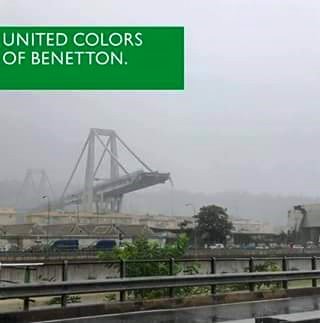
Every year Italians have paid tolls for almost 6 billions of euros, triple what they pay with the Rai license fee. Of this money, only a small part goes to the state: 842 millions.

Read More

Share

Genova: Morandi Bridge

Morandi Bridge
THE INVESTIGATION
Of Roberto Pecchioli
We didn't want to believe it. The collapse of the Morandi Bridge, that we Genoese, with a touch of colonized provincialism we called it the Brooklyn Bridge, It's a shocking tragedy, for its load of victims, pain, destruction and the terrible consequences that will drag on for years. This is not the time for jackals, but help, of condolence, of help, of collaboration. However, one cannot remain silent, keep a lid on anger over another sinisterly Italian tragedy: a work of that importance cannot collapse after just one day 50 years. For the writer there is something personal, almost intimately in the pain of these hours. Children, we participated in 1967 at the inauguration of the bridge with all the school groups of Genoa. Equipped with a tricolor flag, stationed in front of the stage, we followed the ceremony, we saw with the wonder of age the president of the republic Giuseppe Saragat surrounded by men in full uniform and the imposing figure of the great cardinal Siri, historic archbishop of the city.
We have crossed that very long bridge thousands of times, seventy meters above the valley of the Polcevera stream full of council houses and industrial warehouses of the former Superba, every day for decades we saw and touched it on our way to work. It's no longer there and it's someone's fault. They talk about lightning, of an intense storm and structural failure. Let's wait to make judgements, but on the morning of the eve of the August bank holiday it just rained. No floods, from the years 70 we remember at least six, devastating, in the city of Genoa. We don't know how many lightning strikes have struck engineer Morandi's artifact in half a century (few knew that the work was named after him), nor how much rain has wetted the imposing structures since then. We don't accept, we will never recognize the hasty justification of these hours as valid. It will be Bar Sport indifference, but we know that Roman bridges have been standing for two millennia, and we don't believe in the inability of designers. But, in recent decades there have been many collapses, like tragedies due to neglect, to ignorance, to widespread corruption. Read More

Share