

THE INVESTIGATION
Of Roberto Pecchioli
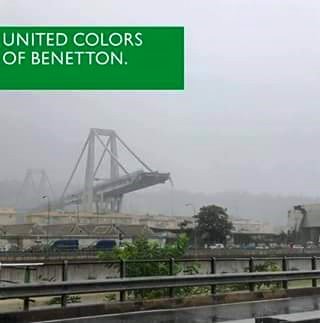
We didn't want to believe it. The collapse of the Morandi Bridge, that we Genoese, with a touch of colonized provincialism we called it the Brooklyn Bridge, It's a shocking tragedy, for its load of victims, pain, destruction and the terrible consequences that will drag on for years. This is not the time for jackals, but help, of condolence, of help, of collaboration. However, one cannot remain silent, keep a lid on anger over another sinisterly Italian tragedy: a work of that importance cannot collapse after just one day 50 years. For the writer there is something personal, almost intimately in the pain of these hours. Children, we participated in 1967 at the inauguration of the bridge with all the school groups of Genoa. Equipped with a tricolor flag, stationed in front of the stage, we followed the ceremony, we saw with the wonder of age the president of the republic Giuseppe Saragat surrounded by men in full uniform and the imposing figure of the great cardinal Siri, historic archbishop of the city.
We have crossed that very long bridge thousands of times, seventy meters above the valley of the Polcevera stream full of council houses and industrial warehouses of the former Superba, every day for decades we saw and touched it on our way to work. It's no longer there and it's someone's fault. They talk about lightning, of an intense storm and structural failure. Let's wait to make judgements, but on the morning of the eve of the August bank holiday it just rained. No floods, from the years 70 we remember at least six, devastating, in the city of Genoa. We don't know how many lightning strikes have struck engineer Morandi's artifact in half a century (few knew that the work was named after him), nor how much rain has wetted the imposing structures since then. We don't accept, we will never recognize the hasty justification of these hours as valid. It will be Bar Sport indifference, but we know that Roman bridges have been standing for two millennia, and we don't believe in the inability of designers. But, in recent decades there have been many collapses, like tragedies due to neglect, to ignorance, to widespread corruption.
The bridge, with the elevated road that runs to the sea in the central area of the city, it is the last great work of a former great city. In the 1967, Genoa was an industrial center with hundreds of factories, major shipping companies (the shipowner Angelo Costa was president of Confindustria for decades) the European headquarters of multinationals such as Shell, Mobil, Esso, the shipyards, the Ansaldo group, the most important port in the Mediterranean. After the “truck” road of 1935 towards the Apennines, to create which, with an outlet onto the port, the San Benigno mountain that divided Genoa from its west was leveled, the bridge represented the basic infrastructure to finally connect Liguria and Italy with France. Half a century later, we have almost no industries left, Genoa has lost a quarter of its inhabitants, it is united with Northern Italy, sorry, divided from the most productive area of the country by the same road over the years 30, while the railway to France still has a long single-track section. Identical fate for the connections between the ports of Savona and La Spezia and the hinterland.
From today, we also have to endure the tragedy of the collapse of the most important operational infrastructure, mourn dozens of deaths and accept the explanation that it was a tragic fatality, rain, lightning and thunderbolts. We don't believe it because we have seen the ruling class at work that has transformed a metropolis into a cemetery in about forty years. Brazen cronyism, a policy of bankruptcy trustees or morticians, the great ugliness that has disfigured the sea and the hill, entire neighborhoods unworthy of a civilized nation, the Diamond, the washing machines, he Cep, Biscione himself, part of Begato, buildings built exactly on the bed of dangerous streams, with the recurring tragedies we have witnessed.
The Genoese, or what's left of it, have entrusted the city for decades, province and region to a very low level political class, which has dragged the economic and financial class down. Public industry has collapsed, the old Savings Bank, now Carige, so important to hold the 4 percent of Bank of Italy, he has been in the storm for years over shameful affairs, monstrous deficits and executives convicted in criminal courts. The old Italsider, now Ilva, much of it has been dismantled and what remains is under threat of closure. In its place we have a freeway (relatively) fast, a small relief now that the bridge is no longer there. The so-called Third Crossing, that is, the fast line to Milan, at least late 30 years, it moves forward slowly, between controversies and money that come and go. The multinational Ericsson has sounded the retreat, destroying the hopes of a "thinking industry" that in Nice, 190 kilometers from here, it has been a reality for decades ( Sophie Antipolis).
madina, the catalog is this. All of this is affected by a disastrous and terrible event such as the collapse of our Brooklyn Bridge. The motorway that leads to the lights of Sanremo and the migrant hell of Ventimiglia was considered the most expensive in Italy. A dubious privilege. But where were the Ligurian politicians whose job it was to impose maintenance, supervise the infrastructures of a land that essentially lives on two activities, tourism and transport? We have four cargo ports, reaching which until now was difficult, now it's a Nobel Prize-winning feat; some of our locations are international tourist destinations, Portofino, the Cinqueterre, Alassio, the Riviera of Flowers. Ma, say the authorities in charge, a bolt of lightning during a summer storm was enough to knock down two hundred metres, exactly in the center, a bridge built decades after the real Brooklyn Bridge and many centuries after the Lantern, looking down from above, illuminates the shame and has seen many.
An Italian tragedy, metaphor and paradigm of a decline that began just a few years after the triumphal inauguration of the bridge. A city, Genova, which historically anticipated events of national importance. The first to want the unification of the homeland, the first in industry and commerce, but then the pioneers of the birth rate decline, of the degradation of historic centres (with Genoa, Ventimiglia), of deindustrialization, Northerners assisted almost as much as certain areas of the South, the backwardness of the infrastructure, the young people who run away. We were also among the first to rely politically on the left, when things were still going well. It was a largely communist left, astiosa, dogmatic, closed, stubborn. No comparison with the ruling classes of the traditional red regions, more pragmatic than the leaden ones apparatchik Ligurians.
They reigned over a garden and turned it into a cemetery. We don't say or think that they're knocking down bridges, but the fact is that the very few works carried out in the last half century are the reclamation of abandoned industrial areas, in their place, commercial centers linked to the usual suspects have arisen (Coop and similar) and various pours of concrete to erect imposing, largely deserted business centers, since there is very little to direct, around here. The works of the past are obsolete, like the aging trucks and the railway, the motorway that leads to the port is a dangerous passage with daily queues of heavy vehicles, accessing the airport is an acrobatic feat, despite the proximity to the city and the possibility of building a railway link of a kilometer or so. It's nice to be silent about the Genoese metro, since not only is it among the shortest in the universe, but its stations are subject to frequent flooding. The bridge that connected the two parts of Liguria no longer exists today.
It makes me sick at the thought of what was, seen and experienced with our own eyes, and what it is, but even more trembling is the certainty that in many parts of Italy others can describe similar or worse situations. This is why the tragedy of the Morandi Bridge makes us suffer so much, proud fallen symbol of our childhood. Beyond the mourning of many families, it's the signal, another, of a nation that, she does, is now prey to structural failure. Even if it were true that a thousand-ton building collapsed due to lightning and a little water, The country where they happen is truly unfortunate, day after day, from North to South, events of this type.
The tragedy is of 14 August. Half of Italy is closed for holidays, the other half implodes, it curls up on itself: structural failure. Together, declare bankruptcy; fraudulent bankruptcy.
*****************************************************************
WHAT YOU WON'T READ IN THE NEWSPAPERS/1 – THE CHAPTER OF MARIO GIORDANO'S BOOK, 'VULTURES', ON THE HIGHWAYS, THE GOLDEN GOOSE THAT WENT TO A HANDFUL OF PRIVATE INDIVIDUALS FROM THE STATE: BENETTON AND GAVIO (AND THEIR PARTNERS) THEY PILL BILLIONS ON THE SHOULDERS OF MOTORISTS, BY INVESTING LESS THAN PROMISED AND RENEWING CONCESSIONS EVEN UP TO 2050
A great deal for them, for us a hidden tax
The former minister Di Pietro defined it as "a bonanza". What's better than managing the highway? Stay there at the toll booth, you wait for the cars to pass and make money. Every New Year's Eve, the world would fall, the tariff increase is coming. It's now part of tradition: I'm here for the New Year's Eve, the panettone, trotter, lentils, the countdown in Times Square. And the increases at the toll booth. Dal 1999 to date, motorway tolls have increased by 75 percent, in the face of an increase in inflation of only 37 percent. It's not enough? Nope.
In fact in January 2018, punctual like the bang of the sparkling wine, the bang of a further increase has arrived: in media 2,7 percent throughout Italy, but with tips of 12,89 percent on the just mentioned Strada dei Parchi, of the 13,91 percent on the Milan-Genoa in the Milan-Serravalle section and of 52,69 percent on the Aosta-Morgex. There were protests, commuter riots, mayors in the square complete with tricolor sashes, the Cantone anti-corruption magistrate has opened an investigation, Milena Gabanelli was outraged in the «Corriere» («because everyone talks about plastic bags and no one intervenes on tolls?»). But no one has managed to answer the fundamental question: because motorway tolls increase even when other prices remain unchanged? And above all: where does that money go??
Every year Italians have paid tolls for almost 6 billions of euros, much more than they paid in first home tax, triple what they pay with the Rai license fee. Of this money, only a small part goes to the state: 842 millions. The rest remains in their pockets 24 companies that manage the 25 concessions into which our motorway network is divided. And you will say: how they spend this money? To pay the staff (circa 1 billion). For investments (circa 1 billion). For maintenance (646 millions). For other expenses. But then in the end a nice slice (1,1 billion) it is distributed in the form of hard cash to members, mostly private. To whom, to be precise, It doesn't seem true that we found the maypole.
principle is simple: the dealer builds, the driver pays. Toll booth after toll booth, exodus after exodus, all expenses incurred to carry out the work are thus reimbursed. The point is this: what happens when all expenses have been recovered down to the last cent? You continue to pay the toll? And why? It's a bit like someone who has taken out a mortgage with the bank, arrived at the end of the last instalment, was heard: have patience, but he still has to pay for the next twenty years. But for what reason? To enrich the bank? As if he didn't have enough money?
Highway dealers have a lot of money. But really many. It's no coincidence that, as well as sharing dividends, they go shopping around the world. They spend and squander, so much to them that it matters? There is always a toll that makes them rich. According to Professor Giorgio Ragazzi, one of the leading experts in the sector and one of the few who has tried to shed light on the intricate world of the toll booth lords, all the investments made to build the motorways were already amply rewarded at the end of the nineties.
Nevertheless, since then the concessions have continued to be renewed, until 2038, until 2046, until 2050, always directly, always without competitions, even risking sanctions from the EU. Every risk and burden was taken on to fill the pockets of these lucky people with money. Still in July 2017 the government went to Brussels to obtain the extension of the extensions and presented it as its success. But we are sure it will be a success? The extension of extensions? The Italians really wanted nothing else?
Nope. The fact is that the Italians were kept in the dark. Forbidden to talk about it. It happened to me once, in a popular Raiuno TV program dedicated to the topic of competition, to mention the highways, I have been inundated with amazed messages: Really? You talked about highways? You did it? How did you do it? Yet we all pay the toll at the toll booth, and more expensive every year. Between the 2011 and the 2016 the average increase in tariffs was 14 percent. In the same period, investments halved. And this shows that that toll is not the price for a service rendered nor the reward for an investment made: it just is, as Professor Ragazzi explains again, “a simple imposta”.
THE REST HERE:
http://www.dagospia.com/rubrica-4/business/quello-che-non-leggerete-giornali-capitolo-libro-mario-169699.htm
Source: Maurizio Blondet
