Bannon: "Salvini e Di Maio facciano un governo insieme"
THE POINT OF VIEW OF TRUMP'S FORMER IDEOLOGIST
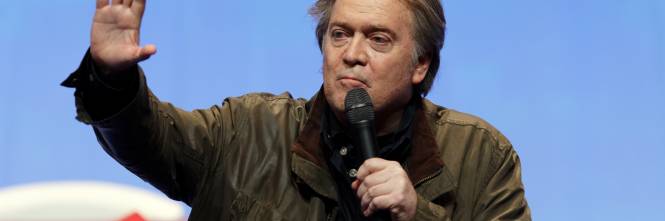
Steve Bannon, the ideologue of the American ultra-right who dragged Trump to victory, he says he dreams of an Italian government formed by the alliance between the Movement 5 Stars and League
Of Raffaello Binelli
L'ex guru on Trump, the one who gave life to the “alternative right” americana, derogatorily branded by opponents as “populist”, focuses on Italian politics.
He does it with an interview with the director of The Press, Maurizio Molinari. “Salvini and Di Maio? My dream is to see them govern together”, dice Steve Bannon without hesitation. “Sono espressioni diverse dello stesso fenomeno e superano, together with other smaller formations, half of the voters”. Read More
Share

The Five Stars like Andreotti's DC. The precedent of 1976 which gives the grillini hope

ImageReport Linkiesta
The abstention of the PCI and socialists was decisive, will go down in history as "the government of no confidence". The protagonists of the time remember that the situation was very similar to the current one. Five stars and the League hope so. Scotti: "If you don't want to go back to voting there aren't many alternatives"

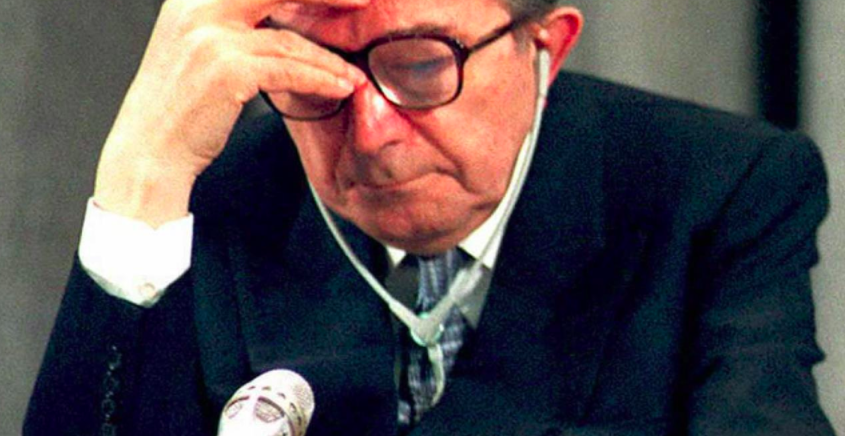
The calendar goes back forty years. Memories go to the First Republic, they recall the Christian Democracy and the figure of Giulio Andreotti. If there is a precedent that many are looking at with interest in these hours, it is precisely the "government of no confidence". The DC monochrome born in the summer of 1976 thanks to the abstention of the communist party and the socialists. An executive that is the result of a long discussion and difficult mediation, despite the absence of a real parliamentary majority. Matteo Salvini was three years old, Luigi Di Maio was not yet born. Nevertheless, with all the necessary differences, the situation closely resembles the current one. That's why at the Quirinale – and certainly also among the leaders of Five Star and the League – there are those who are reviewing that page of history. A precedent to take inspiration from to break the probable stalemate of the next few weeks.
Even then the polls had awarded two winners. Benigno Zaccagnini's Christian Democrats had conquered the 38,7 percent, while Enrico Berlinguer's party had stopped at 34,4 percent. Complex situation, given that neither party had sufficient numbers to govern. A impasse made even more complicated by the choice of the socialists, determined not to enter government without the simultaneous presence of the communists. After a long mediation – managed at the Quirinale by president Giovanni Leone – the solution was identified in a single-party DC government. An attempt made possible by the PCI's abstention, Psi, Psdi, e Pri. “The alternative was to immediately return to the vote” remembers Vincenzo Scotti today, several times minister and undersecretary for the Budget of that executive. «But in republican history it had never happened. And so, in the end, he decided to go that route". At Palazzo Madama the Andreotti III government obtained confidence with 136 Yes, 17 antonyms and 69 abstentions. At Montecitorio with 258 favorable votes, 44 antonyms and 303 abstained.

Without making merciless comparisons, a lot has changed since then. Starting with the leaders. Luigi Di Maio and Matteo Salvini are not Andreotti. «But I'm not even De Gasperi, Togliatti and Nenni» laughs Vincenzo Scotti, who was undersecretary for the budget of that government. «And I say this with the utmost respect for everyone»

The scenario is replicable? Like forty years ago, neither of the two winners today has the numbers to govern alone. The centre-right coalition won at the polls the 37 percent, the Five Stars the 33 percent. Imagining parliamentary alliances with the Democratic Party is unrealistic. Net of the rumors of recent days, it is almost impossible for the Dems to openly support a Grillino or Northern League executive. And so the illustrious precedent becomes relevant again. To govern, the Northern League-led centre-right should hope for the PD's benevolent abstention. The road is more difficult for the grillini, who can count on a smaller parliamentary group. An executive led by Luigi Di Maio could only gain confidence with the simultaneous exit of the center-left and part of the center-right from the Chamber. Complicated, right. But not impossible. «Today the reality is completely different from 1976» says Scotti. «But if you don't want to go back to elections there aren't many alternatives. The center-right and the Five Star Movement can govern together, I find it very difficult. Or they can form a minority government, thanks to the abstention of the opponents, with the aim of implementing a limited and short-term program".
The time limit is obvious. The Andreotti III government did not have a long life, remaining in office for less than two years. And that executive's program was also limited: every relevant provision had to be agreed in advance with the Communist Party. But the coincidences with that experience are not over. In the 1976 the great mediation was preceded by an important institutional transition: the election of the President of the Chamber. The first great proof of understanding between the DC and the PCI took place around Pietro Ingrao, chosen as Sandro Pertini's successor on the most important seat in Montecitorio. Today many people imagine a similar scenario. The election of a member of the Democratic Party in place of Laura Boldrini could represent a first step towards the birth of a minority government. «Ingrao's signal was very important – Scotti insists – This time too we will understand a lot from the election of the presidents of the House and Senate".

The calendar goes back forty years. Memories go to the First Republic, they recall the Christian Democracy and the figure of Giulio Andreotti. If there is a precedent that many are looking at with interest in these hours, it is precisely the "government of no confidence". The DC monochrome born in the summer of 1976 thanks to the abstention of the communist party and the socialists

Then the difficult mediation succeeded. A few days later, it was the end of July, Giulio Andreotti officially baptized the 33rd government in republican history. A very particular executive right from the announcement in the Chamber. «I proposed to the Head of State – said the Prime Minister in Montecitorio – the appointment of the ministers who appear with me today to obtain confidence, or at least non-distrust, of the Senate and the Chamber of Deputies". Today no one is betting on the outcome of the operation. «That was a very interesting experience, which came after years of head-on opposition between the Christian Democrats and the Communist Party" recalls Giuseppe Zamberletti, who was Undersecretary of the Interior of that government. «But at that moment there was a clear political plan, not the confusion of these days". In the 1976 the path to mediation had been identified, albeit with a thousand difficulties. «The PCI was beginning to highlight its mutation – insists the Christian Democrat – I remember that that year there was an earthquake in Friuli. The collaboration with the communists began right there, during the operations that followed the earthquake. But then, above all, There was a very intense internal debate within the parties. I remember the torment, the discussions...". Without making merciless comparisons, a lot has changed since then. Starting with the leaders. Luigi Di Maio and Matteo Salvini are not Andreotti. «But I'm not even De Gasperi, Togliatti and Nenni» laughs Scotti. «And I say this with the utmost respect for everyone».
Meanwhile, the despised First Republic is back in the news. So much for the alleged renovation. «But that was a whole other world – Scotti insists – Then the parties had clear objectives to pursue". Zamberletti agrees. «It's a period that I look back on with nostalgia, very different from today. There is no longer any debate within the political forces, the involvement of the national community and the periphery is lacking. The choices were made after long debates, sometimes harsh. Today decisions are made only by the top".
Source: http://linkiestait.musvc1.net/e/t?q=5%3d7ZAY9%26J%3d3%26F%3d3cB%26G%3d1e5X4%26S%3djLtN_tsSx_53_ryUr_2D_tsSx_48wUy.DiLmAeQv3.iR_tsSx_48iR_tsSx_48aPvAcJg_JQ1R_TfZBS8_PSuP_Zhb3_PSuP_Zhb8_PSuP_ZhA-cGpIuC-uLeJn7-cMo7-l9-f5-dG-cFdPgGtRk-Al-Nt7cCf7nRg-6eJ-3a7d-e0e-Dc-_JQ1R_Tfa9U73a9ch_tsSx_48%26d%3dKwKvA3.FeR%26kK%3d1eBV0

Read More

Share

Sull'esito della tornata elettorale (by Marco Tarchi)

Of Marco Tarchi
On the outcome of the electoral round
Source: Vanity Fair

As he comments on the Movement's exploits 5 position (and of the League)?

Anything but unexpected. The symptoms of the growing disaffection of a good part of the electorate towardsestablishmenthad been evident for some time. It's a bit surprising that both managed to recover a fair share (Together, about the 10%) of those who until a month and a half ago declared they wanted to abstain.

He would technically define the M5S as a populist party?

No. I have always distinguished Grillo's political speech - which is fully populist - and the action of the M5S, which has tended to distance itself from it, especially after the death of Gianroberto Casaleggio. Today there are some traits of the populist mentality in the movement, but several others are missing.

Grillo said that the M5S managed to positively channel the repressed anger of Italians elsewhere (see France, Hungary and others) it was picked up by far-right movements. He agrees?

Yes and no, because I don't agree with the label of "extreme right" attributed to the Front National, to Orban or to the Austrian Fpö. They are populist parties. That said, Yes, the M5S also largely intercepted pushes that could have gone in that direction (Meaning what, from us, to the League).

Why has the M5S still achieved so much despite some stumbles in recent months? Voting for him is an act of faith? Read More

Share

M5S, Cafés flooded with phone calls: "Dove sono moduli per il reddito di cittadinanza?'

In Giovinazzo, Municipality in the province of Bari, the Caf assailed by phone calls from the unemployed: “Give us the form to request citizenship income”
Of Claudio Cartaldo
Not surprising, or maybe yes. But in Southern Italy, there where the Five Star Movement he collected almost all the constituencies available in the last political elections, il citizen's income that seems to be the promise it has warmed the hearts of voters.
To prove it there would be a story that is causing quite a bit of discussion.
Calls for citizenship income
The story comes from Giovinazzo, small municipality in Puglia. In the Molfetta college (where Giovinazzo was located) Francesca Galizia, grillina candidate, got the 43% and in the municipality the votes were just under 40%. A win across the board. Bene. As explained today Gazzetta del Mezzogiorno, in this citadel of 20 thousand inhabitants on the outskirts of Bari, but, the Cafs and the patronages were attacked with the request to be able to fill out the forms to obtain the citizenship income. “They won there Five Stars – the Caf employees were heard to say – now give us the forms”.
At first the operators thought it was a joke. But then the high number of phone calls made it clear that many had believed the promises had already been implemented grilled. Faced with the obvious answer that a similar module does not yet exist (and who knows if it will ever exist), many citizens turned to the municipal offices for confirmation. Read More

Share
1 2