Fascism and pensions for Italians. The historical truth is stronger than Aldo Grasso's hoaxes

Of Francesco Severini
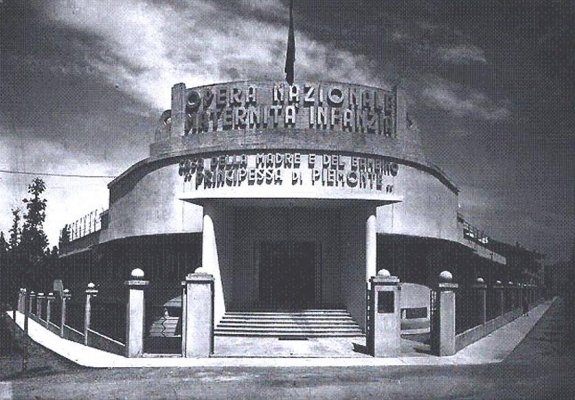
Fascism and pensions for Italians. The historical truth is stronger than Aldo Grasso's hoaxes
Source: century of Italy
On the front page of Corriere della Sera of 7/11/2018 Aldo Grasso refutes the "hoax" (according to him) of the pensions introduced by fascism in Italy, explaining to readers that INPS is not among the "positive things" that the Mussolini regime introduced, as some repeat without properly documenting themselves. And he writes that INPS was born in 1898, while the social pension only arrives in 1969, when fascism had long since fallen. An incorrect reconstruction, points out the journalist and writer Gianni Scipione Rossi: “Aldo Grasso – writes Rossi in a note on Facebook – forgets the substantial difference between voluntary pension insurance for workers and employees, born in Italy in 1898, and the mandatory one, born in 1919, therefore before the Mussolini government". Read More

Share

Immigration: so many false myths to dispel!

Image results for stop immigrationOf Tatiana Santi

“They do the jobs that Italians no longer want to do”, “they pay pensions to Italians”, “only they have children in a dying country”. The president of INPS Boeri sees the solution to all Italian problems precisely in the arrival of new immigrants. Immigrants are really so indispensable?
While young Italians flee abroad in search of work and while families give up having children due to lack of security, according to the president of the INPS Tito Boeri, Italy needs immigrants. It would be curious to understand if Boeri is referring to other immigrants who would end up working in the fields without a contract, therefore underpaid and without any rights. The so-called work that Italians would no longer do.
As for the population decline, worrying phenomenon for the country, Istat data has shown that everyone is having fewer children, Italians and immigrants. What is missing are the security and work to be able to support a family with children. Beyond the propaganda and political declarations of the INPS president, what are the myths related to immigration that still need to be debunked?? Sputnik Italia reached Laura Tecce for an interview, journalist and sociologist.
Laura Tecce, What is your view on Boeri's statement regarding the need for greater immigration to pay taxpayers' pensions?

This is the slogan of all immigrationists, of those who are pro immigration and pro replacement of the Italian population, because that's what it's about. Boers, who is the president of INPS, placed at the head of the social security institution by Renzi in 2015, he made absolutely questionable statements. He stated that the aging population, the demographic decline and the flight of young people abroad can only be compensated for by immigrants.

Read More

Share

Pensions, the EU asks us for sacrifices…

Written and reported by Maurizio Blondet

Pensions, the EU demands sacrifices. But it increases the budget for those of its officials exceeding the 2 billions of euros

In the budget 2019 an increase of 6,2% of the budget to pay allowances to retired Eurobureaucrats, a figure never reached before. Yet the treatment is already for the super-privileged: they become entitled to a pension later on their own 10 years of service and enjoy it starting from 66, alternatively come on 58. The mockery: the amounts are calculated using the method…
Read all.

Read More

Share

Pensions, Draghi takes sides against Salvini: better not to touch the Fornero law

http://www.iltempo.it/resizer/600/315/true/1521627225954.jpg--pensioni__draghi_si_schiera_contro_salvini__meglio_non_toccare_la_legge_fornero.jpg?1521627226000Of Filippo Caleri
And in addition to the ECB, the IMF has already raised the red card against a revision of the current legislation
The European Central Bank he decided: the Fornero you can't touch it. Or rather if you touch it it will be painful (financial) in the long term. A Matteo Salvini, which built part of its electoral success on its scrapping, ears will be ringing. And the challenge that, in a hypothetical government with the League within, is very difficult to find in front of you. Considering that other international bodies such as the International Monetary Fund they have already raised the red card against a revision of the current pension law.
In a recent study three IMF economists Michal Andrle, Shafik Hebous, Alvar Kangur and Mehdi Raissi titled “Italy: Toward a Growth-Friendly Fiscal Reform” they explained that at the moment our pension expense, despite the criticized and harsh Fornero reform, with the 16% of GDP is the second highest, surpassed only by Greece. A consideration that effectively stops Salvini's scrapping ambitions. He also joined the IMF Draghi He immediately made his thoughts on the matter known: “Many countries have already implemented regulations reforms of pension systems after the sovereign debt crisis, although the pace of reforms has slowed recently. Further reforms in this area are essential and must not be delayed, also in light of economic policy considerations”. Read More

Share

Pensions, alert Ue: Fornero reform should not be touched

Pensions, alert Ue: Fornero reform should not be touchedReporting of Wall Street Italia
Of Alessandra Caparello
ROMA (WSI) – The European Union launches a new warning on the Italian social security system. In the report adopted on our country as part of the winter package of the European semester, the European Commission is betting the fates on Italy and the Fornero reform in particular indicated as untouchable.
The albeit partial changes made by Renzi governments and Gentiloni on the social security reform adopted by Italy in 2011, under the technical government led by Mario Monti, they would have in fact partially canceled the pension reforms that were made in the past with the consequence of increasing spending for the average period.

“The long-term sustainability of public debt Italian, ensured by pension reforms done in the past, It is slowly deteriorating, so much so that the European Commission's risk indicator went from low to medium (S2). Spending on pensions in relation to GDP increased by around two percentage points, as a result of the crisis and the consequent fall in nominal GDP. Italian pension spending is now the second highest in the EU and in theOECD, after the Greek one (…) The increase in implicit liabilities resulting from the aging of the population had been limited by past reforms of the pension and healthcare systems, which had improved Italy's long-term sustainability.

Read More

Share