

Of Francesco Severini
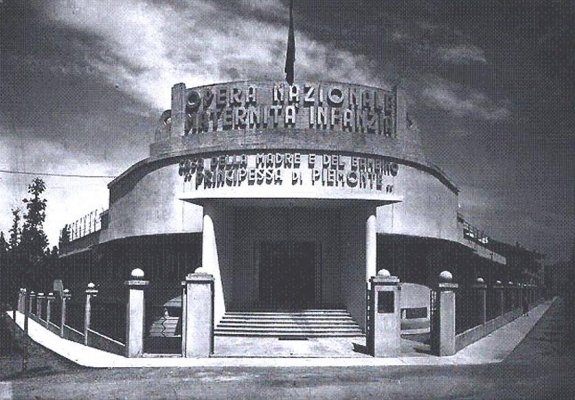
Source: century of Italy
On the front page of Corriere della Sera of 7/11/2018 Aldo Grasso refutes the "hoax" (according to him) of the pensions introduced by fascism in Italy, explaining to readers that INPS is not among the "positive things" that the Mussolini regime introduced, as some repeat without properly documenting themselves. And he writes that INPS was born in 1898, while the social pension only arrives in 1969, when fascism had long since fallen. An incorrect reconstruction, points out the journalist and writer Gianni Scipione Rossi: “Aldo Grasso – writes Rossi in a note on Facebook – forgets the substantial difference between voluntary pension insurance for workers and employees, born in Italy in 1898, and the mandatory one, born in 1919, therefore before the Mussolini government".
In any case it is ungenerous to jump like Grasso dal does 1898 al 1969 as if nothing had happened in between and as if no measures had been adopted at that time for the workers. It may then be useful to report here the information contained in Stefano Vinci's study, Fascism and social security (Annals of the Faculty of Law of Taranto, Cacucci publisher, 2011). Vinci cites law n. 350 of the 17 July 1898, which promoted the creation of the national pension fund for workers' old age and disability, to which Italian citizens who carried out manual labor or provided labor or day labor services could register freely and voluntarily. It then gives an account of the debate that developed at the beginning of the 20th century to "organize compulsory insurance against illnesses and coordinate it with medical and hospital assistance services, of maternity protection and with compulsory insurance against accidents at work and with existing charitable and mutual aid institutions". A debate from which the law arises 603/1919 which established the compulsory nature of disability and old age insurance for all privately employed workers and unified the National Accident Fund and the National Social Insurance Fund into the CNAS (National Social Insurance Fund).
We then arrive at the advent of fascism which immediately intends to give "an acceleration push to the process of unification of the institutions managing social insurance". Mussolini himself in a speech in Turin in 23 October 1932 he explained that fascism in its intent to ennoble work had detached itself "from the too limited concept of philanthropy to arrive at the broader and deeper concept of assistance. We have to take one more step forward: from assistance we must arrive at the full implementation of national solidarity".
“After the first measures of 1923 – writes Vinci – with which the reorganization of the Fund for involuntary unemployment entrusted to the CNAS was established, but without funding from the state, assisted in 1926 to a strong expansion of the "public hand" with the launch of the insurance monopoly implemented through the reorganization of the National Accident Fund (CNI); In the 1927 to the establishment of compulsory insurance against tuberculosis extended in 1929 to illnesses for seafarers; In the 1929 to the provision of accident insurance also for professional diseases".
The Cni was replaced in 1933 from Infail (National fascist institute against accidents at work) and in the same year the Infps was established (National fascist institute of social security). Continues in 1935 the promulgation of a consolidated text on the improvement and legislative coordination of social security which regulated the fragmented social security system for invalidity and old age, unemployment, tuberculosis and motherhood. Some changes to the system, it can still be read in the study,”were made in 1939, when the principle of reversibility of survivors' pensions was accepted, postponing the actual provision of the service until 1945, and the retirement age was lowered to 60 years for men and others 55 for women, with adjustments in performance measurement, adequate until 1943". In that year an attempt was also made to achieve the unification of sickness insurance with the establishment of the Mutuality Agency "which, within the purposes of the law 138/1943 it should have led to the complete unification of sickness assistance institutions, but who in fact failed to achieve this aim".
A note is obligatory: everyone understands the difference between a social security fund that one joins voluntarily and a public social security system that actually begins in 1933 with the Infps which later became Inps. This is certainly not to make an apology for the social measures introduced by fascism but to underline that a hoax is also telling the story halfway, or manipulate it, or not evaluate it with the serene objectivity until later 70 years should be a must.
Similar Posts
