Orban's rise in Europe: Hungary as an alternative model

Of Lorenzo Vita
Orban's rise in Europe: Hungary as an alternative model
Source: The eyes of war
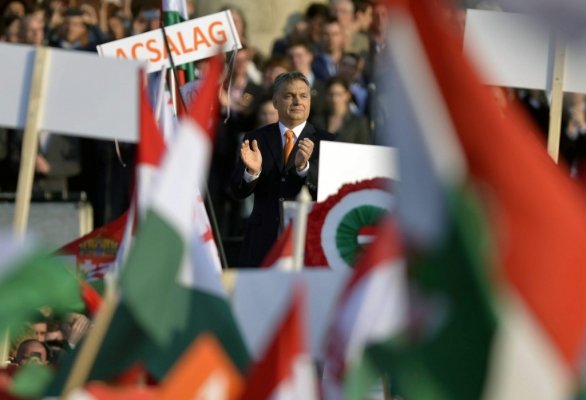
Viktor Orban has become, over the years, one of the most important leaders in Europe. And now, his message, begins to penetrate the entire continent.
The victory of John Jansa in Slovenia, ally of Orban, it is an unmistakable signal. Not so much in the numbers of the electoral victory, but in meaning. The group Visegrad, the one to which Hungary is part, has a new ally in Ljubljana.
And the merits of this victory are largely to be assigned to the Hungarian prime minister who was able not only to ride the wave of protest (particularly on migrant issue), but also penetrate the political debate. Clear messages, simple words, deep meanings. Like the last appeal addressed to the Slovenian people “Vote for the survival of the nation”.
I media e Orban in Slovenia Read More

Share

Identity and sovereignty? They are inseparable notions

Of Alain de Benoist
Identity and sovereignty? They are inseparable notions
Source: Barbadillo
Signor Alain de Benoist, in some environments, we tend to oppose two notions that everyone talks about today: identity and sovereignty. Nel Front National, Marion Maréchal-Le Pen would have represented the first, in opposition to Florian Philippot, which above all defends the second. Such opposition seems legitimate to her?
“Interviewed a few weeks ago by Causer magazine, Marine Le Pen said: "My project is intrinsically patriotic because it defends the sovereignty and identity of France in the same movement. When you forget one of the two, and the bar". So, we don't cheat. Because they should see themselves in the identity and sovereignty of opposing ideas, when they are complementary? Sovereignty without identity is but an empty shell, identity without sovereignty has every possibility of transforming into ectoplasm. So you don't need to separate them. One and the other, Furthermore, they are part of freedom. To be sovereign is to be free to decide your own policy. Preserving one's identity implies, for a people, to be able to freely decide the conditions of one's own social reproduction".
While identity is a necessarily vague concept, sovereignty is no longer easy to define?
“Less than it seems. The “one and indivisible” sovereignty recalled by Jean Bodin in The Six Books of the Republic (1576) it has little to do with sovereignty based on subsidiarity and the principle of sufficient competence, of which Althusius speaks in 1603 in his Politica methodice digesta. Bodin's approach is eminently modern. It implies the nation-state and the disappearance of the distinction that was previously made between power (power) and the authority or dignity of power (authority). Read More

Share

German financial terrorism against Italian sovereignty

Of Luigi Tedeschi
German financial terrorism against Italian sovereignty
Source: Italicum
Germany dominates Europe through financial terrorism, a weapon of mass destruction for states, which entails the abrogation of democracy.
It was all already planned, however, it was an easy prophecy.
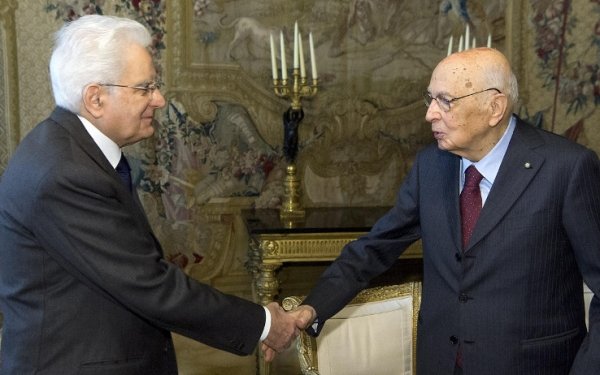
Mattarella's veto is perfectly consistent with a practice inaugurated by Napolitano and now consolidated, that of the president's governments. That this practice is in open conflict with the constitution, that governments elected by the people are removed and other "technical" governments appointed by Germany and European diktats are put before national sovereignty is now clear to everyone. A de facto presidentialism imposed by Europe has emerged. But above all, appointing Cottarelli in Conte's place, Mattarella has made a political choice that clearly violates the Italian constitution.
That of the technicians is in fact an eminently political choice that deposes popular sovereignty. That's how he expressed himself Marco Della Luna in the book“Traitors in the government” (Arianna Publishing 2013), in relation to the appointment of the Monti government by Napolitano: “… In the case of the Italian situation, and in general of a complex system like every country is complex, the problems are many (not just cheap, but also sociological, hydrogeological, legislative), they are unclear but controversial in their identification and causes; there is no precise and shared technique (Why, even within technical economic science there are totally divergent schools both in the analysis of the causes and in the recipes, indeed the crux of the choices is between opposing economic models); it's not just about solving problems, but to choose which objectives to pursue, what priorities to set, which social classes to tax, which to deprive of assistance, which development model (or modestly survival) adopt, and perhaps even more whether to defend a certain national independence or not, whether to accept or reject a Euro-financial architecture under German hegemony, how to challenge and change the current structure of the Eurosystem. All these choices are choices purely political, non-technical; e, based on the Italian Constitution and the general principles of representative democracy, just a political government, with a popular mandate, can be legitimately placed to carry out them. Not a technician or a government of technicians. And in fact the Monti government has done so, with the explicit and repeated endorsement of Napolitano, a series of heavily political choices, ideological, classiste, and very little "techniques". The thesis of the government of the technicians is a lie to cover up a clear and fundamental unconstitutionality, cannot be remedied retrospectively by a parliamentary vote, especially since the parliamentarians and the parties were not free and serene, but they were held under various threats, internal and external, from the spread to early termination before the pension accrues". Read More

Share

Verona, Fortezza Europa protesta fuori dal Liceo Montanari contro l'inculturazione immigrazionista

Reporting of A.F.
The youth nucleus of the cultural association Fortezza Europa, to which our National Manager Matteo Castagna also belongs, demonstrated in front of the school, involved in an awareness project on the topic of migration, which we could also define as “immigrationist inculturation”. And the PD asks: “Which side is the mayor on??”
The article is obviously biased (but there is also a mini-newspaper online in Verona “sinistra-friendly”…):
http://www.veronasera.it/attualita/migrazione-montanari-fortezza-europa-pd-17-maggio-2018.html
Fortress Europe, in close proximity, replica:

“Reading the latest statements released to the press by the Verona PD in relation to the protest staged by our movement during the morning of 17/05, we find it laughable that this Political Party talks about "numerical paucity", especially after the repeated electoral defeats suffered in recent years, which led the aforementioned "team" to historic lows in terms of approval. This, but, it is trivial matter for those who have long since turned their backs on the interests of their former electorate.
One also wonders how many students the PD would be able to mobilize per hour 7 of any Thursday morning. Probably a number that is very close to that collected by a small, colorful and poorly organized group that, in opposition to the demonstration of the children of Fortezza Europa, manifested, confused in ideas and principles, for the protection of identities, or for the same theme that he took further 30 students to raise their voices against the tragic outcomes born from the union between the Piddina-branded Buona Scuola and the world of finance. It is difficult to make even a numerical estimate, since in addition 15 years of opposition there are no memories of Piddine demonstrations in the city.

Read More

Share

Sovereignty and the opinions of the President of the Republic

Of Paolo Becchi e Giuseppe Palma
Sovereignty and the opinions of the President of the Republic
Source: Economic Scenarios
Even at the last moment, M5S and Lega have reached an agreement for the formation of a political government which determines an essential turning point: this is the first real victory of the sovereignist forces. First of all, towards Europe: in a Union that, after all, it had managed to ensure its balance even in the presence of anti-European forces, a "sovereignist" Italy is now arriving, led by an alliance between the two main “national-popular” forces. Elsewhere, we had had defeats: despite Le Pen's good electoral result, Macron's France prevailed, as well as in Germany, despite the nationalist exploit, the system has regrouped. Ecco, the Italian novelty: the “system” was unable to regroup, to absorb and neutralize the oppositions that crossed it. Right, everyone tried in every way: Berlusconi thinking of a center-right government that would find the support of the "responsible" in parliament, the Democratic Party hoping for the President's government, Mattarella with his hypothesis of a "neutral government". But in the end Lega and M5S won: they will govern, Together, after Berlusconi's step aside. As it was in the nature of things from the beginning. Read More

Share

Italians don't exist? “They fear a sovereignist wave. I say: Italy first"

“Because they attack true Catholics, i.e. the traditionalists, as Saint Pius X said? Why We Have Faith, Hope, Charity and let's fight with a smile, we divide the world into friends and enemies of Christ and we have chosen the banner of the Sacred Heart. We love the Truth, we do not fear it and we do not hide it. If anything we shout it. It does not conform to the trend of the world? We shrug, we are identitarian, because for us there is always a sacred I don't care!” (M. Chestnut, 1/05/2018)
Of Paolo Becchi
Italians don't exist? “They fear a sovereignist wave. I say: Italy first"
Source: lospecialegiornale
“Italians do not exist and we are more different between east and west than between north and south”. It is the title of an article on the front page of the online website Corriere della Sera. An anthropological investigation that aims to demonstrate how Italians in practice do not exist as a nation. A study that made the philosopher very suspicious Paolo Becchi who speaks to The Special. According to Davide Pettener, anthropologist of the Department of Biological Sciences, Geological and Environmental Sciences of the University of Bologna, who created a bank of DNA samples to trace the genetic history of Italians, the Italian people would not exist. According to the anthropologist it would actually be "just a geographical aggregation. We have different genetic identities, linked to different stories and origins and not just those". In short, what sovereignty, we are children of migrations and crossbreeding of various peoples and we do not have a typically Italian DNA.
Becchi, therefore Italians do not exist? We returned to Metternich and his idea of ​​"Italy as a mere geographical expression"? Read More

Share

IMF and Italy

Of Nicola Di Cesare
IMF and Italy
Source: Appeal to the People
Based on the thinking of the managers of the International Monetary Fund, never asked by anyone (and that it has nothing to do with Italy except for the fact that our country finances it for 3,21 % of its shares), in order to revive the growth of its GDP, Italy should eliminate the fourteenth salary from all employment contracts, eliminate the thirteenth of pensions, de facto eliminate survivor's pensions and raise the rate to 27% for self-employed workers, reintroduce the IMU on the first home. The first question that a reader of average intellect should ask himself is:: but who are they and why would they want to starve millions of Italians? What they gain from it? Before delving into the merits of these statements and formulating answers to the aforementioned questions, Let's first understand what it is for and who is in command of the IMF. According to the article 1 of the Statute (establishing agreement between states) the IMF was created for: promote international monetary cooperation; facilitate expansion and international trade; promote the monetary stability of currencies and the constancy of exchange rates, avoiding competitive devaluations; provide loans, behind adequate guarantees (political and institutional interference), through the general fund resources to address balance of payments difficulties; reduce the degree of imbalance in the balance of payments of member states by preventing them from resorting to measures to devalue their currency; regulate economic growth in developing countries. Read More

Share
1 2