

L'ira del web contro Benetton e Toscani: "Metterete una maglietta rossa per le vittime di Genova?"
 Reporting of G.B.
The Benetton family, which through Atlantia controls Autostrade per l'Italia, in the sights of social media. Toscani's do-gooder campaigns are also under attack
Of Sergio Rame
From pain to anger. The transition is immediate. Sui social network, and especially on Twitter, Anger is being vented at this time against the Benetton family.
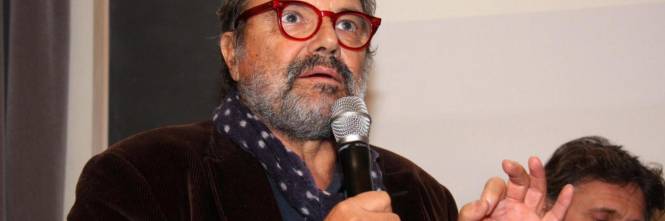
Media lynching is, Indeed, started soon after the first statements by ministers Luigi Di Maio, Matteo Salvini and Danilo Toninelli against the company Motorways for Italy that, through Atlantia, it is in fact controlled by the Benettons. “Now you will wear a red shirt for the victims of Genoa?”, writes a challenging user Oliviero Toscani That last 7 July had demonstrated against government policies of closing the ports to boats loaded with illegal immigrants.
Several hundred tweets. One after the other. All popped up a few hours later the dramatic collapse of Morandi bridge on the A10 motorway. Social networks are unleashing themselves against the Benettons by posting, just as the death toll increases hour by hour, several shots that portray a smiling and complete family group. In other posts, a photomontage was published in which Toscani is seen holding a photograph of the collapsed bridge in his hand. “Now you will wear a red shirt for the victims of Genoa?”, a user writes to him referring to the demonstration of 7 last July in support of illegal immigrants who land on the Italian coasts. Read More
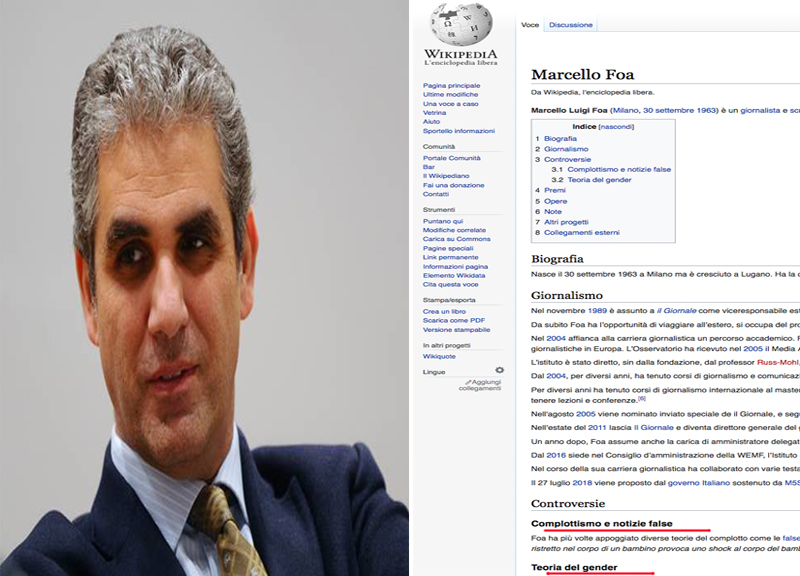
Rai. This is how they destroy Marcello Foa's credibility
Copyright, the European Parliament rejects the directive
 We already talked about it at the end of June. The law he would have, in all likelihood, gagged us too, it didn't pass. At least for the moment…(n.d.r.)
STRASBOURG – The European Parliament blocks copyright reform. L’Eurocamera, meeting in plenary in Strasbourg, rejected the start of negotiations with the Council (318 no, 278 yes and 31 abstained) on a proposed directive that had split the Assembly in half. Now the discussion of the proposal is postponed to the next plenary, in September, but it is likely that the text on the digital single market is destined to run aground on further amendments between now and the end of the legislature. Also because time is running out: in May 2019 we return to the polls for the European elections and the assembly that is expected to be "quite different".
The unknowns of September
At least to use the euphemism of a European Chamber spokesperson. The topic has never been easier, but the situation became heated after approval, last 20 June, of the amendments of the Legal Affairs Committee. The changes to the articles sparked the controversy 11 e 13, i.e. the obligation of economic recognition of the contents disseminated by the platforms (item 11) and installing a “filter” to prevent copyrighted material from being uploaded online (item 13). Actually, the directive concerns more the relationship between online platforms (come YouTube o Google) and publishers and end users. The intention of the text is to regulate the economic recognition of copyright in the Web era, replacing a regulatory system stuck at 2001. Read More
The latest from the EU: the web without images (and without ideas). It's called censorship. I'm not there. And you?
Of Marcello Foa
 They've been trying in every way for a long time, in the United States and, above all, in Europa. Those who follow this blog know how I think: since the establishment lost control of the Internet and especially of social media, conveying non-mainstream ideas and encouraging the affirmation of alternative movements, those who are contemptuously defined as “populists”, any pretext is good to encourage measures to limit freedom of thought. They tried using the battering ram of "Fake news" and the attempt is still ongoing, in these hours they are using another lock pick, he copyright.
As he reported, in perfect solitude, Claudio Messora up Byo Blu the Legal Affairs Committee of the European Parliament, on the proposal of the inevitable German commissioner Oettinger, gave the first green light to the Copyright Act, that in fact, if it is also approved in the Chamber, will allow the introduction of censorship measures.
The article 11, establishes the so-called “link tax”. We're not talking, to avoid misunderstandings about films or songs or entire books, but we are talking about the text that, quoted verbatim refers, “even to the smallest fragments of articles containing news”, that they “must have a license”. You know that little preview text that appears next to or below a link, in the absence of which no one in their right mind would dream of clicking? Ecco, that should also be properly licensed!
Messora explains, which continues like this: Read More
SULL'ORLO DELLA TOMBA DI INTERNET – Against Blue Review #18
 https://youtu.be/syae3upDnXg
Il video blog by Claudio Messora
YOU ALSO SIGN TO ASK EUROPEAN PARLIAMENTARIES NOT TO RATIFY THE COPYRIGHT DIRECTIVE WHICH WILL DESTROY THE NETWORK: https://www.byoblu.com/firma-per-evitare-la-distruzione-di-internet/
DOWNLOAD THIS REVIEW AND UPLOAD IT ON YOUR SOCIAL MEDIA OR SEND IT VIA WHATSAPP TO ALL YOUR FRIENDS. YOU CAN CHOOSE BETWEEN THE HD VERSION OR THE LOW RESOLUTION THOSE, SUITABLE FOR YOUR SMARTPHONE:
https://www.byoblu.com/preleva-e-diffondi-la-controrassegna-blu/
They are missing 13 days to the destruction of the internet as we know it. Sign now...or never! Read More
Fake News and induced truths
Of Enrica Perucchietti
Source: Italicum
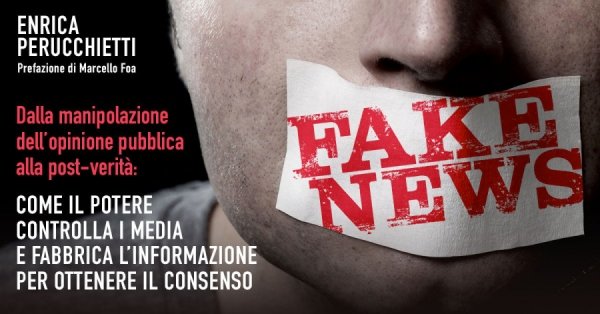
Interview with Enrica Perucchietti, author of the book “Fake News”, Arianna Publishing 2018, edited by Luigi Tedeschi
- According to the thoughts of Walter Lippmann, our perception of reality is conditioned by images, concepts, moral values not directly acquired, but transmitted to us by others. Therefore, the narration of facts is necessarily subjective, a representation of reality formed through stereotypes, assumed as interpretative canons of reality itself. In the fluidity of today's telematic communication, therefore, new stereotypes replace old forms of manipulation of reality. It is therefore necessary to conclude that the perception of reality is always mediated by the uninterrupted succession of cultural stereotypes over time, every truth arises from selective parameters of interpretation of reality itself. In this case the post-virtual truths of media technology, they do not end up being equated with the metaphysical conceptions of philosophical knowledge and/or with the transcendent truths of religious faiths?
The risk exists. Yet the truth is one, with its infinite nuances, beyond the stereotypes or cultural archetypes that each of us has inherited or been indoctrinated into. I agree with the philosopher Alain De Benoist according to which the intent of post-truth would be to discredit the truth by presenting it as a "great story" which can no longer be believed precisely because everyone has constructed their own subjective truth. It would be the triumph of relativism: everything becomes “relative”, virtual and therefore chaotic. At this point of collective disorientation, Power guarantees the existence of its own truth through the supervisory action of the mainstream media and the laws introduced to guarantee order. That is, we want each of us to be increasingly wary of the news we can find on the web even if it is documented and true and, more generally, of alternative information to make exclusive reference to "certified" news.: we must only rely on what the Party says and has decided for everyone. The others will be conspiracy theorists, webeti and well poisoners. Read More
“Whoever controls the internet controls the money (and therefore the world)”, on Jarod Lanier (in collaboration with the Assayer)
Report Linkiesta
Whoever controls the internet controls the money (and therefore the world)
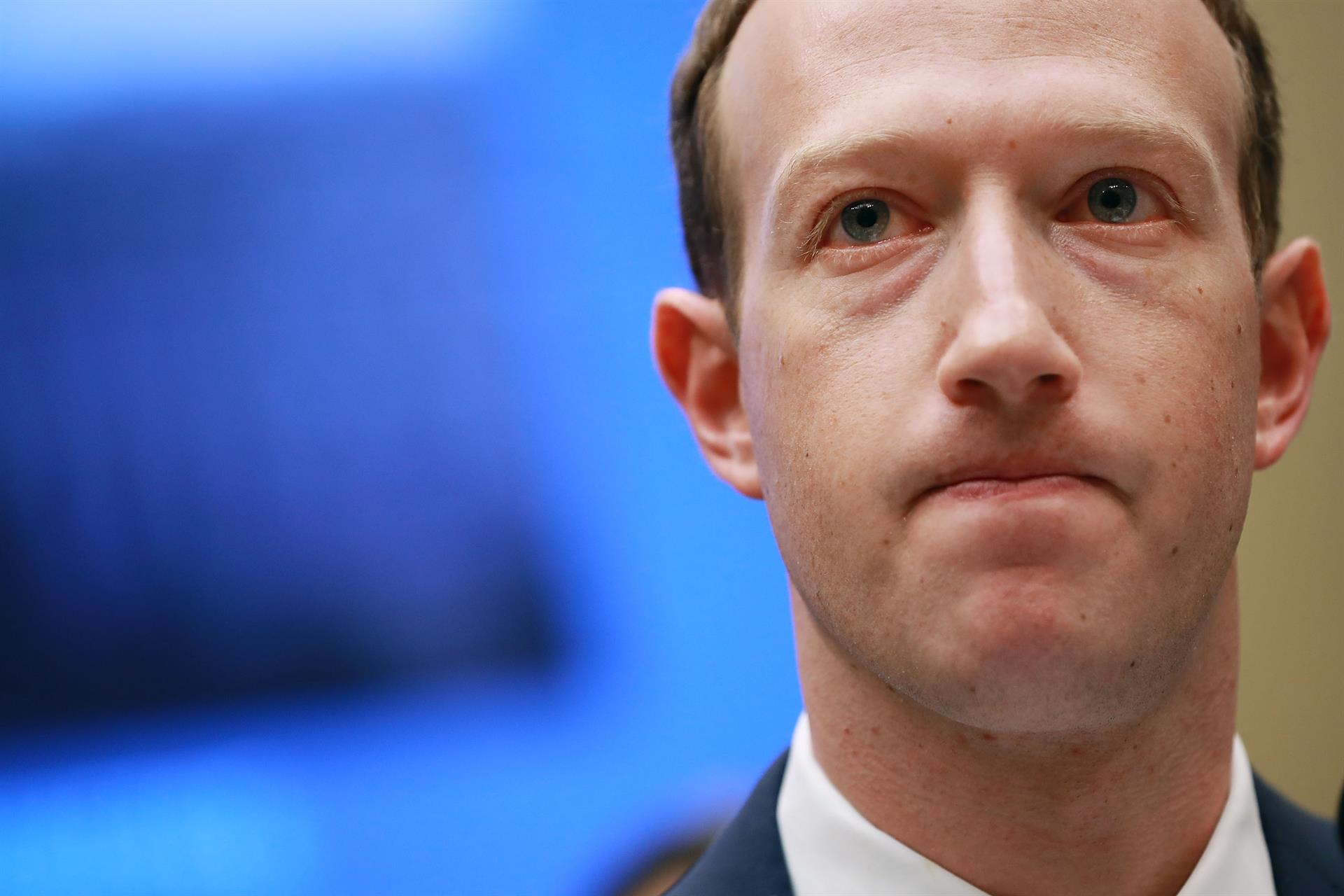
Money was created to exchange and record owned wealth. But from a certain historical moment onwards it became a bet on the future, which has a lot to do with our faith in progress. Jaron Lanier, in his book “Dignity in the age of the internet” (The Assayer, 2014) explains how to orient yourself in the era of the digital and financial economy. With an eye on Mark Zuckerberg and the other titans of the web. And their crazy idea of becoming big global banks (LAWS)