

Of Fulvio Scaglione
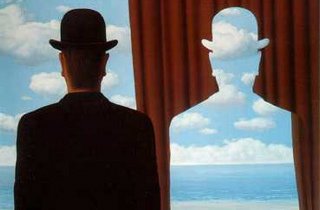
Source: Fulvio Scaglione
Am I wrong or does it turn out that the famous and omnipotent Russian hackers, those who had convinced the Americans to elect Donald Trump and the English to send the European Union to that country, they were actually a bespectacled guy born in London in 1975, graduated in History of Art, grew up in advertising environments, landed at Strategic Communications Laboratories (company specializing in behavioral analysis and communication) and from there became director of the affiliate Cambridge Analytica, whose name is Alexander (James Ashburner) Nix? A guy who knows nothing about Russia and who, On the contrary, became important at Strategic etc. ecc. working, among others for the Government and Defense of the United Kingdom, who are not much friends of Russia?
And I'm always wrong or maybe the other Kremlin hacker was the legendary Mark Zuckerberg, father of Facebook, who knew or perhaps didn't know what those tens of millions of profiles that Cambridge etc. were for. ecc. he downloaded from the most famous and popular social network and used it to make his clients win? And now we are hearing the same question from the US Congress, by the English Parliament, from the European Parliament and from the Chinese washerman who irons my shirts: you knew or you didn't know? This Putin... studies them all!
It was understood for some time that Russiagate was a hoax. But it was such a hoax, be’, it was hard to imagine. And the beauty of the matter is that for many months, the election just celebrated, a lot of fine heads explained to us that the technology gurus, the masters of the new world, the standard-bearers of modernity would never have tolerated such a retrograde opprobrium from a President. “Silicon Valley against Trump”: use the Internet, precisely, and look how many times this title has been published. And now it turns out, on the contrary, they were the click gurus, and their techniques as globalizers with the future in their hands, to send him to the White House.
In reality there would be little to be surprised about. Barack Obama had already cleverly exploited the internet world and user profiling to become President in 1994. His approach to Big Data (the set of techniques for collecting and analyzing large quantities of data) it had been, for the time, very advanced and had inaugurated the professional application of those systems to the political struggle. So much so that it was then studied in an academic context, for example from the Technology Review of the Massachusetts Institute of Technology, the famous Mit, one of the most prestigious universities in the world. Sasha Issenberg, who had studied Obama's campaign for the magazine, in his analysis he exalted the ability to "identify and gather individual voters".
A few years later that technique changed its name: now it is called microtargeting and it is the marketing strategy that serves to identify small groups of "consumers" or even individual "consumers" and then influence their choices. The specialty, precisely, of that Russian hacker Alexander Nix.
I put “consumers” in quotes and not by chance. Why microtargeting, despite the collective outrage now exhibited over the Trump-Facebook-Cambridge Analytica affair, it is practiced every day in every product sector to the detriment or behind the backs of anyone who uses the Internet. An example to understand. Some time ago I explored the possibility of buying a camera on Amazon, wandering among the models and price proposals. For weeks, afterwards, I found adverts for cameras, and in particular those of my favorite brand, on my Facebook page, in the columns of the newspapers I read online, in advertising emails, in Google ads and Twitter. Don't tell me it hasn't happened to you too.
Now the question is: because I have to consider it lawful (and not only that: also modern, innovative, bright, figo) use Internet users' personal data to make them buy, day after day, one product rather than another e, in general, influence his preferences so much that he changes his lifestyle; and I must instead consider it illicit (and not only that: even illiberal, undemocratic, reactionary, dangerous) use the same data to make him buy one political candidate instead of another, be it Obama or Trump? Isn't that a bit hypocritical? On the contrary, worse: naive?
So now let's get rid of Nix, if it helps to keep us calm, and maybe a little also to Zuckerberg who will get away with it anyway. But the substance will not change. As Edward Snowden and Julian Assange explained to us, it is no coincidence that one is an exile in Moscow and the other confined to the Ecuadorian embassy in London, our privacy is gone, finished, broken. We are given, bit, clic. For sale to the highest bidder.
Similar Posts

My Home Page
Russian hackers? In reality they are Westerners | http://www.agerecontra.it
GloucesterCarRecovery
Russian hackers? In reality they are Westerners | http://www.agerecontra.it