

Reporting of www.unavox.it
 |
 |
|
The miserable nativity scene displayed in the Basilica of Fatima News taken from the site Tradition in action 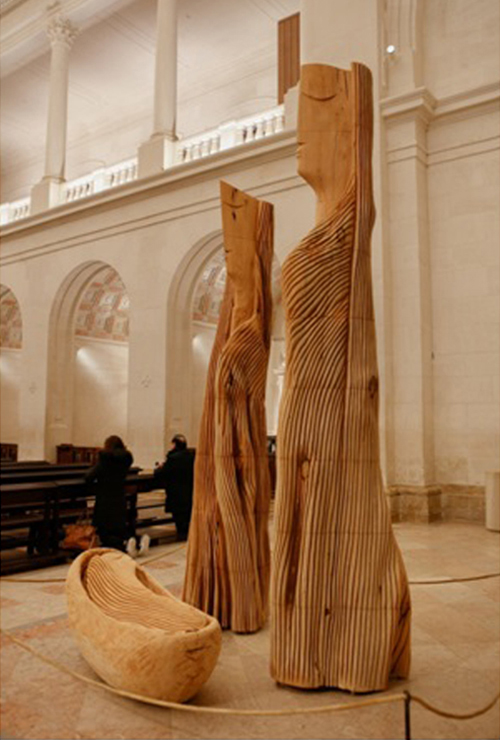
The photo above reproduces the miserable nativity scene recently placed in the Basilica of Fatima, in Portugal. It is the work of the contemporary Portuguese "artist" Paulo Neves, appointed for the need by the priests of the Basilica.
Observing this sculpture means realizing that you are in the presence of a preordained plan aimed at trivializing and sabotaging the spirit of Christmas in modernist and progressive terms.. The following considerations can be drawn from this: Primo: the two sculptures have essentially similar features, of a clearly feminine type, such that it can be considered that they intend to implicitly express the modern feminist conception. Placed to compose the nativity scene, they appear as a modern expression of lesbianism which advocates pseudo homosexual families made up of lesbians who nevertheless claim to be able to adopt a child. There is no doubt that in this way the intention is to exploit Christmas to bring about the demolition of Catholic doctrine. Second: the two sculptures have deliberately unusual features, especially in reference to Fatima and Portugal, such as not to recall two human characters, in this case a woman and a man, but rather two idolatrous figures of the type of those present on Easter Island, which is located on the other side of the globe and in any case without any relationship with Portugal, né neither cabbage Natale. Thus presented, the scene ends up representing an unlikely pagan myth, among other things known only to the sculptor and perhaps to his clients, rather than the incarnation of God. In any case, the recall, instead of Christmas, It's quite tribal. 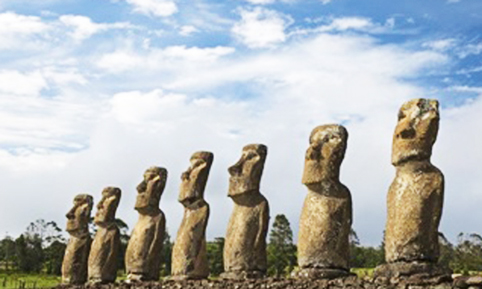
Third: starting from these assumptions, the total lack of sacredness in the scene is evident. Not only do the features of the sculptures not even remotely recall the supernatural interpenetration and natural tenderness of the two holy parents of the Son of God who came to become Man for us, but the context suggests a sort of indifference in the face of an event that is not even an event at the sight of that anonymous cradle which appears to be anything but the manger on which the Baby Jesus was placed, placed on straw, symbol of the plant world, and warmed-adored by the ox and the donkey, symbols of the animal world. 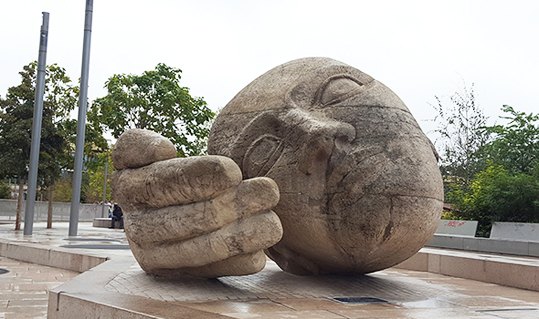 A modern "masterpiece" displayed on a square in Paris Quinto: the features of the sculptures are such as to once again suggest the pauperism characteristic of the new papal trend, as if the Birth of Christ did not have the slightest earthly splendor and as if the Nativity itself had to submit to the sentimental brutalization to which they would like to reduce all the sacred art developed by Christian artists to show the faithful the majesty, the beauty and magnificence of the divine. |
