

 by Emilio Giuliana
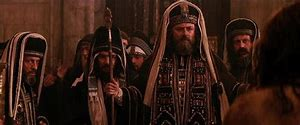
There is an insistent desire that tends to relieve the Sanhedrin of Caiaphas from the guilt of the death sentence against Jesus, indicating Pilate as responsible and guilty. FALSE! History and the Gospels are clear and equally clear are the proud Jewish admissions of their will to lead to the crucifixion of CHRIST.
Below I report a writing by the very insightful and learned historian Rutilio Sermonti, which dispels any doubt from yet another ignoble attempt to falsely rewrite history, that of Pontius Pilate.
by Rutilio Sermonti
Responsibilities in their place.
(aurhelio.it) – As a Roman as I pride myself on being, I wish to take on the defense of Pontius Pilate, that excellent man and honored official, who is unfairly reviled, as has been the case for centuries with the subtle action of rabbinic Judaism, who - by making havoc of the evangelical findings - tries to free himself from the accusation of deicideby dumping it on the Romans, and on that in particular.
Let's start by making it clear that, at the time of Jesus' trial, Judea was not a Roman province, rather "federated". The representative of the proconsul of Caesarea (as Pilate was the procurator) it therefore had political-military jurisdiction only over crimes of infidelity to that "foedus", While, for everyone else, and even more so those of sacrilege against the Mosaic law, the exclusive competence belonged to the local Jewish authority, that is, of the Sanhedrin. Indeed, when the guards of the Sanhedrin (not the Roman soldiers!) they arrested Jesus, they tried to have Pilate condemn him on charges of sedition against Rome.
Pilate carefully interrogated the accused, and his sentence was: “I find this man immune from guilt”. It seems like an absolution to me, or am I wrong? And even later, the hypocritical accusers insisting that He would proclaim Himself king, who answered them: “But his kingdom is not of this Earth”? It was Pontius Pilate himself.
And the evangelical narrative continues. When he heard that the alleged crime of political sedition, of a continuous nature, it would begin in Galilee, Pilate (probably happy in his heart to be rid of those austere nuisances), exactly applying the current rite, he declared himself incompetent for the territory and referred the case to the tetrarch of Galilee, Herod Antipas. Well – the evangelist records – when Herod also declared Jesus innocent “from that day Pilate and Herod, who were previously on bad terms, they became friends". So, the conviction of Christ's innocence also involved Pilate emotionally, to the point that the common belonging to the "innocentist party" was also able to erase a previous personal antipathy.
But the prosecutor didn't stop there. He committed himself to saving Jesus even beyond his institutional duty, so much so that he compromised his own "cursus honorum", which we know how much the Romans cared about.
Let us consider the Passover episode in its true light, consistently with the previous ones. It was tradition that, on that day, the people could pardon a person condemned to death. There were two condemned people: Jesus of Nazareth and a certain Barabbas, street thief and murderer. Pilate knew well that Jesus was very popular (he couldn't have missed Palm Sunday, right in Jerusalem), and he also knew that the Sanhedrin hated him for that and for his severe accusation against the majority of Pharisees and Sadducees.
He therefore deluded himself that, appealing to the people, he would have succeeded - without violating the law - in snatching the persecuted person from the clutches of his enemies. He underestimated the cunning or perfidy of the Jewish leaders, That, predicting his move, they had arranged for a large group of their servants and customers to flow into the small square in good time, with very precise instructions: It so happened that, against all logic, the result of the “popular consultation” was “Free Barabbas!”, although Pilate had also resorted to the ruse of having his protégé appear in public dressed in a "theatrically" suitable way (Sisto says it well) to move with compassion.
Pilate, At that time, having noted the impossibility of moving the rabble down there from their fixed position, he shouts “I am innocent of the blood of this righteous man.”
Affirmation, that, certainly irreconcilable with the hypothesis that he himself had sentenced him to death shortly before and explainable only by the fact that the sentence had been pronounced by "others", and that he, Pilate, was – as it was – legally powerless to prevent its execution. You can also pass the four gospels through a magnifying glass, and you won't find the slightest hint there, I'm not talking about a condemnation of Christ pronounced by Pilate, but not even the slightest expression of his that was not in His defense, while the text several times declares that the Sanhedrin, at any cost, “he wanted his death”. It was therefore the Sanhedrin, not Pilate, the judge who condemned Jesus, and there can be no doubt about this, being even…Gospel.
And we arrive at the famous "washing of hands". This is a patent mystification, that no one seems to notice. And mystifications are never random. The fact is that only a few centuries after the fact, Pilate's public gesture was generally and peacefully attributed to the meaning of disinterest, to get out cowardly and alibistically, so much so that the expression "wash your hands of it" is commonly used in the sense of distancing oneself from something, to escape responsibility. It's a gross fake. For a first century Roman, hand washing (lustral water) it was an act of purification.
Well, one purifies oneself from something unworthy, of dirt, of impure. E, if the gesture is deliberately performed in a public manner, in the presence of other people, as Pilate wanted it to be, it implies a very serious offense to them, an explicit declaration that contact with them has contaminated us, since it is something ignoble, as the plot of the Pharisees and their accomplices against the "just" Nazarene certainly appeared to Pilate.
Jesus of Nazareth, King of the Jews - he ordered the writing to be written on a tablet fixed to the gallows, and when the Sanhedrin asked him to change it to "presumed king" he was adamant: “What I wrote, I wrote!”.
It's little known, but the thing, combined with the unprecedented disfigurement of the basin, procured for the procurator a petulant Jewish appeal to the emperor, which earned our man the removal from office, the reason of state having been judged to be prevalent in maintaining good relations with the local authorities of the "federates". It took another forty years for Domitian to do what the modest Pilate had, that terrible day, so much desire to do!
They made him the symbol of indecision, of pusillanimity, of inconsistency, while his acts were impeccable both legally and humanly. I'd really like to see, in its place, those who use the verb “pilatezzare” with contempt. They made him the tormentor of the Lord, when he defended him even when the Holy Apostles had abandoned him.
Therefore I do not share the ideas of those who would like to accuse our worthy ancestor of being a positivist ante litteram or a fool.. They resent it, reflect, of the despicable figure of Pilate created by the true deicides. Jesus – whose superhuman stature the Roman clearly had, if not knowledge, at least an inkling – he declares himself a witness to the truth. And Pilate, like any person of a certain caliber, that he had not attended preaching in the past three years, he asked him what truth he was referring to. It doesn't seem to me that it is necessary to attribute Jesus' silence, rather than the material impossibility of explaining everything to a pagan with one sentence, or the state of extreme physical prostration in which he found himself, to a tacit reproach, nor to give a Pirandellian meaning to the question posed. I don't see any point, Indeed, that there was capital punishment for verbal disrespect to any official of the empire, nor that the Romans, who have taught the law to the whole world, they issued hysterical death sentences at random. No, only He knows the reason for Jesus' silence and so you continue to be.
What matters to me, is to correct the unjust negative judgment on Pontius Pilate, Roman citizen, and this precisely in the light of the gospels.
This is not my far-fetched opinion, given that, in the Coptic Christian calendar, il 25 June is dedicated to a Saint named Pontius Pilate.
source – http://www.emiliogiuliana.com/8-notizie/24-il-sinedrio-di-caifa-condanno-a-morte-gesu.html
Similar Posts

Good comment that re-establishes the truth that is so hidden nowadays.