Very interesting interview with the Minister of Economy indicated by Salvini. Maybe it's because of what he says, here too, that the establishment sees it as smoke and mirrors?
Of Paolo Savona
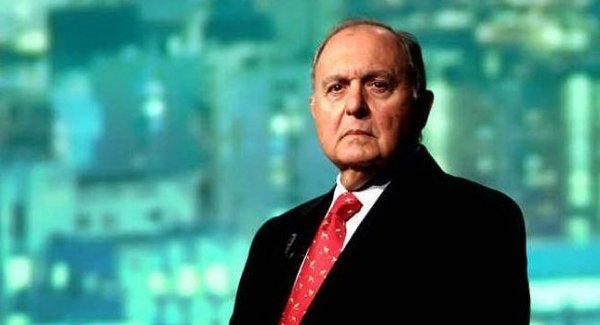
Source: The Antidiplomat
“The Maastricht operation was politically and technically very poorly conducted at the time. The few people who thought like me were marginalized”
Of Alessandro Bianchi e Simone Nastasi
Paolo Savona. He taught economics at the universities of Perugia, of Rome Tor Vergata, at the Higher School of Public Administration and at the Guglielmo Marconi University. Founder of’ Open Economies Review and former president of Assonebb, the Association for the Encyclopedia of Banking and the Stock Exchange. Industrial miner (1993-1994). Author in 2012 Of Heresies, exorcisms and right choices to get out of the crisis. The Italian case
– Professor, in one of his articles published on 13 October on the Formiche.net website, the paths that Italy could take to emerge from the crisis are being traced. Together with the legal path traced by Professor Guarino (according to which the amendments to the European Treaties would be illegitimate under the directive 1466/97), You write how a road should pass through a "serious institutional crisis". What kind of crisis and how it might develop?
I'm talking about the recovery of monetary sovereignty and the return to the lira, if it were possible to limit exit to this aspect of EU participation. However, I believe that the entire European construction would collapse, Therefore, we will also take back the sovereignty to regulate the internal market and relations with the international market; this, Anyway, would remain under the aegis of the WTO, the World Trade Organization, avoiding the risks of Italy falling back into forms of protectionism. The serious institutional crisis would therefore concern both us and the EU.
– Since the beginning of the sovereign debt crisis of European states, we are in 2010, You have always repeated that Italy should have two survival plans, depending on whether or not we remained in the single currency. In the first of these two floors, plan A, You argued that Italy must necessarily avoid the "blackmail" of ceding sovereignty in exchange for financial aid. Italy would therefore find itself under the blackmail of international institutions?
It is the short-sighted vision of the EU institutions, unfortunately including the ECB. If a member country wants to be helped to overcome public debt crises, of banks or the economy must be subject to strict European supervision, that is, losing almost entirely the residual fiscal and regulatory sovereignty. It is a form of economic colonization which contrasts with the democratic spirit of the Treaties. I compared this situation to a constitutional structure in which the laws approved by Parliaments must be submitted to religious bodies which judge their coherence with the sacred texts, come in Iran. So I called the fiscal compact, but also other texts of European agreements, come il Redemption Fund, the Koran of Europe. I also added that those who agree to completely get rid of national sovereignty without first having political unification will be judged severely by history.
– The way to escape this blackmail, according to you, it would involve the elimination of some weaknesses, first of all the reduction of public debt. In fact, today's Italy resembles a company whose level of debt far exceeds the level of turnover. In such cases, companies, sooner or later, they fail. And according to some, come l’ex direttore del Financial Times Wolfang Munchau, the moment of Italy's bankruptcy would be quite close. What then is the real situation? What risks does our country run??
Italy is in a position to deal with its public debt very well;
there is no risk of default due to us. We have sufficient assets to service the debt. I had the opportunity to state to the House, on the occasion of the meeting of 27 Budget commissions of the European countries to which I was invited, that public debts are renewed, but they were never reimbursed by anyone; they can be reduced by inflation or by the decision not to honor them. Italy is not in these conditions and can renew them on the market.
Only international speculation can make renewal impossible, as he attempted after the American financial crisis. Precisely therefore the ECB's position must be to intervene as lender of last resort since our debt is denominated in euros. However, it does not have this power, Therefore, if we were forced to default, the blame would be on the "lame" European institutions, poorly constructed.
– What if we instead took plan B into consideration, that of an exit from the Euro, what they would be, according to you, the consequences for the economy and the savings of Italians?
Although some colleagues, like Alberto Bagnai, they argue the opposite, I believe there would be a strong initial shock on the exchange rate and inflation, but within a maximum of two years the situation would return to equilibrium, with the advantage of having regained control of the future fate of the country, including the performance of the two development engines, construction and exports. However, I have always insisted that if this happened under the pressure of the market and, I add, of European sanctions without adequate preparation for the event, including new international alliances, the situation can get out of hand. If, however, it were organized in an orderly manner, the effects would be close to the modest ones indicated by Bagnai.
– Professor, speaking at a conference recently organized by the Ugo La Malfa Foundation, you declared that "the adversary has disappeared". Unlike in the past, there are global financial powers today that after communism – their fear – “they have resumed the old anti-democratic vices”. But how do we identify these "adversary forces" to fight and what are the first countermeasures that states can take? It's not them, Furthermore, That, according to you, they are pushing for the signing of the TTIP, the free trade area that the US and EU are negotiating?
The subject of my diagnosis is capitalism, whose scale of values has at the top the accumulation of increasingly less productive and increasingly financial capital, it has established itself in democratic and totalitarian countries, losing sight of the scale of social values with employment and social well-being at the top in a climate of freedom. This second scale of values established itself in the post-war period in the Western area due to fears of the attraction of the Soviet communist hypothesis of society, which had a calming effect on the force of capital on labor.
Now capitalism no longer has any opponents, having spread even to countries that continue to declare themselves communist. The countermeasures are to increase competition under the constraint of equal welfare, that the WTO ignores. Competition between countries with different social protection networks cannot be accepted. This year's Nobel Prize in Economics went to Jean Tirole, for his contributions on the difficulty of having correct competition in the presence of large oligopolies. Paolo Sylos Labini had already written it in 1951 in Oligopoly and Technical Progress. The countermeasure is to place a minimum constraint on the level of welfare of the countries that join the free trade area. This is not the case with TTIP, which would lead to competition between countries with almost the same level of welfare, while the problem is the dollar. If Europe does not give the ECB the same powers as the FED, we will remain in the hands of American choices. I find a worrying deafness on the topic.
– In the end, also recalling his experience in the Ciampi government, how do you judge the choices of the Italian Central Bank and the executive at the beginning of the 1990s?, from the Treaty of Maastricht onwards, they started that escalation of loss of sovereignty that today traps our economy? Could greater guarantees have been requested for Italy and what was the biggest mistake made??
Paolo Baffi's Bank of Italy was more problematic, not that of Carlo Azeglio Ciampi. The Executive understood little and was involved in one of the worst periods experienced by Italian politics. Overall, the benefits of adhering to the Maastricht Treaty have been overestimated and the costs underestimated. The operation was also technically very poorly conducted, as a fact of abstract civilization and not one whose important practical implications had to be taken into account. I felt very close to Baffi's analyzes and my own Europe with feet of clay, written for Carli negotiator of the Treaty, but published later due to the difficulty of finding a publisher, I pointed out that we were building an ideal building without good foundations. The few people who thought like me were marginalized and the opportunists prevailed, those who really were and those who were unconsciously so. It was not possible to influence the decisions.


The government neither needs nor should borrow capital at interest as a means of financing government work and public enterprises. The Government must create , issue and circulate all currency and credit necessary to satisfy the spending power of the government and the purchasing power of consumers. The privilege of creating and issuing money is not only a supreme prerogative of government but also represents the government's greatest creative opportunity. Money will cease to be the master and will become the servant of humanity. Democracy will become superior to the power of money. ( Abramo Lincoln 1865 Senate document no. 23 )
Banking was fertilized by injustice and was born in sin, bankers own the world, take it away from him, by giving them the power to issue money at the stroke of a pen they will create enough deposits to buy it back. Take it away from them in any way and all great fortunes like mine will disappear and they need to disappear so that this becomes a better world to live in..
But if you prefer to remain the slaves of the bankers and pay the cost of your slavery yourself, let them continue to create money.
(Sir Josah Stamp governor of the Bank of England 1928-1941)
Whoever controls the amount of money circulating in a country is the absolute master of its industry and commerce. And when you understand that the whole system is easily controlled in one way or another, by a very small elite , you won't need anyone to explain to you how periods of inflation and deflation arise.
(James Gardfield 20th president of the United States of America)
Capital must protect itself in every way possible with alliances and legislation. Debts must be collected, bonds and mortgage contracts must be concluded in advance and as quickly as possible. When through legal processes ordinary people will lose their homes, they will become increasingly docile and will be more easily reined in through the strong arm of the government in power powered by a central force of wealth under the control of leading financiers. This truth is well known among our leading men now engaged in establishing a capital imperialism that governs the world. Dividing voters through the political party system, we can make them spend their energy fighting over insignificant issues. Consequently, with prudent action we have the opportunity to secure what has been so well planned and so successfully accomplished.
(USA Bankers Magazine 25 August 1924)
The current creation of money out of thin air by the banking system is identical to the creation of money by counterfeiters. The only difference is that those who profit from it are different.
(Maurice Allais Nobel for economics)
Giving banks the ability to create money is like giving yourself into slavery and paying for it too.
(Sir Josah Stamp governor of the Bank of England 1928-1941)