
Of Lisa Turri
Source: Century of Italy
In civilized and advanced Sweden, if you say that integration policies have been a failure, you are branded a racist and fascist. It happened in 1997 to the wife of the American anthropologist Jonathan Friedman who drew inspiration from it for an essay of his that will cause discussion, Politically correct. Moral conformism as a regime (Meltemi), now available in Italian. Friedman teaches at Lund University and, like his wife before him, he is in turn considered a dangerous reactionary.
Interviewed by Elisabetta Rosaspina for The Reading, the cultural insert of Evening courier, Friedman observed: "I know, they accuse me of being a fascist. I can assure you that this is absolutely not the case: on the contrary. But this confirms the basic thesis of my book: political correctness emerges in historical periods of great sensitivity, when transformations of society are underway according to the plans of some elites, like the bourgeois left, unsure of their own positions". Friedman denounces the fact that precisely in the academic world the situation is becoming unsustainable, and cites the case of a Harvard professor accused of sexism in the 1990s for having quoted a line from the poem in his textbook Don Juan in Byron. In the end the risk is to censor the research because "if you want to be politically correct you end up imposing limits on the questions".
The trend of political correctness began to spread in American schools and universities in the 1990s. In a book by 1993, Americans, Alberto Pasolini Zanelli told it very well when talking about an episode that anticipated the modern distortions made on Bizet's Carmen or the choice of a black actor for the role of Achilles in the American series on the Trojan War. In fact, it happened that it was censored at the Washington Opera House The Magic Flute di Mozart, the scene in which two men talk about the cunning of women was cut (sexist scene) and Monostatos the Moor becomes a white man who talks to Papageno about "strange" and not "black" men (dialogue otherwise suspected of racism).
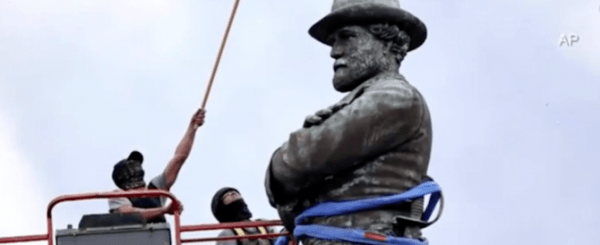
Rebelling against dominant thinking is possible? According to Friedman, it will be increasingly difficult: “For years I believed that political correctness would soon disappear but it has only evolved. If before he shut people's mouths and made them feel ashamed, Now it's getting violent.". The war on statues in America proves it.

Non-fiction
Home » ARTICLES » Non-fiction » Book-complaint by an anthropologist: Political correctness kills freedom
