

 Of Gianluca Marletta
Anyone who has the fortune of reading The Brave New World, the hallucinated but "prophetic" dystopia of English Aldous Huxley, which already in the 1930s predicted a future Global Government where a humanity conceived "in a test tube" (the publication of the novel is of 1932!) e reduced to 200 millions of individuals, she is kept in “golden chains” and total obedience through drugs, sex and shows, he cannot help but suspect that the plot reflects not only the novelist's "fantasy" but also a trend, a state of mind, truly present among the "upper classes" of the Anglo-Saxon world (of which Aldous was one of the most brilliant offspring). Effectively, what we might define as “British ideology” has a long history: it is a mix of class supremacism, cult of eugenics and elitism, obsession with induced social control and fixed idea that humanity must be drastically reduced in number if not even "recreated" promisingly, which has been a true occult reference of many Anglo-Saxon policies of the last two centuries, becoming "reference ideology" after the Second World War no longer only in England or the United States but throughout the Western world and beyond.
An ideology that reveals, sometimes, para-messianic suggestions of global renewal and world domination but which has nevertheless managed to impose itself, on a pseudo-scientific level, with the hypotheses of Malthus and Darwin, becoming justification and pillar of modern ultra-capitalism and its vision of the world. As, for example, when assisting, nowadays, to operations such as the attempt to extend euthanasia to sick children or to the incessant propaganda against human "birth" seen as a danger for "mother Earth", we must always take into account what ideological roots lie behind such policies.
MALTHUS: DECREASE THE POPULATION WITH WARS, FAMINE, ADULTERY AND SODOMY
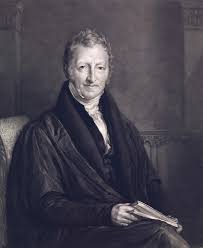 One of the best known examples of this science at the service of power He is the Anglican pastor Thomas Malthus, author of that An essay of the principle of the population as it affects the future improvement of society to which they refer, even today, all the theorists of denatalism and the need to contain or reduce the world population.
According to Malthus, Indeed, since the population would tend to grow in geometric progression, therefore faster than the availability of food, (which would instead grow in arithmetic progression), everything should be done to avoid the multiplication of the population itself, above all – it comes naturally- of its poorest part. For this purpose, according to Malthus, those "subsidies for the less well-off" needed to be removed to prevent families from being encouraged to reproduce excessively, and it was also necessary to keep the wages of the poorest classes at a minimum subsistence level.
From “religious”, naturally, Malthus saw chastity and continence as the most morally acceptable remedy for reducing the population, but as a "scientist" he did not deny that the means through which this limitation was implemented in nature or in societies were more often of a repressive o preventive. In one case, the repressive ways contemplated the action of mortality through epidemics, guerre, famines, ecc.; in the other, a decrease in the birth rate through the diffusion of all those behaviors, including adultery, sodomy, ecc. which cause a decrease in births.
On the other hand, the Malthusian hypothesis did nothing more than translate, in the form of a “scientific” hypothesis, a feeling already strongly widespread in English society of the time. There would be a dramatic demonstration of this shortly thereafter, between 1845 and the 1849, during the terrible famine that struck neighboring Ireland (The Great Famine, in Gaelic The Great Famine) killing or forcing emigration almost the 40% of the island's population; famine welcomed as a golden opportunity by the British rulers and Protestant landowners, which, very “Malthusian”, they refused any form of help to their people (detested) Celtic and Catholic subjects, leaving them literally starving.
DARWINIST IDEOLOGY AND THOMAS HUXLEY'S "CULTURAL MANIPULATION"
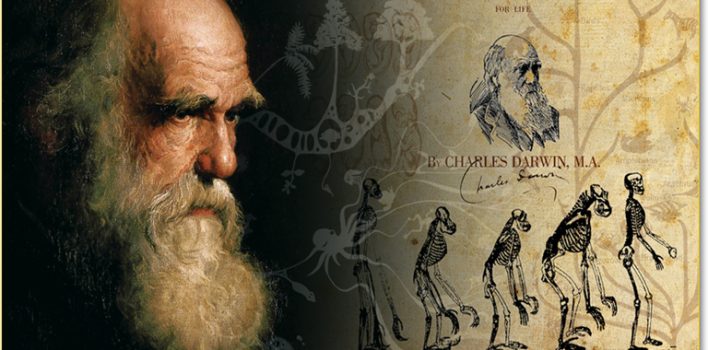 But if Malthusianism is the more or less direct ancestor of those true dogmas of globalist thought which will be denatalism and eugenics, it is also the inspirer of another Anglo-Saxon "scientific myth" gradually imposed on the whole world: il Darwinism. Darwin himself recognized its contribution, especially in the very typical aspect of his hypothesis regarding the struggle for existence and the survival of the fittest. On the other hand, the story of the affirmation of Darwinism starting from the 19th century is also quite significant in its role politico assumed by science in British culture.
Darwinism, which for the new "scientist ideology" was to serve as a crutch to the hegemonic projects of Great Britain and the entire West, would have been what had been there Genesis for the Christian universalism of previous centuries. An “atheist genei, materialist ed exhilarating the power of the strongest over the weakest which responded perfectly to the cultural and political climate of the era of Colonialism and the Second Industrial Revolution. And if on one side, with his idea of “random” evolution, Darwinism effectively excluded any divine intervention on reality, it also became an extraordinary tool to legitimize the domination of a self-proclaimed "elite" of "evolved beings” on the rest of the world branded as involuted, traditionalist and destined by nature to extinction.
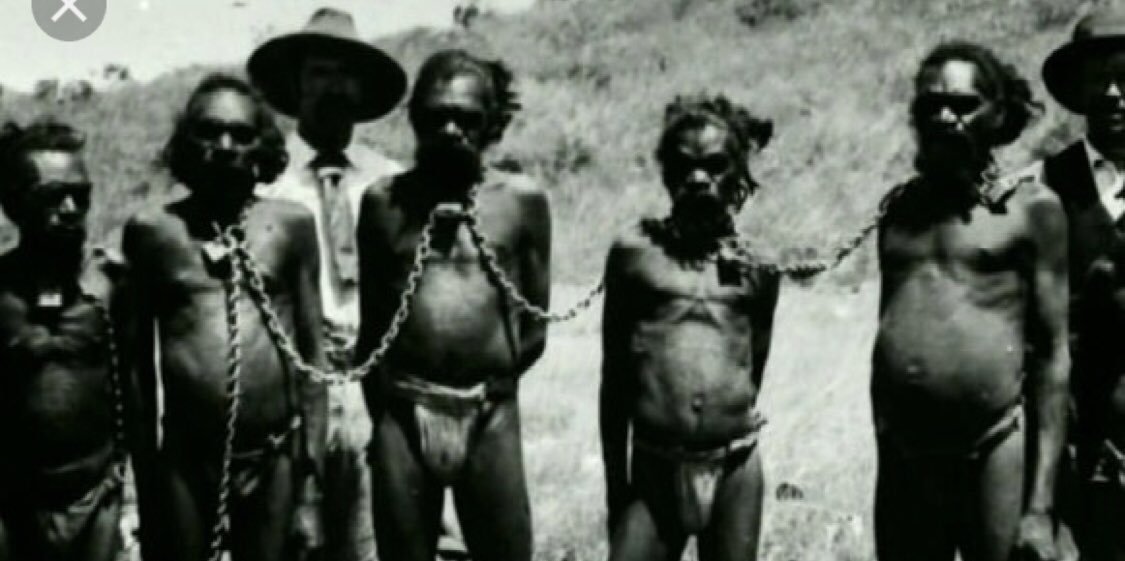 This, However, It doesn't mean there wasn't resistance. The still strong influence that religion had on a part of British and Western society - in addition to the aporias and legitimate scientific doubts that Darwinism aroused- could make the affirmation of such a revolutionary ideology difficult.
It is precisely at this juncture, effectively, that the concerted action of certain "cultural lobbies" stands out more than ever, in practice, were instrumental in imposing Darwinism on public opinion. We're talking, for example, of the group led by Thomas Henry Huxley, brilliant and cunning character, grandfather of the novelist Aldous.
President of the Royal Society since 1883 al 1885, Thomas Huxley was also the promoter of a smaller and more exclusive group, the XClub, which had a huge influence on British culture, pushing her to accept Darwinism and its assumptions. By co-opting in the XClub, particularly prominent and powerful men of culture in British society of the time, Indeed, Thomas Huxley inexorably succeeded in spreading the Darwinist faith among large sections of English high society, according to a scheme of "manipulation of society" that we will often find in the birth of modern "fads"..
BRITISH IDEOLOGY BECOMES WORLD IDEOLOGY
It's only since the Second World War, However, that this ideology will be proposed and imposed on the entire world. And he will be one of Thomas Huxley's nephews, Julian Sorel Huxley, iron Darwinist, neo-Malthusian and convinced supporter of eugenics, among the founders of UNESCO) of which he was first director, to publicly define the image of a small group of enlightened people holders of the truth who has the right to "direct" humanity towards goals and objectives unknown to the multitudes. As, writes Julian Huxley in the program of the UNESCO Preparatory Commission entitled Unesco its purpose and its philosophy[1]:
Progress is not automatic or inevitable but depends on human choice and effort of will. Taking the techniques of persuasion and information and real propaganda that we have learned to apply as a nation at war, and deliberately combining them with international peacekeeping tasks, using them if necessary, as Lenin envisaged to overcome the resistance of millions towards desirable change. (J.S.Huxley, Unesco its purpose and its philosophy, 1946. The text can be downloaded in English in PDF format from the official UNESCO website:http://unesdoc.unesco.org/images/0006/000681/068197eo.pdf )
War propaganda used in peacetime to manipulate mass opinion: this is therefore one of the programmatic purposes of contemporary international organizations. And the ideology that these organizations propose is nothing else, in conclusion, than the most updated edition of the "ideals" born in England from the 18th century onwards: social control, depopulation, eugenics, diffusion of those customs (purely “recreational” sexuality, homosexuality, ecc.) which can lead to a decrease in the birth rate, elimination of the weakest considered as "useless lives", ecc.
Without these prerequisites, effectively, it is impossible to understand many of the phenomena that characterize recent history.
——————————————————————————————————————————-
BRIEF BIBLIOGRAPHY
For the benefit of those who wish to delve deeper into the topic covered, we recommend:
G.Marletta-E.Perucchietti, Global governance, Ed. Arianna
E. Pennetta, Inquiry into Darwinism, Ed. Cantagalli
Source: http://www.gianlucamarletta.it/wordpress/2018/04/ideologia-britannica/
