

by Fabio Falchi
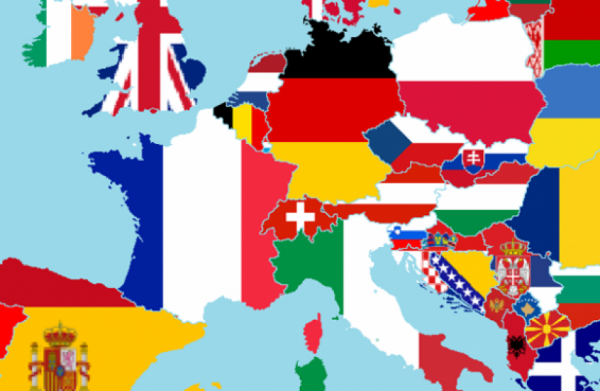
Source: Fabio Falchi
A SHORT REPLY TO FRANCO CARDINI
“For a pro-European sovereignism”* by Franco Cardini (one of the most lucid and capable Italian intellectuals) It is certainly an article worth reading, since, as well as highlighting the serious limits of a "sovereignism" which risks configuring itself as a form of "incapacitating" nationalism in the current multipolar phase**, offers the opportunity for critical reflection on the question of building an authentic European geopolitical pole. Indeed, they can also be done in Cardini – and they must – address several criticisms. Let's look at some of them briefly
1) Hinges (but he is not the only one) it seems not to take into account that civilization and culture are on a distinct level (although not unrelated) from the geopolitical one. For example, Greek civilization and culture were based on the poleis which continued to wage war even after the Peloponnesian War, until the poleis had to recognize the supremacy of the Macedonian kingdom.
In short, civilization and culture (european) they are not enough to give life to a geopolitical subject (European).
2) Cardini defends European sovereignty, but it says nothing about the sovereign debt of individual European states. There should then be a single European public debt? And Germany, which didn't even want Eurobonds, would accept? What German and French banks did to Greece has nothing to teach? Furthermore, it is indeed possible that a Greek or Italian general could command the European defense, including the strike force? And what Europe's foreign policy should be? In other words, who would decide? Germany wants a seat at the UN (and he doesn't want to know about a European seat) and France is certainly not willing to give up its own. How then do we deal with European sovereignism?
3) Cardini on the one hand argues that Europe should distance itself from economic and financial powers, which he considers powers “transnational”, on the other hand, however, he thinks that to achieve this, Europe should decouple from America, that is, by a national state. The contradiction is obvious, because in practice this is equivalent to recognizing that economic and financial powers are and are not “transnational” as necessary “hooked up” to specific centers of power (geo)politicians, that is, because they cannot fail to act in synergy with a hegemonic national state or with multiple national states (anti-hegemonic or sub-dominant), who are still the main geopolitical players on the global chessboard. Indeed, only states possess the means of coercion (satellites, missiles, planes, warships, armored forces, services, police, courts, prisons, ecc.) per “regular” international relations. On the other hand, is it perhaps possible to explain the war in Syria or the Israeli-Palestinian conflict or the clash between Israel and Iran or the Ukraine issue or Saudi Arabia's war in Yemen or Islamist terrorism and so on “solo” with the power of finance or geoeconomics? Obviously not. Any reflection on the question of a European geopolitical space and the “national sovereignty” therefore it should at least bear in mind that to understand the geopolitical reality we need not only economic categories or “ideological” but also and above all political-strategic categories.
On the other hand, it is known that after the Second World War the Americans were willing to support the various nationalist movements of the Third World. However, they had to recognize that the communists were nationalists too. How then to justify the fight against communism? They solved the problem by arguing that the communists were not true nationalists.
Actually, the opposite was true. Ho Chi Minh, for example, he was a communist but also a nationalist from the tips of his toes to the tips of his hair, so to speak. The fact that the communist Vietnamese were nationalists was the rule, not the exception, regarding the various liberation struggles after the Second World War.
In this perspective, we should then understand that today, rather than a pro-European sovereignism, there would be a need for a national liberation struggle of the European peoples, that is, one “International” of the European peoples. Ultimately today be “inter-nationalists” means both to defend the “sense of belonging” than to oppose neoliberal predatory capitalism or to oppose Euro-Atlanticism (disguised as Europeanism) of the Eurocrats as to the neo-Atlantic imperialism of Trump and Bannon.
** However, one must distinguish between different forms of nationalism. One thing is chauvinism, which generates intolerance and xenophobia, another is patriotism, that is, the defense of “sense of belonging” to a land, to a culture, to a people. In the latter case we certainly cannot speak of obtuse nationalism, just think of the national liberation struggles.
