Libya-Syria: who they support, who to cheer for
Of Fulvio Grimaldi
Amici, this time too we are long. Pardon. However for 15 days I'm out and, so, there is time to slowly make it. If you believe.
Of Fulvio Grimaldi
Amici, this time too we are long. Pardon. However for 15 days I'm out and, so, there is time to slowly make it. If you believe.

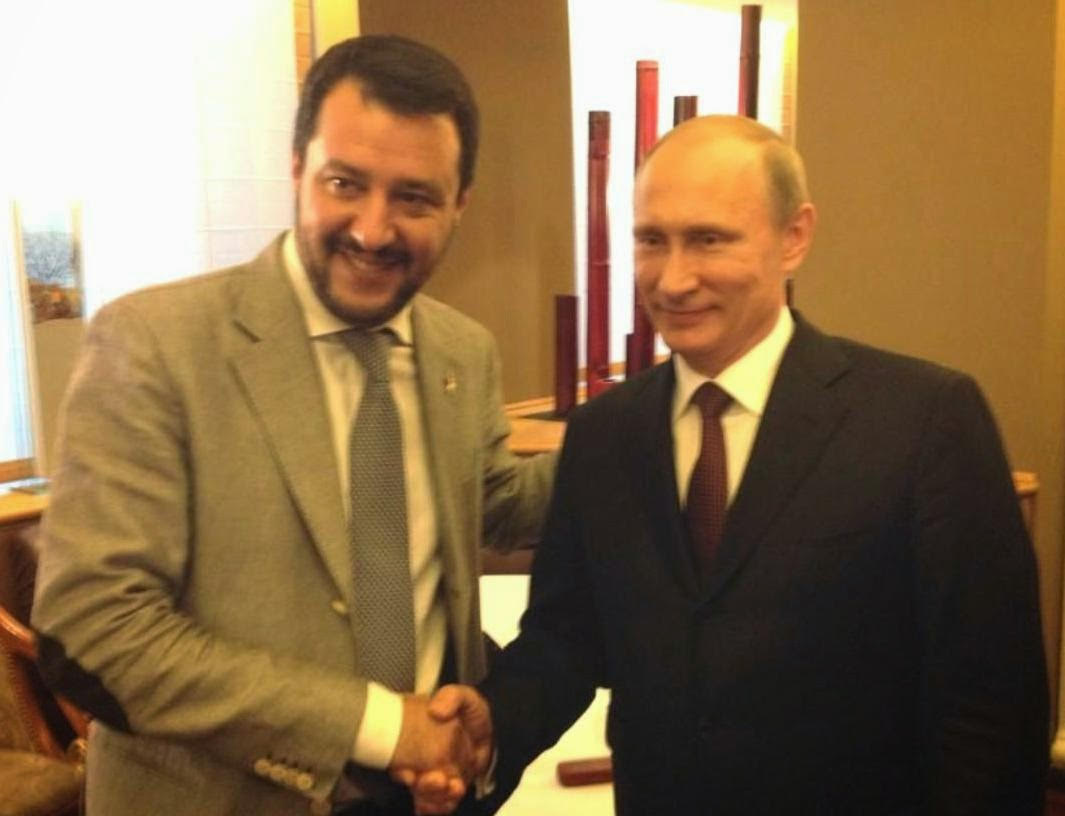
In the crisis in Libya, Italy has a rival, the France, and an ally, the United States. But there is another actor, fundamental and until now on the sidelines, which can be decisive in resolving the conflict: the Russia.
Another base for the Mediterranean
Although the world's attention on Russian operations is naturally focused on Syria, Libya represents a fundamental point in the Kremlin's Mediterranean agenda. For Moscow, il Mediterranean represents the natural outlet towards the Atlantic. Controlling or in any case guaranteeing the presence in the Mediterranean therefore translates into the ability to emerge from the shell of the Black Sea and obtain positions in the intermediate sea between Russian ports and the ocean.
The Mediterranean is needed. And therefore Libya is needed, given that the conflict that has been shaking the North African country for years mainly concerns the coasts, where there are ports, arsenal, possible military bases e, inevitably, the terminals of gas and oil fields.
Support for Haftar Read More

THE EYES OF WAR
Of Davide Bartoccini
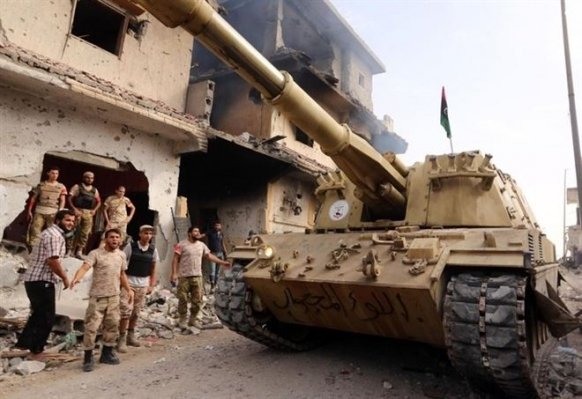
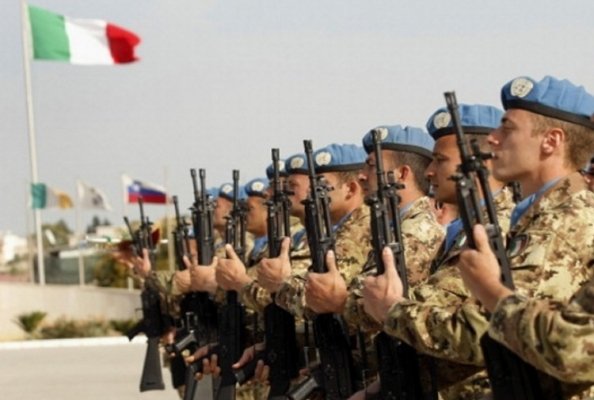
A silent contingent of special forces and agents of DSGE secret services who operate in the Libyan theater for over two years: officially in "anti-ISIS function", but often close to the actions of the armed forces led by the general Khalifa Haftar. The man on the rise in the Libyan crisis who risks overwhelming the Tripoli government (Gna).
Italy is not the only European power to have a contingent of special forces engaged in “front line” on Libyan soil. France too, which according to what was reported in the past by The Mondeis waging a “secret war” in Libya, has a task force of special forces and military operators in the field Dsge – General Directorate of External Security – press the database Benina air base, east of Benghazi. The presence was also confirmed by the UN special envoy Martin Kobler .
A contingent of one hundred and fifty men, according to the latest rumors dating back to 2016, which may have been reinforced by additional units after some losses recorded, and following the continuous escalations that have reached their peak in recent days: when clashes in the outskirts of the capital saw some mortar shells fall near government buildings and embassies, forcing the evacuation of personnel - including Italians - from Tripoli. Read More
Of Fulvio Scaglione

Source: linkiesta
The new one, yet another crisis in Libya, with the government of Fayez al-Sarraj on the brink of the abyss due to the attack by rebel militias, It has a very complicated outline, which includes historical rivalries between tribes, the role of Gaddafi's former hierarchs, the sharing of oil revenues, the interference of a long series of countries ranging from the USA to Great Britain, from France to Italy, from Russia to Egypt, from Türkiye to Qatar.
But the substance, at least in the reality of recent years, it's much much simpler: there is a very weak and almost impotent Government, the one led by Al-Sarraj, which acts under the auspices of the United Nations and is recognized by the international community; and there is a country, the France, who works for that Government to fall, even at the cost of plunging Libya back into total chaos.
Emmanuel Macron did his part when, last July, he called a unilateral summit to bring together Al-Sarraj and his sworn enemy, the former Gaddafi and former CIA general Khalifa Haftar, with the obvious result of delegitimizing the first and legitimizing the second. And he's still doing it, given that the moralizing militias (they say the Government is corrupt, think about that pulpit) they went on the offensive between our Prime Minister Conte's trip to Washington, where Donald Trump had gone so far as to propose an Italian-American "control room" for Libya, and the conference on Libya organized in Rome for 10 November. His plan is clear: eliminate Al-Sarraj and go to those elections in December that no one except him wanted and which would end up crowning a vassal of Paris.
The substance of this conflict is very very simple: there is a very weak government, the one led by Al-Sarraj but recognized by the international community. And there is a country, the France, who works for that Government to fall, even at the cost of plunging Libya back into total chaos. Macron's plan is clear: eliminate Al-Sarraj and go to those elections in December that no one except him wanted and which would end up crowning a vassal of Paris: Khalifa Haftar. Read More
Of Michela Mercuri

Source: The Subsidiary
For about five days some areas of the Libyan capital have been the scene of serious clashes between militias, despite some attempts at a truce, they don't seem to want to stop. Yesterday a mortar shell hit a hotel near our embassy. Internal settlement of accounts, as has already happened other times in the last year, or something more serious that could jeopardize the stability of the Government of National Accord (Gna) by Fayez al-Serraj, historical ally of Italy? And what our government's options might be?
First of all, it is necessary to shed light on the possible causes of this resurgence.
The tension between the various groups present in Tripoli can be attributed to various reasons. First of all, the decline in migratory flows from the Tripoli coasts - which guaranteed income to some groups present in the area - has cut a good slice of the cake from which many militias ate, satiating theirs “economic appetites”. Put another way, keeping armed groups under control with the proceeds of illegal trafficking is now much more difficult and this could constitute a risk for the stability of the UN-branded government. Proof either way, prima, the Seventh Brigade, a militia stationed in the cities of Tarhuna, south of the capital, it moved against formations loyal to Serraj, accusing them of being corrupt; Then, as reported by some agencies, Wrong Badi, controversial figure of the Libyan Dawn operation - who in 2014 forced the newly elected government to take refuge in Tobruk - he spread a message on Facebook saying he was ready to enter Tripoli at the head of the al Samoud brigade. As an old popular saying goes “hunger drives the wolf out of its den” and so it was. Read More
Of Alberto Negri

Source: Alberto Negri
Italy also risks losing Tripoli? Fayez Sarraj's government, supported by the Islamist brigades but under constant attack from the other militias _ despite yet another fragile truce _ appears increasingly weak, General Khalifa Haftar in Cyrenaica is increasingly threatening towards Italy, Macron's France increasingly determined to pursue its agenda to call elections by the end of the year.
But what is Italian policy in Libya? No one is really able to answer despite Salvini and Moavero's visits to Tripoli. Indeed, Italy seems almost isolated, despite the Tripoli government being the one recognized by the international community as opposed to Haftar's power, backed by France, Egypt, Russia and the United Arab Emirates. In reality, American support for the Italian positions also appears very evanescent: the impression is that Trump told Prime Minister Conte the same nonsense about Libya that Obama told Renzi, that of our pre-eminent role in Libyan affairs which in practice the other powers do not recognize in us except in words. Even the publicized conference on Libya in Rome, to be held in October, it appears incongruent if the French and Haftar position prevailed in order to hold new elections, even just presidential ones (without legislative and constitutional reform). Read More
The shocking revelation to the National Newspaper by a security officer, who wishes to remain anonymous, employed on a Save the Children ship: “The relationships between smugglers and many organizations are evident”“I saw few migrants in danger of their lives, we don't have Never saved anyone who was dying at sea: it seemed more of a race to see who could get there first“. The interview given to has the effects of a bomb National newspaper Qn by a security officer employed on Vos Hestia, una nave di Save the Children, who wishes to remain anonymous. “Once we took a boat with people in good conditions - he says. – Ten minutes from the Libyan coast, not on the high seas. The relationships between smugglers and many organizations are evident. None of the migrants care, it's a business“.

Of Adolfo Spezzaferro
For the first time, an Italian ship, after having rescued the immigrantsin mare, brought them back in Libya. It's about the Ace Twenty-Eight, a support vessel for an oil platform, That, in application of what has been established by the Italian government, coordinated with the Tripoli Coast Guard which is competent in those waters for the management of SAR search and rescue operations.
The boat, reports The Press, “it seems he followed the indications from the Coast Guard operations center which ordered the commander of Asso via radio from Rome 28 to coordinate with the Tripoli Coast Guard. Essentially the order was to bring those migrants back to Libya.".
“We have learned that one of the dinghies reported today by the Italian Coast Guard with 108 people on board in the Mediterranean were rescued by the ship Asso Ventotto, flying the Italian flag, which is heading towards Tripoli. We do not yet know whether this operation takes place on the recommendation of the Italian Coast Guard, but if that were the case it would be a very serious precedent, a truly collective rejection for which Italy and the ship's commander will answer before a court“, he said Nicola Fratoianni of Free and Equal, aboard the Open Arms. “International law – he adds – provides that people rescued at sea must be taken to a safe port and those in Libya, despite the mystification of reality by the Italian government, cannot be considered as such". Read More
Reporting of R.G.
Although the number of new asylum requests to the EU has decreased this year, the migration crisis currently seems to have reached its highest point. Hundreds of migrants have shown that they are determined to enter the EU and no one will be able to stop them. Driven by desperation and hunger they are ready to risk their own lives and the lives of border agents to enter Europe. They don't accept “no”.
The violence they employ against the police is shocking and must be a warning sign for Brussels. So far the EU has not responded to this incident, ma, if a concrete action plan is not developed soon, there is the risk that violence and anarchy will also reach the heart of Europe.
Even before the start of the civil war of 2011 the Libyan dictator Gaddafi warned so:
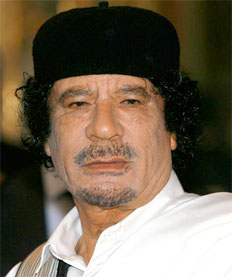
“Listen to me carefully. If you want to suffocate and destabilize me, you will only play Bin Laden's game and help the armed groups of insurgents. The following will happen. You will be attacked by a wave of migration coming from Africa which will pour into Europe from Libya. There will be no one left here to stop them”.
At the time, Gaddafi probably never imagined that he was alone 6 months later he would be killed by rioters in the street after NATO's intervention. But with his warning Gaddafi was right although this does not intend to justify in any way the actions of the Libyan despot. Until 2011 Libya was the richest African country and the desired destination for the starving Eritrean and Nigerian populations.
As for the population, Libya was among the countries with the most immigrants in the world. Today Libya is a failed state in which there is a dual government but there is no order. The failure of this state has also destabilized neighboring countries. Difficult situations are observed practically from Nigeria to Somalia. During the civil war France and the USA actively supplied the Libyan rebels with weapons who naturally did not return them after the end of the war. Military equipment from Gaddafi's arsenals was looted. Thus Libya was formed into a real one “arms market”. The Humans Rights Watch organization thus warned after the end of the civil war: “It's the largest distribution of weapons we've ever seen. It will be a threat to the region in the coming decades”. A similar development could also be observed following the American interventions in Iraq, Afghanistan e, before the Russian intervention, also in Syria.
Today the majority of asylum applications in Germany are submitted by refugees from the above countries. Mostly Nigerians leave Africa for Europe, Eritrea, Somalia e Chad. More than 75% of refugees arriving in Europe by sea leave from Libyan ports.
The politics of the German Chancellor of “somehow we will make it” recalls the impotence of the Roman Empire shortly before its fall. The Romans failed to manage the migration crisis when the Goths were at the gates and entered the Empire during the attack of the Huns. Initially the Goths were welcomed peacefully, food was provided to them, but when flow became too important, the Romans started a war to stop the Goths.
Furthermore, the corrupt Roman authorities kept food for them and, when the Goths who lived in Rome realized this unfair treatment towards them, an insurrection broke out. The famous historian Alexander Demandr also listed other causes of the fall of the Roman Empire: “Decadence, greed, old-fashioned way of thinking, immobility and loss of national identity”. And today in Europe it seems that many citizens of the Union believe that everything is fine as long as they have a roof over their heads, they can go out to eat and take holidays. The fall of the Roman Empire began before the migration crisis, so the parallels are chilling. And the legendary quote from Cicero: “How long will our patience last??” proves more relevant than ever if addressed to German Chancellor Angela Merkel and Interior Minister Horst Seehofer.
Merkel's security policy towards migrants differs from her predecessor's policy, l’ex cancelliere Willy Brandt: “In our company they work approximately 2,5 millions of people representing other nations. We have reached the point of having to carefully evaluate where the ultimate limit lies beyond which we can no longer welcome other people and our social responsibility ends”.
Helmut Schmidt ten years later he warned:”More than 4 millions of foreigners are the maximum number for German society if we don't want to have serious problems. We will not be able to integrate more than 4,5 millions of foreigners without any negative consequences”. Today they live in Germany 10,6 millions of foreigners and there has been no talk of secure borders for some time. Horst Seehofer attempted together with Austrian Chancellor Sebastian Kurz and the countries of the Visengrad group to present an alternative program for resolving the migration crisis. “Illegal immigrants must be expelled, border defense must be strengthened. In third countries, collection centers must be built for migrants whose asylum applications have been refused and the Frontex agency must be converted into a border police force”.
The main point of this program is the possibility of applying for asylum in the country of origin. So, after the Ceuta uprisings the question arises: what these centers should do and how they should be defended? The African population is growing very quickly and by 2050 will double until it reaches 2,5 billion. The flow of refugees driven by hunger, from economic problems, from corruption and a lack of prospects could increase. It is very likely that refugees will not accept the rejection of their asylum application and will leave for Europe anyway.
In Syria there is a glimmer of hope because that is where a large part of the refugees are currently heading “Europeans”. Thanks to Russian support for President Bashar al-Assad, it was possible to largely expel ISIS from Syria and interrupt the civil war. After the visit of the Russian delegation, the Syrian president confirmed that all refugees “safe repatriation will be guaranteed”. Active work is already being done on the repatriation of Syrian refugees from neighboring countries (Türkiye, Lebanon and Jordan) so that they can be an integral part of the country's recovery. It will probably be possible in the future to dialogue with Assad to conclude similar agreements for the repatriation of refugees.
Reporting of Blog on Maurizio Blondet
The French Foreign Minister, Le Drian, he went to Tripoli on Monday. According to various sources, with a purpose: obtain the opening of a permanent military base in Libya. The minister met Sarraj, the head of the pseudo government, but also the head of the “Libyan armed forces (sic) Abdulhramman al-Tawi and the commander of the Western Military Zone Osama Al Juwaili, from the …
Read all.