From Israel to Bardonecchia, the competition to see who is more cynical about migrants

Report Linkiesta

Image

From Israel to Bardonecchia, the competition to see who is more cynical about migrants

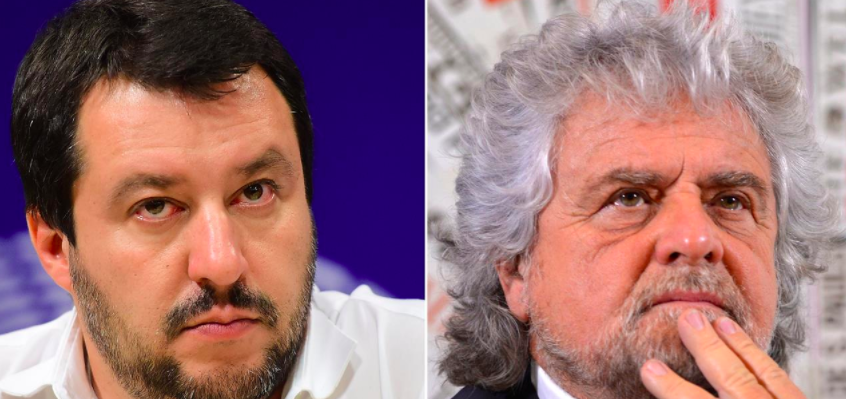
In the chaos over immigration everyone does what they want, and whoever has the most hair on his stomach wins. From Israel to French customs officers, by the governments of Hungary and Poland, a Macron e Merkel. (Of Fulvio Scaglione, LAWS)

Read More

Share

We truly are the country of the ignorant

Report Linkiesta (in collaboration with The Assayer)

Image
We truly are the country of the ignorant?
The rankings, merciless, they paint us as one of the most ignorant countries in Europe. And we ourselves have become accustomed to defining ourselves as such. But Italy is truly the country of the ignorant. Antonio Sgobba's essay "?. The paradox of ignorance from Socrates to Google” tries to shed some light (or to complicate our ideas) (LAWS)
Linkiesta | Longread is a collaboration between Linkiesta and Il Saggiatore, historic Milanese publishing house, of which every Sunday we will publish an extract from a book, not necessarily an editorial novelty, which in some way is linked to the current events of the seven days that have just passed.

Read More

Share

“Nor exploited, nor big babies". Francesco Cancellato's new book comes out today, director of Linkiesta.it

Report Linkiesta

Image
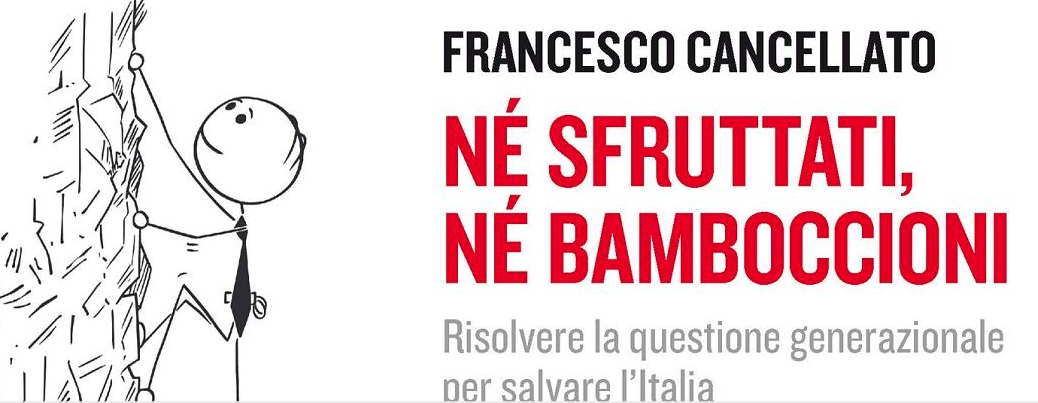
“Neither exploited nor big babies. Resolve the generational issue to save Italy"
The new book by Francesco Cancellato, director of Linkiesta.it, in bookstores from today
All the paradoxes of the generational question in Italy: training, Work, welfare and gender gap in the age of millenials
In a global context in which everything seems to be turning in favor of young people - technological advancement, the predisposition to flexibility, the challenge of new skills for an industry 4.0 – Italy appears to be an anomaly. The political choices made in different fields, from education to labor reforms, from policies to reduce the gender gap to welfare, they did not favor the stabilization of young Italians in the market, indeed they have increased the distance between school and work, increasing the mistrust towards training to such an extent that it has given rise to the sad phenomenon of NEETs. The essay invites us to take on the holistic character of the generational question which is the nerve center around which many, if not all, the Italian problems. Solving it is a categorical and moral imperative under penalty of the collapse of the entire welfare system and the serious risk that generations to come will live, for the first time, a life worse than that of their fathers.
The author: Francesco Cancellato, he is the director of the online newspaper Linkiesta.it and a commentator on numerous television and radio programmes.
For Egea – UBE he is the author of Fattore G: because the Germans are right (2016).
EGEA € 16,00 – pages. 144
Per read an excerpt
Per buy the book

Read More

Share

Salvini's real goal is to take over Forza Italia (and Di Maio is giving him a hand)

Image
Report Linkiesta
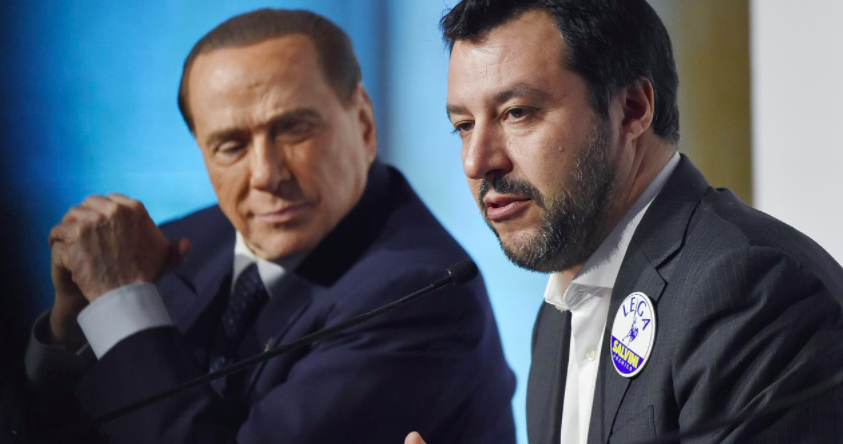
The leader of via Bellerio works on a center-right in his image and likeness. He wants to be Berlusconi's successor. And he needs not to break the coalition. The pact with Di Maio serves to consolidate a new bipolarism: their
Of Alessandro Franzi

Not the mortal embrace with the Movement 5 position, but the definitive conquest of the center-right. E’ This is the horizon that Matteo Salvini's moves seem to indicate, after transforming the League (Nord) in the first party of the first coalition that emerged from the elections of 4 March. The meeting with i 5 position – the first party – it is a necessity due to the lack of a numerical majority in Parliament. But it is also something more. Both Salvini and Luigi Di Maio intend to manage the birth of what they consider the third republic, no longer only disconnected from twentieth-century ideologies but also disconnected from ties with traditional political families. And to do it both leaders, Salvini and Di Maio, they banded together to weaken their opponents: on one side Silvio Berlusconi, on the other, the Democratic Party. And to rewrite the rules of the game: an electoral law with a majority bonus that can be certified in the next elections, when they will be there, a new bipolarism. Their. A strategy that may not even pass through a political government between the League and the M5S, which would kill off all the novelty in one fell swoop.
Who and how will go to Palazzo Chigi, but, we will only see it in the next few weeks. What is certain is that Salvini has had in mind for a long time a centre-right that some would rename "Lega Italia". The name is not important, as much as strategy. From the end of 2013, the secretary of the Northern League has worked on the construction of his national proposal, no longer limited to Northern Italy. It has adopted unifying slogans: against the sovereignty ceded to the European Union, against new migrations, against Islam. He caused scandal with his speeches based on the desecration of politically correct. And he inaugurated what he always does well: a permanent electoral campaign, which came down to the South, passing through the regions of Central Italy which rewarded him with often double-digit electoral results. Salvini represents the new right. Not just the radical one that has been talked about in recent months. His extreme message reached a moderate electorate left without references, and therefore ready to rely without intellectual hesitations. Salvini therefore also represents a new centre-right, which no longer has its totem in Berlusconi.

Read More

Share

Cinquestelle and Lega? They started out “solid” and old-fashioned (and they win elections because of it)

Report Linkiesta

Image

Cinquestelle and Lega? They started out “solid” and old-fashioned (and they win elections because of it)

The liquid party was an invention of the Veltroni in 2008 and it seemed like a revolutionary idea (but the Cavaliere also had this idea of ​​party). With the latest elections, Instead, “solid” parties have established themselves: Lega and M5S. (by Flavia Perina, LAWS)

Read More

Share

Trade war: Trump is right (and we Europeans are not innocent at all)

Report Linkiesta

Image
Trade war: Trump is right (and we Europeans are not innocent at all)

The tariff war is only the latest chapter of a global liberalism that has always gone in fits and starts. Trump has his reasons for shutting down free trade. And that's not necessarily Europe (much less innocent than it seems) cannot take advantage of it. (Of Stefano Cingolani, LAWS)
Share

The Five Stars like Andreotti's DC. The precedent of 1976 which gives the grillini hope

ImageReport Linkiesta
The abstention of the PCI and socialists was decisive, will go down in history as "the government of no confidence". The protagonists of the time remember that the situation was very similar to the current one. Five stars and the League hope so. Scotti: "If you don't want to go back to voting there aren't many alternatives"

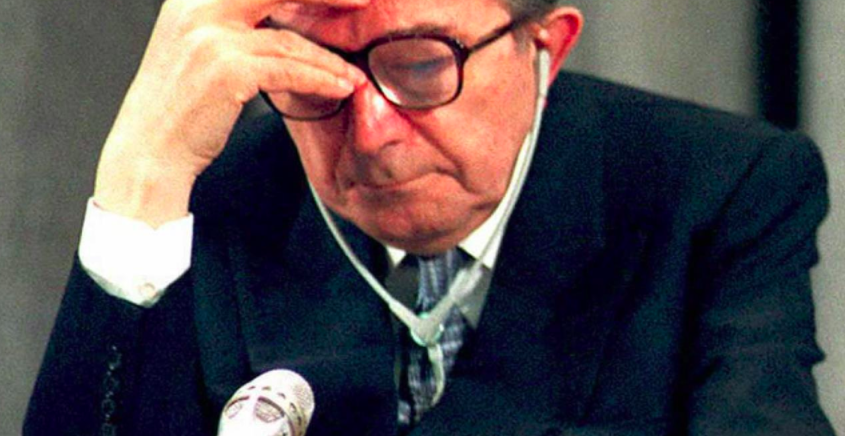
The calendar goes back forty years. Memories go to the First Republic, they recall the Christian Democracy and the figure of Giulio Andreotti. If there is a precedent that many are looking at with interest in these hours, it is precisely the "government of no confidence". The DC monochrome born in the summer of 1976 thanks to the abstention of the communist party and the socialists. An executive that is the result of a long discussion and difficult mediation, despite the absence of a real parliamentary majority. Matteo Salvini was three years old, Luigi Di Maio was not yet born. Nevertheless, with all the necessary differences, the situation closely resembles the current one. That's why at the Quirinale – and certainly also among the leaders of Five Star and the League – there are those who are reviewing that page of history. A precedent to take inspiration from to break the probable stalemate of the next few weeks.
Even then the polls had awarded two winners. Benigno Zaccagnini's Christian Democrats had conquered the 38,7 percent, while Enrico Berlinguer's party had stopped at 34,4 percent. Complex situation, given that neither party had sufficient numbers to govern. A impasse made even more complicated by the choice of the socialists, determined not to enter government without the simultaneous presence of the communists. After a long mediation – managed at the Quirinale by president Giovanni Leone – the solution was identified in a single-party DC government. An attempt made possible by the PCI's abstention, Psi, Psdi, e Pri. “The alternative was to immediately return to the vote” remembers Vincenzo Scotti today, several times minister and undersecretary for the Budget of that executive. «But in republican history it had never happened. And so, in the end, he decided to go that route". At Palazzo Madama the Andreotti III government obtained confidence with 136 Yes, 17 antonyms and 69 abstentions. At Montecitorio with 258 favorable votes, 44 antonyms and 303 abstained.

Without making merciless comparisons, a lot has changed since then. Starting with the leaders. Luigi Di Maio and Matteo Salvini are not Andreotti. «But I'm not even De Gasperi, Togliatti and Nenni» laughs Vincenzo Scotti, who was undersecretary for the budget of that government. «And I say this with the utmost respect for everyone»

The scenario is replicable? Like forty years ago, neither of the two winners today has the numbers to govern alone. The centre-right coalition won at the polls the 37 percent, the Five Stars the 33 percent. Imagining parliamentary alliances with the Democratic Party is unrealistic. Net of the rumors of recent days, it is almost impossible for the Dems to openly support a Grillino or Northern League executive. And so the illustrious precedent becomes relevant again. To govern, the Northern League-led centre-right should hope for the PD's benevolent abstention. The road is more difficult for the grillini, who can count on a smaller parliamentary group. An executive led by Luigi Di Maio could only gain confidence with the simultaneous exit of the center-left and part of the center-right from the Chamber. Complicated, right. But not impossible. «Today the reality is completely different from 1976» says Scotti. «But if you don't want to go back to elections there aren't many alternatives. The center-right and the Five Star Movement can govern together, I find it very difficult. Or they can form a minority government, thanks to the abstention of the opponents, with the aim of implementing a limited and short-term program".
The time limit is obvious. The Andreotti III government did not have a long life, remaining in office for less than two years. And that executive's program was also limited: every relevant provision had to be agreed in advance with the Communist Party. But the coincidences with that experience are not over. In the 1976 the great mediation was preceded by an important institutional transition: the election of the President of the Chamber. The first great proof of understanding between the DC and the PCI took place around Pietro Ingrao, chosen as Sandro Pertini's successor on the most important seat in Montecitorio. Today many people imagine a similar scenario. The election of a member of the Democratic Party in place of Laura Boldrini could represent a first step towards the birth of a minority government. «Ingrao's signal was very important – Scotti insists – This time too we will understand a lot from the election of the presidents of the House and Senate".

The calendar goes back forty years. Memories go to the First Republic, they recall the Christian Democracy and the figure of Giulio Andreotti. If there is a precedent that many are looking at with interest in these hours, it is precisely the "government of no confidence". The DC monochrome born in the summer of 1976 thanks to the abstention of the communist party and the socialists

Then the difficult mediation succeeded. A few days later, it was the end of July, Giulio Andreotti officially baptized the 33rd government in republican history. A very particular executive right from the announcement in the Chamber. «I proposed to the Head of State – said the Prime Minister in Montecitorio – the appointment of the ministers who appear with me today to obtain confidence, or at least non-distrust, of the Senate and the Chamber of Deputies". Today no one is betting on the outcome of the operation. «That was a very interesting experience, which came after years of head-on opposition between the Christian Democrats and the Communist Party" recalls Giuseppe Zamberletti, who was Undersecretary of the Interior of that government. «But at that moment there was a clear political plan, not the confusion of these days". In the 1976 the path to mediation had been identified, albeit with a thousand difficulties. «The PCI was beginning to highlight its mutation – insists the Christian Democrat – I remember that that year there was an earthquake in Friuli. The collaboration with the communists began right there, during the operations that followed the earthquake. But then, above all, There was a very intense internal debate within the parties. I remember the torment, the discussions...". Without making merciless comparisons, a lot has changed since then. Starting with the leaders. Luigi Di Maio and Matteo Salvini are not Andreotti. «But I'm not even De Gasperi, Togliatti and Nenni» laughs Scotti. «And I say this with the utmost respect for everyone».
Meanwhile, the despised First Republic is back in the news. So much for the alleged renovation. «But that was a whole other world – Scotti insists – Then the parties had clear objectives to pursue". Zamberletti agrees. «It's a period that I look back on with nostalgia, very different from today. There is no longer any debate within the political forces, the involvement of the national community and the periphery is lacking. The choices were made after long debates, sometimes harsh. Today decisions are made only by the top".
Source: http://linkiestait.musvc1.net/e/t?q=5%3d7ZAY9%26J%3d3%26F%3d3cB%26G%3d1e5X4%26S%3djLtN_tsSx_53_ryUr_2D_tsSx_48wUy.DiLmAeQv3.iR_tsSx_48iR_tsSx_48aPvAcJg_JQ1R_TfZBS8_PSuP_Zhb3_PSuP_Zhb8_PSuP_ZhA-cGpIuC-uLeJn7-cMo7-l9-f5-dG-cFdPgGtRk-Al-Nt7cCf7nRg-6eJ-3a7d-e0e-Dc-_JQ1R_Tfa9U73a9ch_tsSx_48%26d%3dKwKvA3.FeR%26kK%3d1eBV0

Read More

Share

Renzi is finished? Ok, but spare us Prodi, Veltroni e tutto quello che c'era prima

Image results for Renzi is finished
Report Linkiesta
You may like it and you may (very legitimately) don't like Renzi's style. But if the alternative is a return to the old guard of the left, then it means that the Democratic Party deserves grillism and anti-politics
Of Francesco Cancellato

That Renzi is in bad shape, politically, it is a fairly incontrovertible fact. That the Democratic Party around the 22/23% in pre-bloc polls is objectively a party in a devastating identity crisis, pure. That the future of the main Italian center-left party – assuming that it will have a unitary future – must be something different from Leopolda, it is self-evident. Let no one think of it, but, to go back, to the pre-scrappage ruling class.
We say it, reading about noble fathers like Prodi who position themselves, of hypotheses of Veltroni secretariats, or Franceschini. Of returns to the fold, as protagonists, by D'Alema and Bersani. No, Thank you. If there is something that could be even more harmful than Renzi bolting to the Nazarene, it is the return of the Second Republic-model Democratic Party.
We say it by remembering – to them, above all – That the Renzi phenomenon was born precisely from a crisis of rejection of a large part of the democratic electorate towards them, of that immobile power block, self-referential, exhausted, incapable of building a political vision that was such, let alone make it attractive in the eyes of voters.
Even the Five Star Movement, in conclusion, it began to germinate precisely on the radical criticism of the centre-left ruling class of the second republic, unable, according to Beppe Grillo, to constitute a real alternative to Berlusconi and centre-right governments. The Monti government, the first great coalition, it was an all too welcome gift that produced the exploit of 2013.
Agree, Renzi has not reversed course, and the Democratic Party continued, with him too, its unstoppable fall. But if Renzi hadn't been there, probably, we would be talking about even worse numbers. Without Renzi, for example, the Letta and Gentiloni governments would have been perceived for what they really were, two inconclusive and excessively timid executives, without any idea – right or wrong – on the future of Italy. Without Renzi we would be talking about a Christian Democratic and seaside legislature, of pure management of the existing, without any spectacular failure, Perhaps, but without any planning impetus.

Read More

Share
1 2 3 4